As an Amazon Associate, we earn from qualifying purchases. Some links on this site are affiliate links at no extra cost to you. Our recommendations are based on thorough research and editorial judgment.

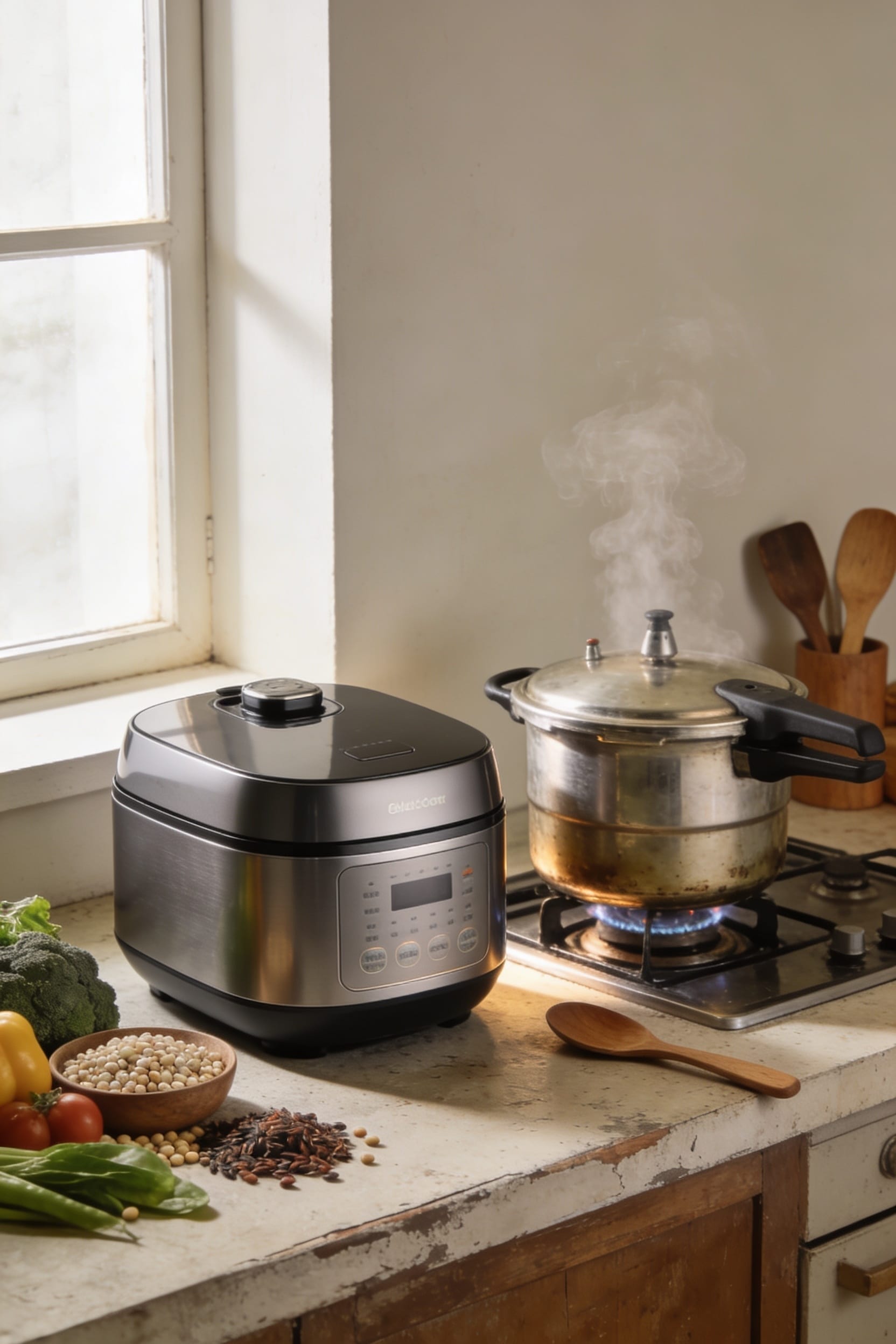
Instant Pot vs Traditional Pressure Cooker: Which Is Better?

All right, here’s the thing—they’re not really competing for the same job. Instant Pots win on convenience and safety with their set-and-forget presets and automatic shutoffs, plus they do seven things at once. But stovetop pressure cookers cook about 25% faster because they hit higher pressure, and they’ll outlast any electronics you own. Your choice depends on whether you prioritize ease and multitasking or speed and durability. Stick around if you want the full breakdown on what actually matters for your kitchen.
Key Takeaways
- Instant Pot offers convenience with preset buttons and hands-off cooking; stovetop requires active monitoring and manual pressure control.
- Stovetop pressure cookers reach 15 PSI versus Instant Pot’s 11–12 PSI, delivering up to 70% faster cooking times.
- Instant Pot consolidates seven appliances (pressure cooker, slow cooker, rice cooker, steamer, sauté pan, yogurt maker, warmer) into one unit.
- Stovetop models are more compact and durable mechanically with no electronics to fail; Instant Pot has potential circuit-board issues.
- Instant Pot features 10+ safety mechanisms and automatic shut-off; stovetop requires user skill and constant attention for safe operation.
Instant Pot vs. Stovetop: Quick Decision Guide
How do you actually know which one belongs in your kitchen? Look, it comes down to your lifestyle and your space. If you’ve got countertop clearance and want set-and-forget convenience, the Instant Pot‘s your friend—microprocessor monitoring means you’re not hovering over the stove. Traditional stovetop models are smaller, perfect for cramped kitchens, but they demand your attention and generate more noise levels while building pressure. Here’s the thing: Instant Pot takes about 25% longer to cook, though it’s gentler overall. Stovetop cookers hit higher PSI and cook faster, period. New to pressure cooking? Instant Pot’s less intimidating. Want speed and durability without electronics failing on you? Stovetop’s got your back. Both work beautifully—it’s just about matching the tool to your habits.
Recommended Products

Burner Type: Induction (used only with Induction Ready Cookware - Ferrous Stainless Steel, Iron and Cast Iron)

【5000W 220V Commercial Induction Cooktop】 — Built for high-output countertop cooking, this 5000W commercial induction cooktop works as a countertop induction burner, induction cooker, and heavy-duty electric hot plate for restaurants, catering kitchens, food trucks, cafés, hotels, prep stations, and back-of-house cooking areas. Ideal for boiling, simmering, soup cooking, sauce preparation, stock pots, and large flat-bottom magnetic cookware. Please confirm your 220V outlet and circuit before ordering.

Exclusively made from BUFFALO Clad, its thermal conductivity is faster and more even than conventional stainless steel cookware
First-Time Users: Why Instant Pot Feels Less Scary
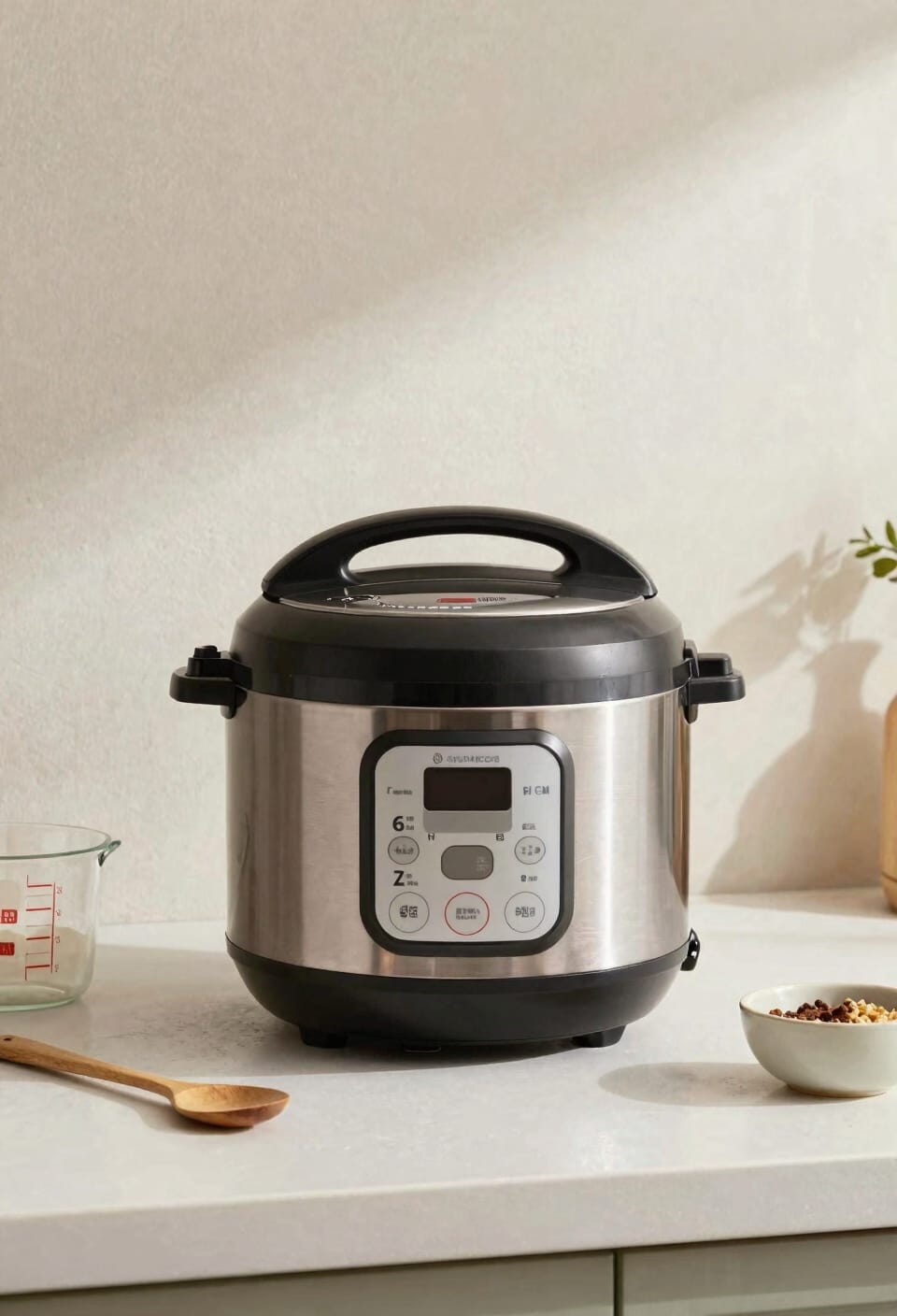
Why does stepping up to a pressure cooker feel like you’re defusing a bomb for the first time? I get it—traditional stovetop models demand constant attention, vigilant monitoring, mental math about pressure levels. You’re essentially babysitting your dinner.
The Instant Pot? It’s the friend who doesn’t need supervision. Pre-programmed button labels handle the intimidation factor entirely. You’re not wrestling with mysterious gauges or wondering if you’ve hit the right pressure sweet spot. The learning curve flattens dramatically when the machine does the thinking.
Here’s what actually matters: that community support matters. Online Instant Pot groups overflow with meal planning ideas and reassurance. Nobody’s panicking about sealing rings or pressure disasters there. You’re joining thousands who’ve already walked this path, which somehow makes your first batch of beans feel genuinely achievable.
Speed Matters: Why Stovetop Pressure Cookers Cook Faster
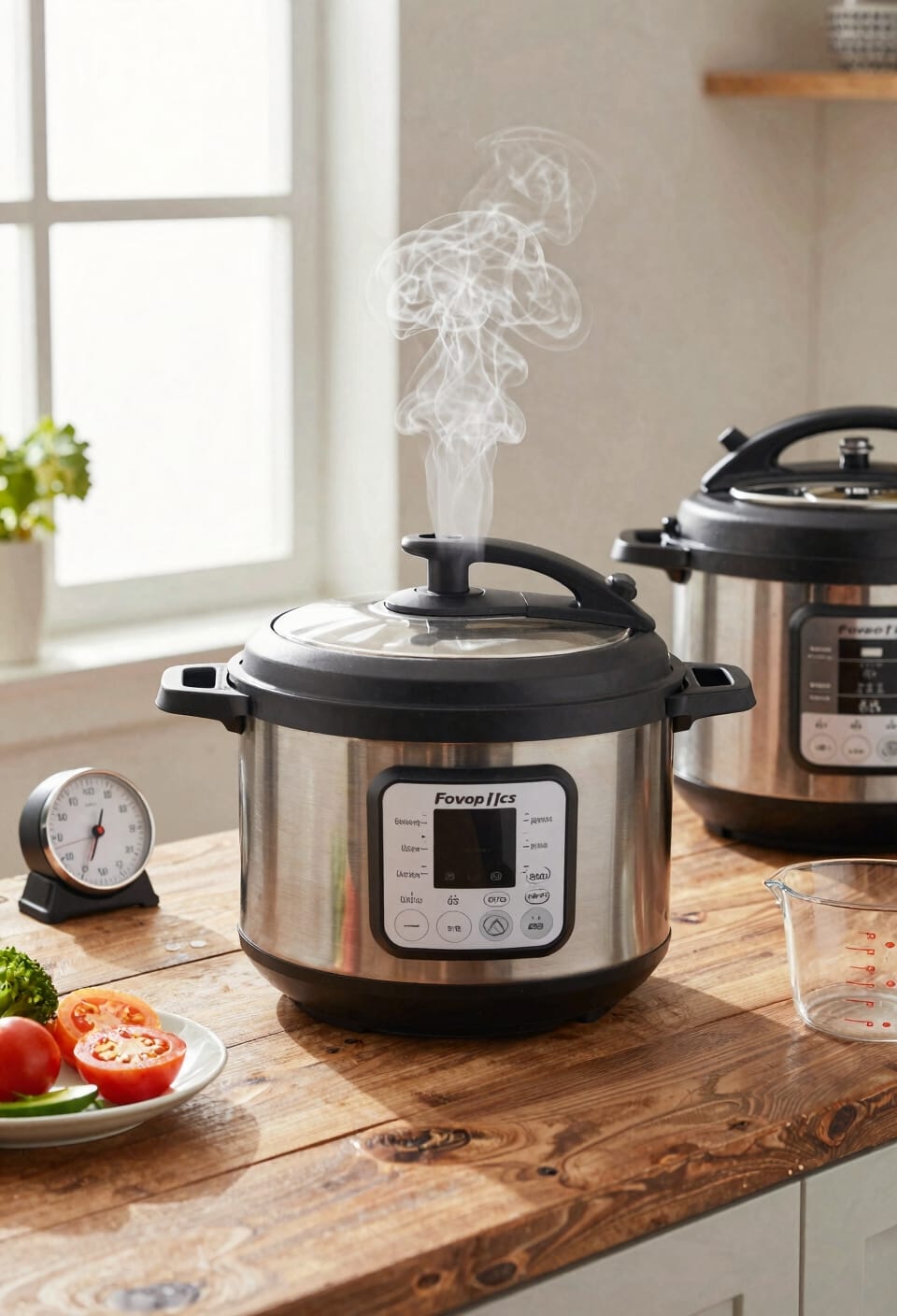
Now, here’s where things get interesting—because all that peace of mind from an Instant Pot comes with a tradeoff that actually matters if you’re hungry. Traditional stovetop pressure cookers reach 15 PSI compared to the Instant Pot’s 11-12 PSI, and that difference fundamentally changes how fast your food cooks. The steam dynamics work harder on a stovetop, and direct heat transfer from your burner means more vigorous, powerful cooking action. You’re looking at roughly 25% longer cooking times with an Instant Pot to match what a stovetop achieves. That pressure cooker on your stove heats water to 250°F internally versus 212°F boiling, speeding things up to 70%. If speed’s your priority, the stovetop wins. Period.
Beyond Pressure: Instant Pot’s 7-in-1 Advantage
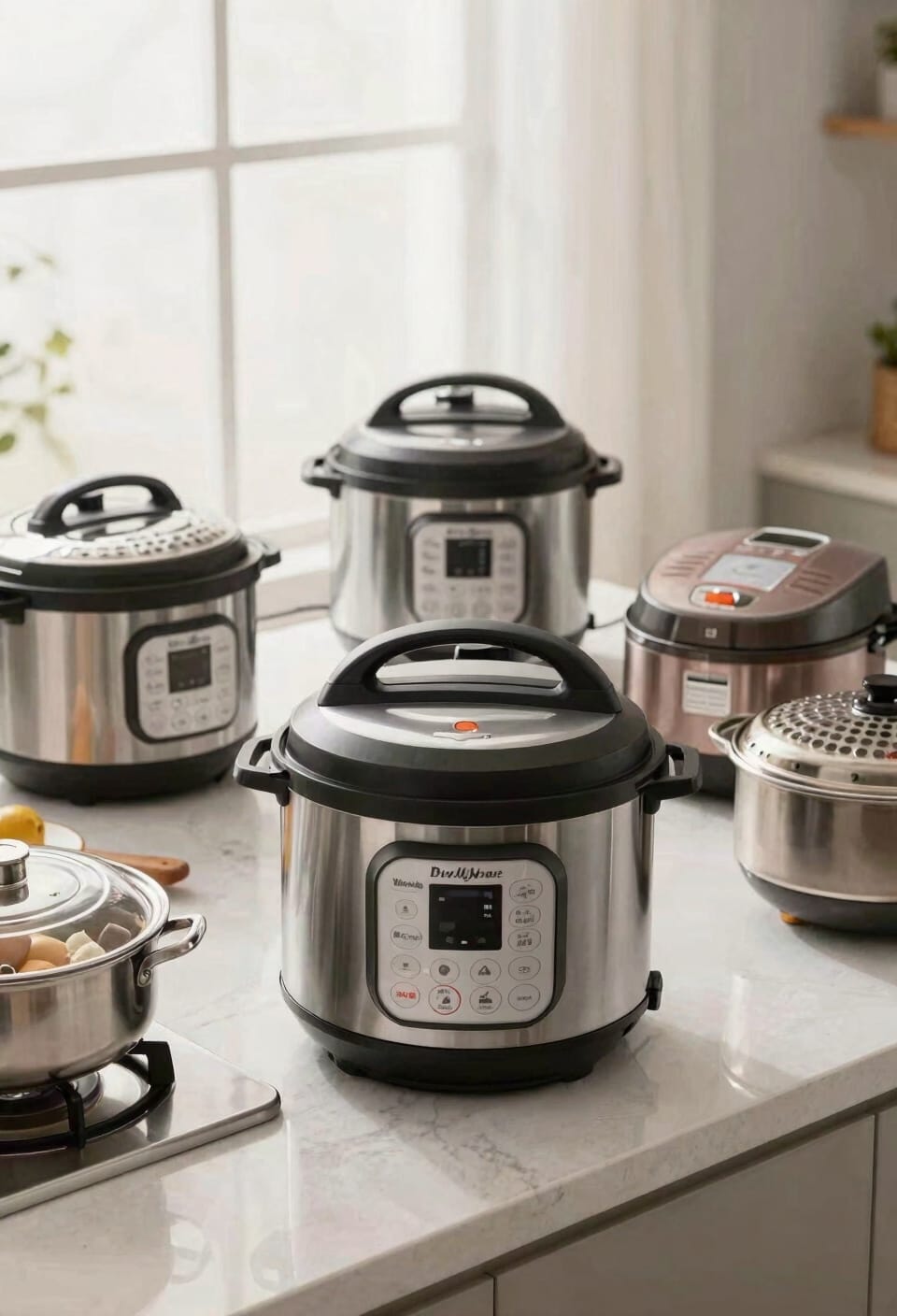
While the speed advantage goes to your stovetop model, there’s something the Instant Pot does that changes the whole game—it’s not just a pressure cooker, and that matters way more than you might think. That 6-quart Duo? It’s seven appliances in one. You’re getting a pressure cooker, slow cooker, rice cooker, steamer, sauté pan, yogurt maker, and warmer all rolled into a single footprint.
Now, here’s where your appliance ecosystem actually pays off. Those smart presets mean you’re not fumbling through manuals or guessing cook times. You press “soup,” it handles the pressure and timing automatically. I cook constantly, and honestly, the versatility alone justifies the counter space. One device replaces half your cabinet—that’s genuinely useful, not marketing fluff.
Recommended Products

18/10 stainless steel will not interact with food

PRESSURE COOKING: 9L pressure cooker (7-10 people) designed to easily and quickly cook a wide variety of dishes every day, from starters to desserts

AUTOMATED FOR EASY CANNING: The Presto Pressure Canner simplifies home canning with its automated features, ensuring confident and precise results every time.
Kitchen Space: Instant Pot vs. Stovetop Footprint
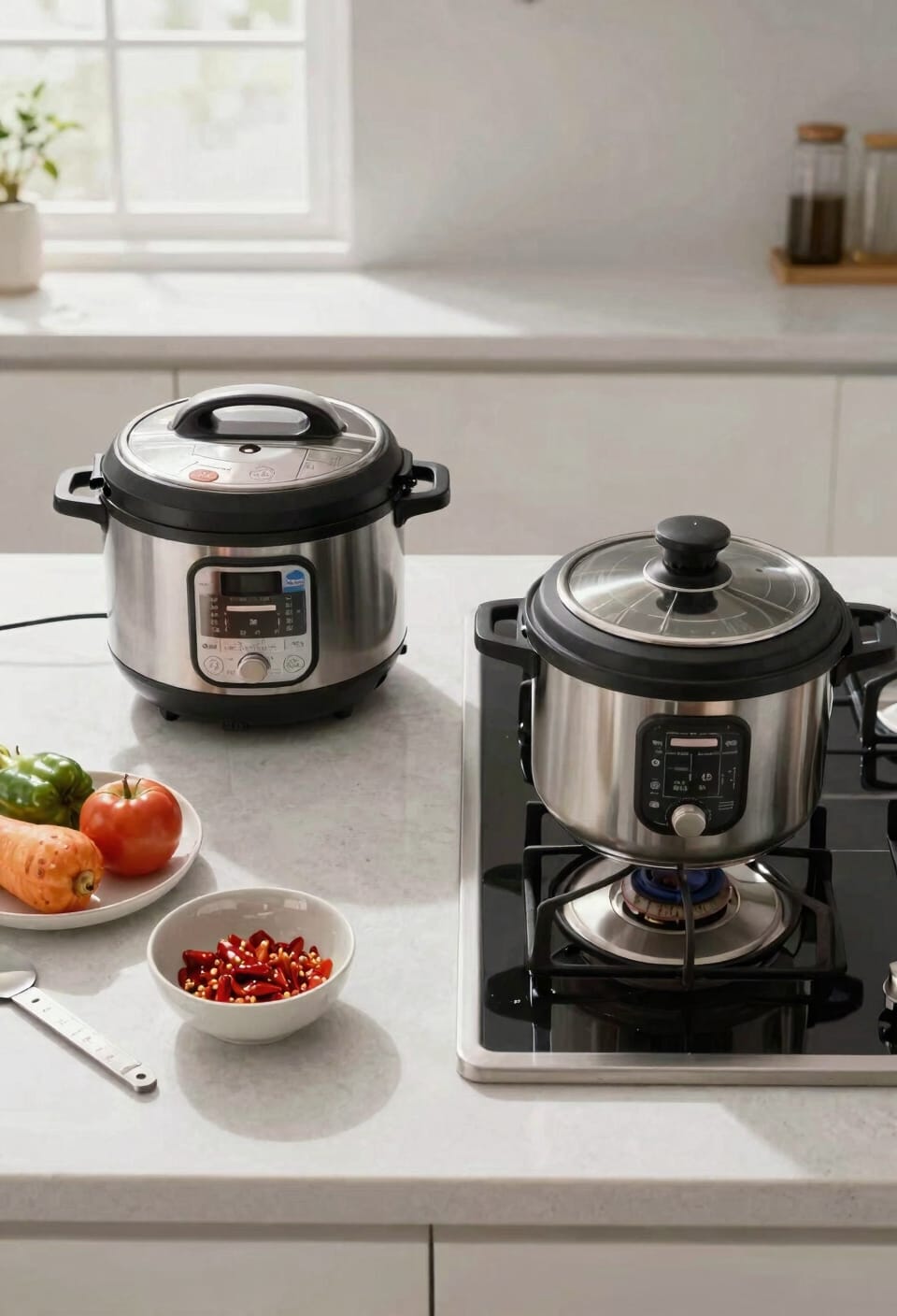
Against a small kitchen counter, the footprint conversation gets real pretty fast. Here’s the thing: a traditional stovetop pressure cooker measures about 17 by 9 by 8.75 inches—genuinely compact. Your Instant Pot? Think 13 by 12 by 12.5 inches of counter real estate. Now, both weigh nearly the same (around 12-14 pounds), but that Instant Pot’s bulkier shape creates serious counter clutter issues if you’re not careful. For cabinet organization, the stovetop model slides into tight spaces way easier. You’re looking at meaningful storage differences, especially if your kitchen’s already playing Tetris with your appliances. If counter space is precious at your place, the traditional cooker wins this round hands down.
Safety Without Supervision: Instant Pot’s Electronic Edge
If you’ve ever stood over a stovetop pressure cooker watching the pressure valve like a hawk, convinced that any second now it’ll explode and decorate your kitchen ceiling, you’ll understand why the Instant Pot‘s electronic safety features feel like a genuine miracle. The Instant Pot includes 10+ UL-certified safety mechanisms that monitor pressure, temperature, and time automatically. You get an automatic shut-off if the lid isn’t properly closed, plus a child lock to keep curious hands safe. Even during a power outage, the pressure releases safely. Traditional cookers demand constant vigilance—you’re the safety system. With an Instant Pot, you can actually leave your kitchen without that nagging dread. That peace of mind? Priceless.
Recommended Products

Attractive design, safe, very fast, durable, easy to handle and quiet; cooks in approximately 70% less time than other conventional pots

PRESSURE COOKER + CANNER - All American 1930 Pressure Cookers/Canners offer an easy solution for home canning. The USDA recommends pressure canning as the only safe way to can meat, vegetables & fruits. Holds approx. 32 pint jars or 19 quart jars.
![Tiger TIGER JPV-G100KM [Pressure IH jar rice cooker 5.5 cups matte black] 100V](https://m.media-amazon.com/images/I/41719wCNFoL._SL500_.jpg)
●Body size (approx. cm): 25.7 x 38 x 21.4 ●Body mass (approx. kg): 5.5 ●Color: Matte black
Built to Last: Why Stovetop Models Outlast Electronics
Electronics fail—it’s not a matter of if, but when. I’ve seen plenty of Instant Pots develop sealing issues or watch their circuit boards give up the ghost after a few years. Stovetop models? They’re basically indestructible. There’s no complex wiring to fray, no sensors to malfunction. Sure, you’ll eventually need gasket replacement—that’s normal wear—but the actual cooker itself keeps humming along. Metal fatigue takes decades to show up in quality steel. The mechanical simplicity of traditional pressure cookers means you’re cooking with something that might outlast your kitchen. You get lifetime seals in the sense that the core vessel just works, year after year. That’s worth considering if you want something truly built to stick around.
What You’ll Actually Spend: Price, Durability, Maintenance
Now, durability‘s only half the story—because even the toughest cooker doesn’t matter if you’re going to bleed money keeping it running. Here’s the thing: traditional stovetop models cost less upfront, and that gap widens over time. You won’t need replacement parts for something with zero electronics. Meanwhile, Instant Pots can develop sealing issues or electronic glitches that require repairs or pricey replacement parts. That said, you’ll recoup some costs through resale value—both hold their worth reasonably well, though stovetops maintain better long-term value for speed-focused cooks. Factor in the convenience tax: Instant Pot’s preset buttons justify the premium if you actually use them. But if durability and wallet-friendliness matter most? The stovetop wins this round.
Recommended Products
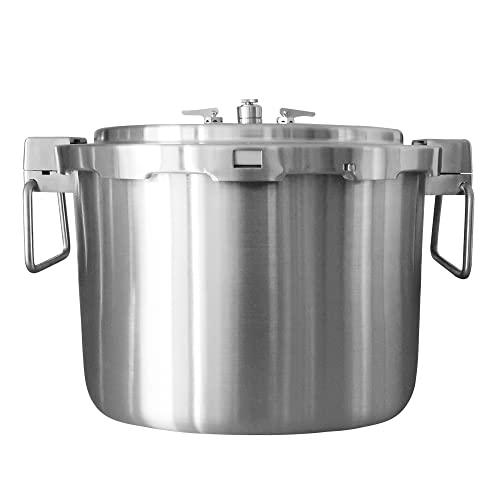
Designed and manufactured in Taiwan. Family Living Today's CHOICE: The commercial grade pressure canner is what you need.
![Buffalo QCP435 37-Quart Stainless Steel Pressure Cooker [Commercial series] Bundle with Pressure Gauge and Silicon Gasket](https://m.media-amazon.com/images/I/41jJ6ajJe3L._SL500_.jpg)
Designed and manufactured in Taiwan. Family Living Today's CHOICE: The commercial grade pressure canner is what you need.

Healthy and energy saving: For quick and healthy cooking: pressure cooking with sophisticated functions reduce cooking time by 70% and ensure that up to 90% of vitamins, such as vitamin C, are preserved
Instant Pot’s 12 PSI vs. Stovetop’s 15 PSI: Real-World Impact
Because pressure is everything in a pressure cooker—literally—that 3 PSI gap between Instant Pot’s standard 12 PSI and a stovetop’s 15 PSI actually matters more than you’d think. Here’s the thing: that pressure difference translates to real cooking outcomes you’ll notice in your food. Water inside a stovetop cooker hits 250°F versus 212°F in most Instant Pots, which speeds cooking up to 70% faster. You’re looking at texture variations too—stovetop models produce more vigorous, powerful cooking from direct stove heat. The trade-off? You’ll need about 25% extra time in an Instant Pot to match stovetop tenderness. From an energy efficiency standpoint, that matters if you’re cooking regularly. Higher-end Instant Pot models reach 12-13 PSI, narrowing the gap slightly.
Which One Should You Buy?
If you’re standing in front of your kitchen deciding between these two, the honest answer is that it depends entirely on how you actually cook and what matters most to you—and I mean that in the least cop-out way possible.
Pick the Instant Pot if you value convenience and meal planning flexibility. Those preset buttons and hands-off operation mean you’re genuinely free to do other things. The multiple functions give you real portability benefits across different cooking styles without cluttering your cabinet.
Go stovetop if you’re speed-obsessed and already comfortable with direct heat. You’ll get faster cooking times, better sauté results, and something that’ll outlive your kitchen renovations. No electronics means no potential headaches down the road.
Recommended Products

【Details of Cooker】:Kolice pressure cooker comes with stainless steel exterior and non-stick Inner Pot. This is heavy duty commercial cooker. ONLY FOR 220V electric (NOT 110V ), 50HZ~60HZ, US plug, 3000W, 21L (22 QT). Dimensions: 20.87” x20.87”x18.90” (53x53x48cm), N.W.: 16 kgs. Food grade inner pot with non-stick coating, smart AI temperature control, lid closed detection and won’t heat if not closed, included time indication light and pressure holding indication light. 24 hours timer control and presetting function

MODERN WAY TO CAN AT HOME – Upgrade from traditional stovetop canning with a smart digital canner designed to simplify pressure and boiling water canning from start to finish.

TIME SAVING: Cook delicious meals twice as fast (compared to a standard Tefal Dutch oven) thanks to the pressure cooking lid
Frequently Asked Questions
Can I Use an Instant Pot or Traditional Cooker for Canning and Food Preservation Safely?
I’d advise against both for canning. Instant Pots aren’t certified for pressure canning, while traditional cookers lack precise temperature control. You’ll want proper canning equipment, water bath methods, or root cellar storage for safe food preservation and fermentation safety.
Do Pressure Cookers Work at High Altitudes, and Do Cooking Times Need Adjustment?
I’ll tell you that pressure cookers do work at high altitudes, but you’ll need altitude adjustments and pressure compensation. I recommend increasing cooking time by about 5% for every 1,000 feet above sea level.
What’s the Warranty Coverage Difference Between Instant Pot and Stovetop Pressure Cooker Brands?
I can’t provide specific warranty length and service support comparisons because the knowledge base doesn’t contain detailed warranty information for either Instant Pot or traditional stovetop pressure cooker brands. You’ll need to check manufacturer websites directly.
Can You Interchange Recipes Between Instant Pot and Traditional Pressure Cookers Without Modification?
I’d recommend adjusting recipes when swapping between them. You’ll need timing adjustments since Instant Pots operate at lower pressure—typically 11-12 PSI versus traditional cookers’ 15 PSI. Most recipe conversions require adding roughly 25% more cooking time to match results.
How Do Pressure Cookers Compare to Slow Cookers for Nutritional Value and Food Quality?
I’d say pressure cookers gently preserve your meal’s essence better than slow cookers. They’ve got superior nutrient retention since they’re gentler on vitamins. You’ll notice texture differences too—pressure cooking keeps foods more tender while maintaining quality.
Conclusion
Look, here’s the thing: roughly 40% of Instant Pot owners never use half its features, yet they still love it. Me? I reach for my stovetop cooker when I’m in a real hurry, but the Instant Pot wins for weeknight cooking when I want set-it-and-forget-it ease. Neither’s objectively better—it depends on whether you value convenience or pure speed. I’d honestly get both if you cook seriously.