As an Amazon Associate, we earn from qualifying purchases. Some links on this site are affiliate links at no extra cost to you. Our recommendations are based on thorough research and editorial judgment.

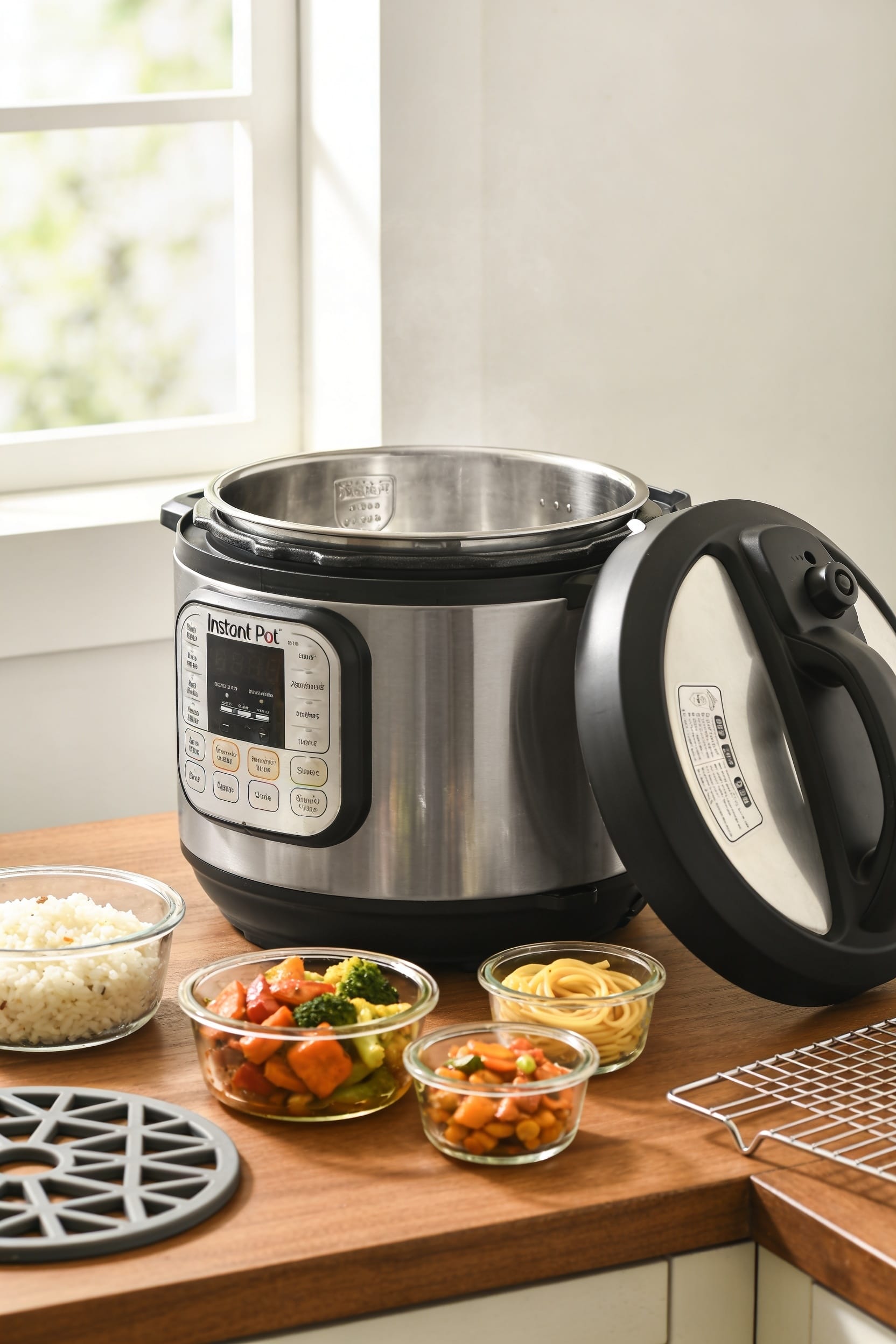
How to Reheat Leftovers in an Instant Pot

Look, the secret to Instant Pot leftovers that don’t taste like cardboard is all about steam and restraint. Position your trivet, add just enough water so it doesn’t touch your containers, then hit Steam for five minutes—or less for delicate stuff like pasta. Natural release for ten minutes, then quick-release the rest. Fork-test for doneness, finish with fresh herbs and olive oil, and you’re golden. Stick around if you want the breakdown on avoiding watery disasters and reheating multiple dishes at once.
Key Takeaways
- Position a trivet in the inner pot and add at least one cup of water to enable proper steam circulation for reheating.
- Use tempered glass containers like seven-cup Pyrex bowls to safely reheat leftovers while maintaining food texture and preventing direct water contact.
- Set cook times based on food type: five minutes for most dishes, two to three minutes for delicate items, one to two minutes for noodles.
- Use the Steam function to preserve original texture and quality; consider Sauté for crisping or Slow Cook for forgiving, longer reheating.
- Allow natural release for ten minutes, then quick-release remaining pressure; test doneness and finish with fresh herbs, citrus, salt, and olive oil.
Prepare Your Instant Pot With Water and the Trivet
Before you even think about dumping your leftovers into the Instant Pot, you’ve got to set up the machine properly—and I’m not talking about just hitting a button and hoping for the best. First, position the trivet at the bottom of the inner pot. This little metal rack does the heavy lifting by elevating your containers above the water, which is essential because steam needs that space to circulate properly.
Now measure your water. You’ll need at least one cup—that’s your baseline. If you’re reheating multiple stacked containers or dealing with particularly cold food, bump it up slightly. The water level should never creep above the trivet, though, or you’ll end up with soggy, overcooked leftovers instead of the perfectly warmed meal you’re after.
Choose Heat-Safe Containers for Your Instant Pot
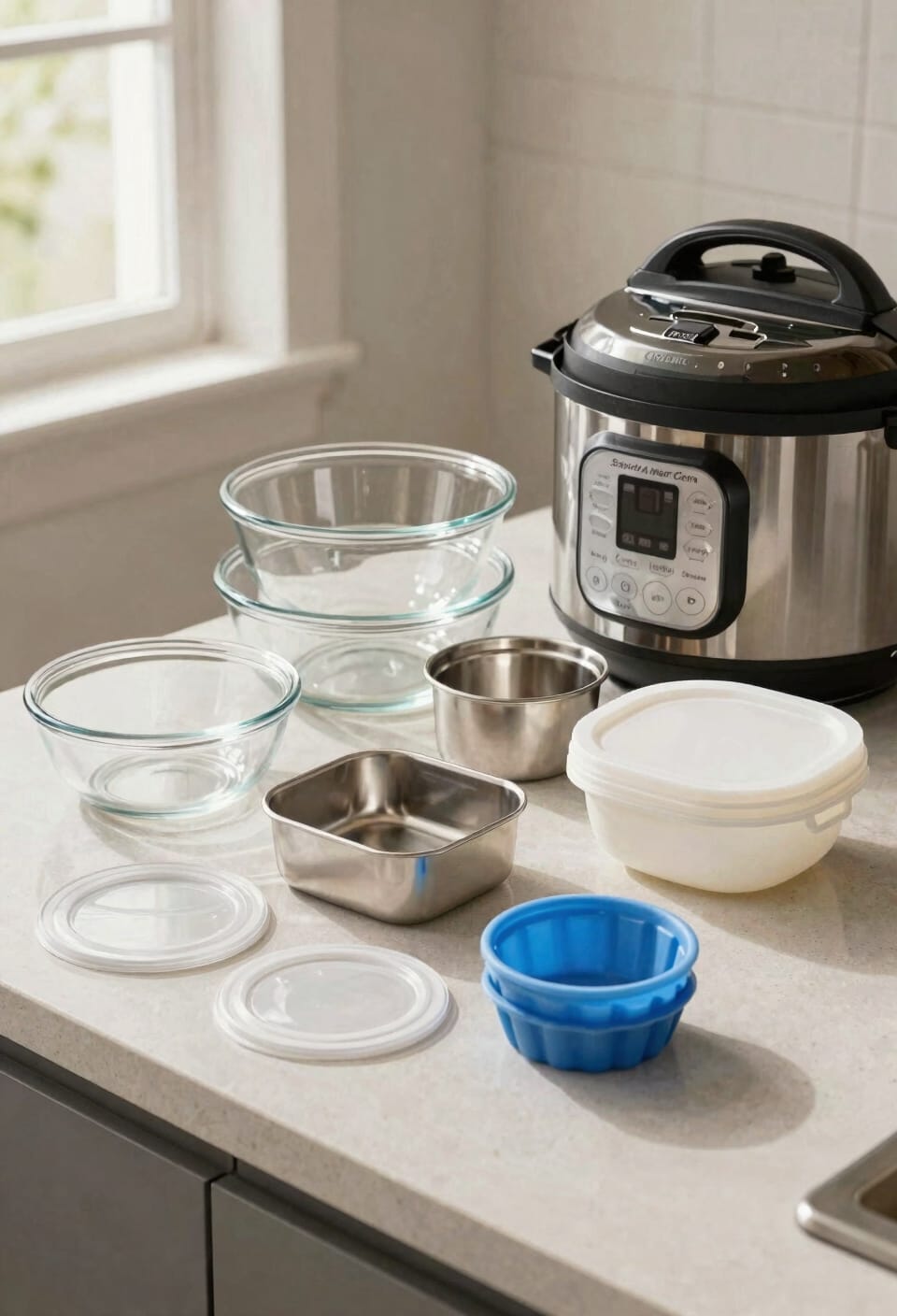
Now that you’ve got your water situation sorted and the trivet sitting pretty at the bottom of your pot, it’s time to think about what you’re actually reheating your leftovers *in*—because dumping them directly onto that trivet is a one-way ticket to a mess you don’t want to clean up.
I’m talking tempered glass containers or heatproof bowls here. They’re your best friends for the “pot in pot” method. Seven-cup pyrex bowls work beautifully if you’re reheating larger portions, and honestly, they’re indestructible. Silicone inserts can work too if you’ve got them, though I find glass more reliable for moisture control.
Stack multiple containers if you need to—just make sure nothing touches the lid. The whole point is steam circulation, and you need that airflow happening.
Set Instant Pot Cook Times by Food Type
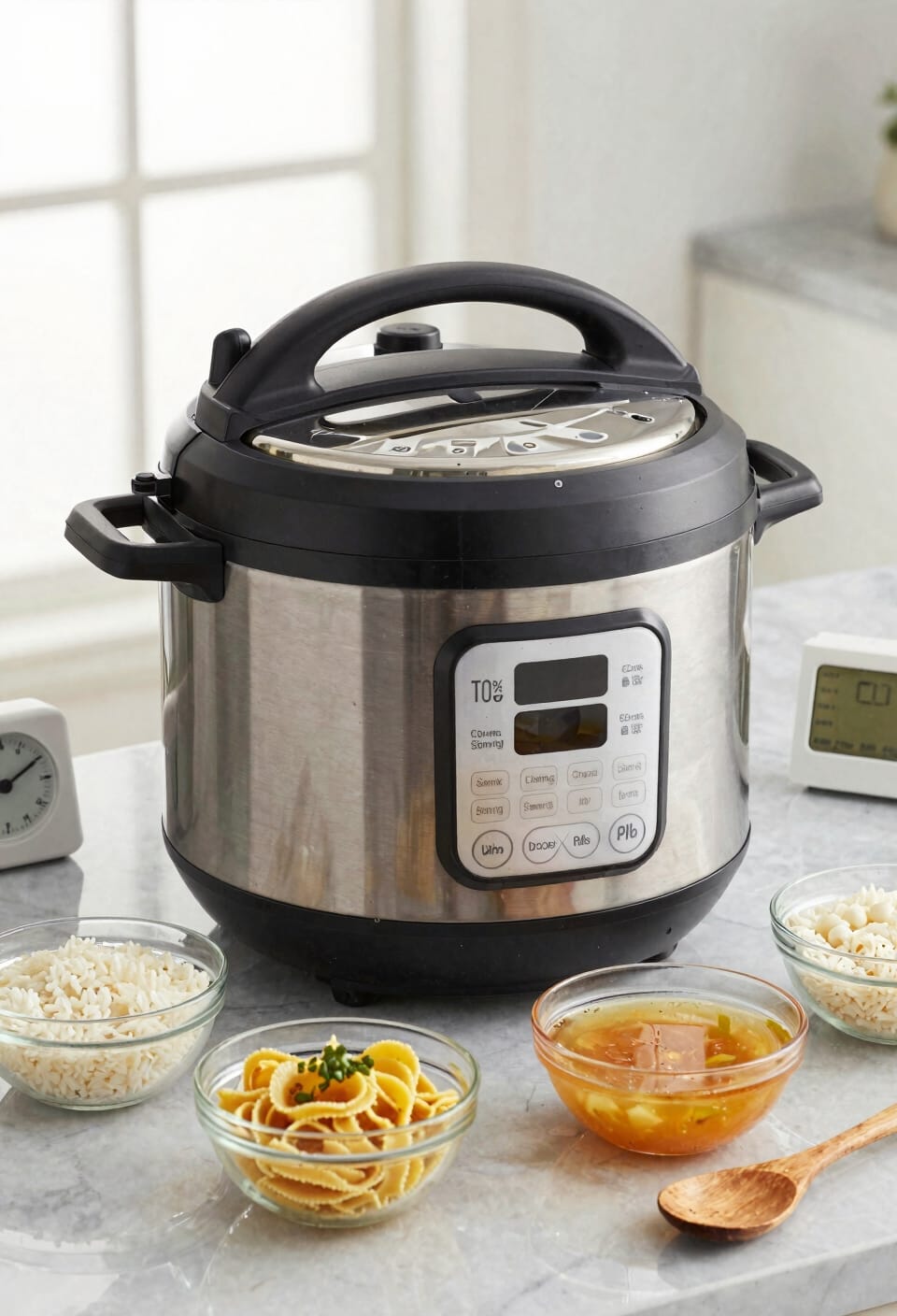
Once you’ve got your containers nestled on that trivet, the real game-changer is knowing how long to actually cook the thing. Most reheated dishes need about five minutes on Steam, but here’s where it gets interesting: delicate stuff like pasta or vegetables? Knock that down to two or three minutes. Noodles are even quicker—seriously, just one or two minutes. Larger casseroles demand more patience, maybe ten minutes or longer on high pressure. Container sizes matter too; bigger dishes need extra time. Temperature adjustments help fine-tune results depending on what you’re working with. The trick is starting conservative, then adding another two or three minutes if something needs more heat. You’d rather reheat twice than serve cold chicken.
Pick the Right Function: Steam, Sauté, or Slow Cook
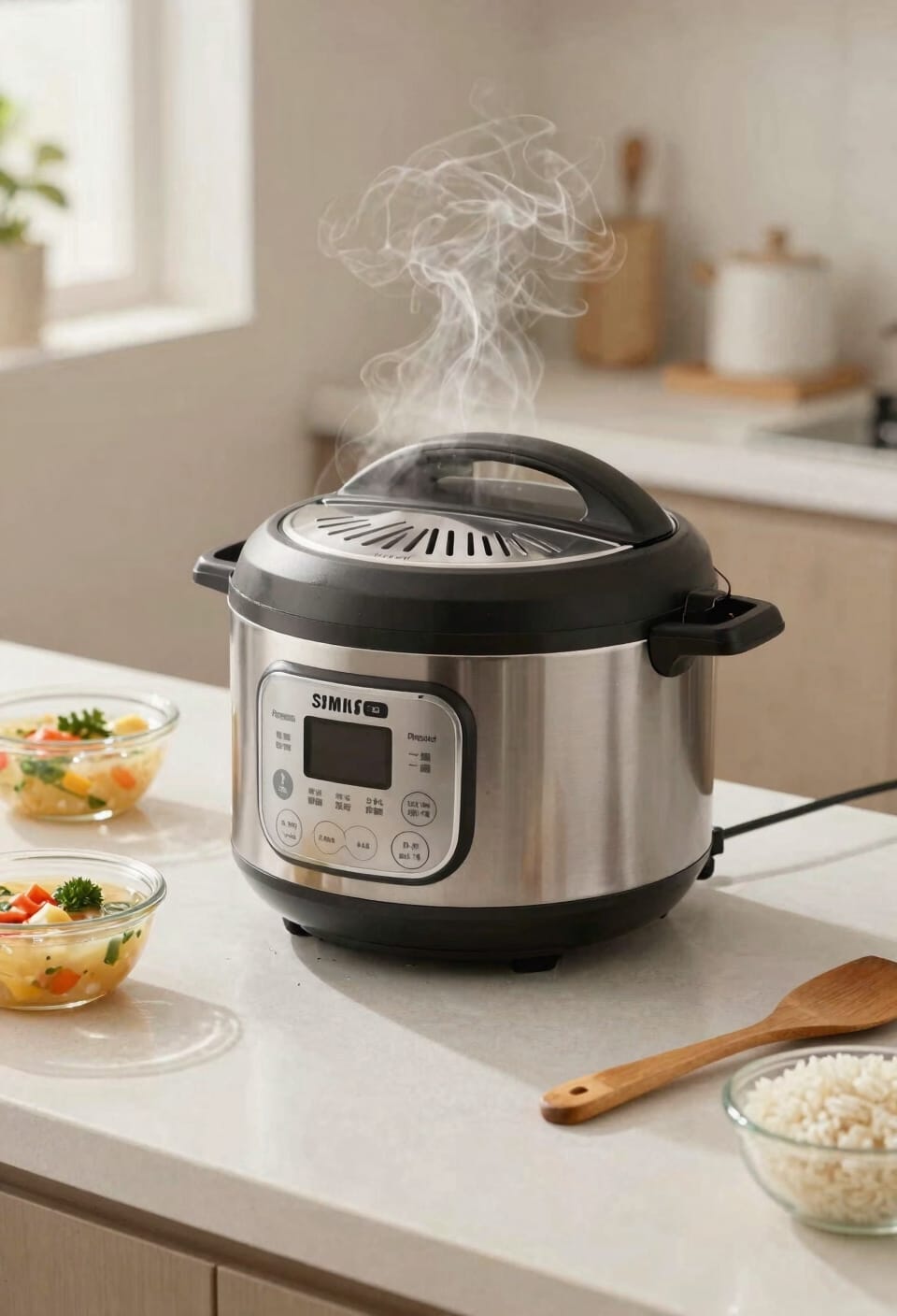
The function you choose can make or break your reheating game, and I’m not being dramatic—different foods genuinely need different approaches. Steam’s your go-to for texture preservation; it gently warms most leftovers without drying them out. I use it for vegetables, proteins, and casseroles. Sauté works when you’ve got time and want direct heat—it’s perfect for fried rice or anything needing a crispy edge. For function comparison, think of slow cook as your safety net; it’s forgiving and mimics traditional reheating, though it takes longer. Honestly, steam wins most days. It’s consistent, reliable, and respects what you’ve already cooked. Pick steam unless you’ve got a specific reason not to.
Manage Pressure Release and Check for Doneness
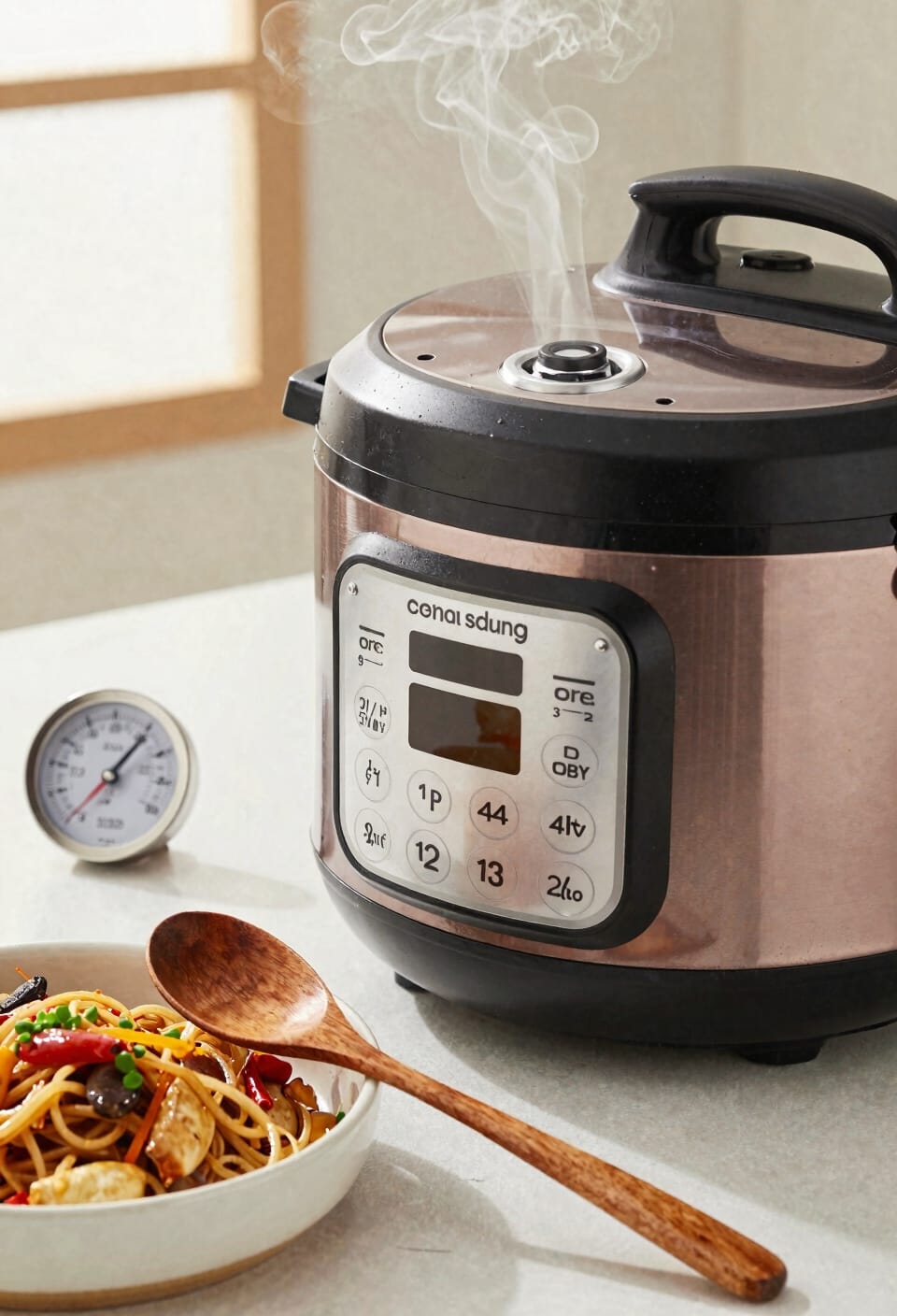
After you’ve picked your function and let the Instant Pot do its thing, you’ve got to know when to stop the party—and that’s where pressure release comes in. I’m a fan of natural release for about ten minutes because it keeps gently heating your food without shocking it. Then I quick-release whatever pressure’s left. Once that float valve drops, you’re safe to open the lid. Now for the doneness probe—just grab a fork and test it. If your leftovers still feel cold in the middle, no shame in running another two or three minutes. Give everything a gentle stir, let it rest for a minute, and you’re golden.
Restore Flavor With Finishing Touches
Don’t let perfectly good leftovers leave the Instant Pot tasting like sad, steamed disappointment—this is where you actually make them taste like food again. A handful of fresh herbs scattered over the top works wonders. I’m talking cilantro, parsley, basil, whatever you’ve got hanging around. Now, zesty citrus changes everything. A squeeze of lemon or lime juice brightens up even the most tired-looking casserole faster than you’d think possible. Salt and a glug of good olive oil round things out nicely. Let everything rest for a minute so the steam dissipates and flavors actually meld instead of just sitting there awkwardly. You’ve earned this comeback moment.
Fix Common Reheating Issues (Watery, Cold, or Overcooked Food)
Even with the best intentions, reheating leftovers in an Instant Pot can go sideways in a few predictable ways—your food ends up swimming in water, still cold in the middle, or somehow both mushy and tough at the same time, which shouldn’t be physically possible but here we are.
For moisture management, use less water than you think you need. I’d start with just a tablespoon per cup of food rather than the full cup. If your dish finishes watery, that’s usually too much steam trapped in there.
Cold spots happen when you’re impatient. Natural pressure release for ten minutes makes a real difference—it gently continues cooking while pressure equalizes. For texture adjustment on overcooked food, stick to two to three minutes maximum next time. You’re reheating, not recreating.
Reheat Multiple Dishes in One Pot
Stacking multiple dishes in your Instant Pot is where things get genuinely convenient—you’re basically getting a full meal ready while the machine does the work, and I’m here for that kind of efficiency. Here’s the thing: your stack arrangement matters. Place heartier dishes on the trivet’s bottom tier, then layer delicate foods above them. This setup creates natural temperature zones—the lower containers get more direct heat while upper ones steam gently. Use heatproof glass containers or 7-cup pyrex bowls that fit your pot’s dimensions. Set your cooking time based on whatever needs the longest—usually 5-10 minutes on high pressure handles most combinations. Just keep water below the trivet level so nothing gets waterlogged. You’re effectively meal-prepping with science backing you up.
Store Leftovers for Easy Reheating Later
Planning your storage strategy from day one transforms reheating from a guessing game into something actually reliable. I’ve learned the hard way that how you store matters as much as what you’re storing.
Label containers with both the dish name and date—trust me, mystery leftovers from three weeks ago aren’t worth the gamble. Vacuum seal what you can; it prevents freezer burn and keeps food fresher longer. For items destined for your Instant Pot, flat containers work better than oddly shaped ones since they’ll fit on your trivet without playing Tetris.
Glass containers are your friend here. They’re microwave-safe for quick checks and won’t absorb odors or stains. Portion things reasonably too. You’ll actually reheat smaller portions instead of letting massive containers go to waste in the back of your fridge.
Frequently Asked Questions
Can I Reheat Frozen Leftovers Directly in the Instant Pot Without Thawing First?
I’d recommend thawing frozen meals first for best results, though you can reheat them directly using the Steam function. You’ll need extra water and longer cooking times—typically 10+ minutes—for direct steaming of very cold food.
How Long Does the Instant Pot Take to Build Pressure Before Cooking Actually Begins?
I’ve found that your Instant Pot needs approximately 10 minutes for its pressure time and warm up duration before the actual cooking begins. This warm up duration varies slightly depending on the amount of liquid and food temperature you’re working with.
What’s the Difference Between Using Steam Function Versus Manual Function for Reheating?
I find steam vs. manual offers distinct texture differences. Steam function gently warms delicate foods like pasta and vegetables, preserving their texture. Manual function applies direct heat at higher temperatures, better for firmer dishes needing thorough reheating.
Is It Safe to Open the Instant Pot Lid Immediately After Cooking Finishes?
No, I’d love to tell you it’s safe, but you’ll want to wait for steam venting first. I recommend waiting until the float valve drops, then performing a quick release for safety before opening that lid.
How Do I Know When My Reheated Food Is Thoroughly Heated Through to Temperature?
I’d recommend using a thermometer to check the internal temperature—you’re aiming for 165°F. I stir midway, test multiple spots, and probe through the thickness. Look for steam rising, and I rest it covered before serving.
Conclusion
Look, reheating leftovers in your Instant Pot beats microwaving them every time—you’ll get better texture, more even heat, and honestly, it’s not much slower. I’ve learned that a little prep work up front saves you from watery disasters later. Remember: good leftovers make good tomorrows. Master these techniques and you’ll actually look forward to that container hiding in your fridge instead of dreading it.