As an Amazon Associate, we earn from qualifying purchases. Some links on this site are affiliate links at no extra cost to you. Our recommendations are based on thorough research and editorial judgment.

Instant Pot Preheat Time: Why It Varies and What to Expect

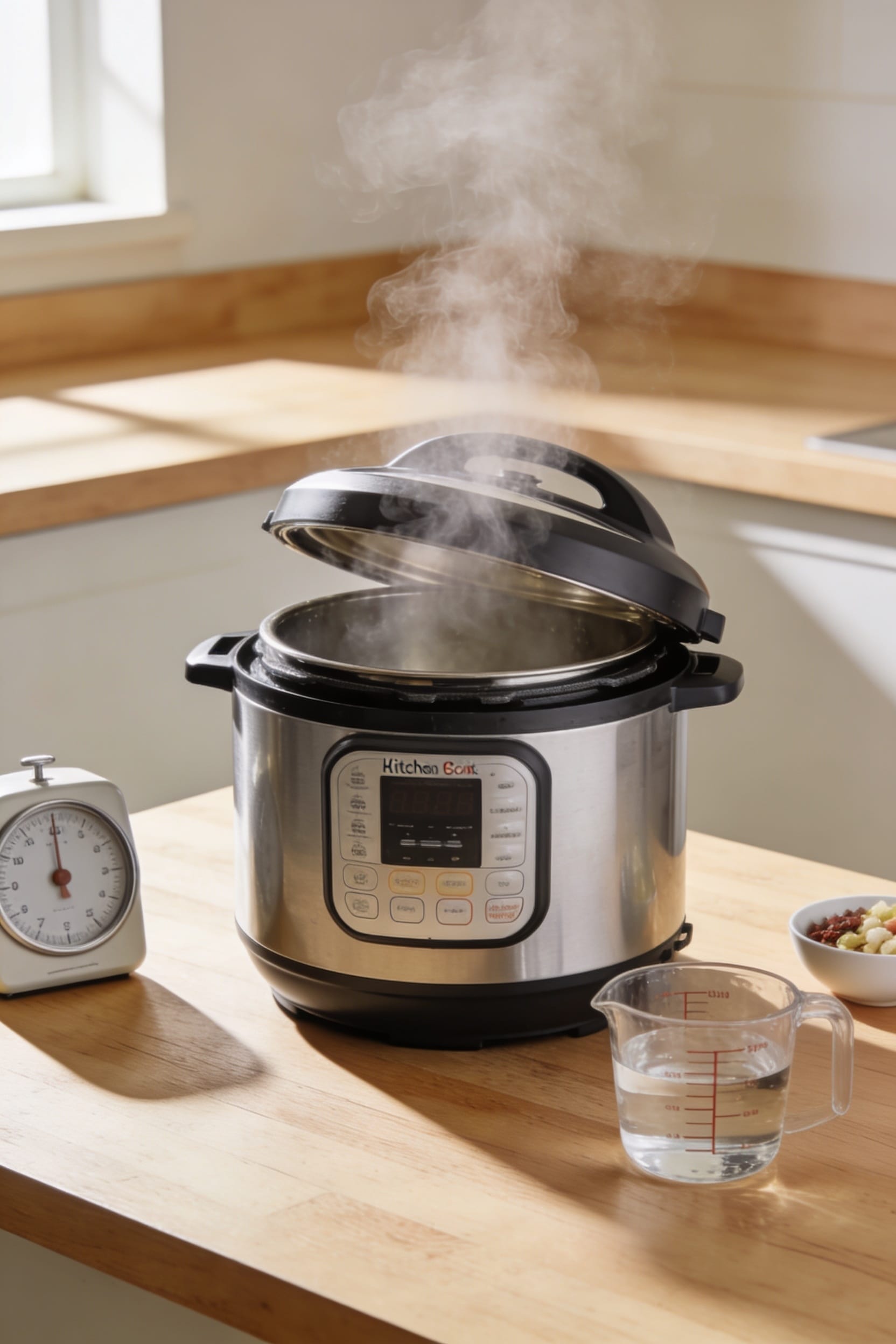
Look, your Instant Pot’s preheat time typically runs 10 to 20 minutes depending on your model and how much liquid you’ve loaded in. The floating valve popping up signals you’re actually cooking now—that’s your green light. More liquid means longer preheating since it takes more heat energy to pressurize, and a packed pot can easily stretch toward 15-20 minutes. Your specific model matters too; some newer ones cut that down considerably. The real kicker? That preheat timer doesn’t include natural release afterward, which can add another 30-45 minutes to your total time commitment.
Key Takeaways
- Preheat typically takes 10-20 minutes depending on your Instant Pot model and the amount of liquid inside.
- The floating valve popping up signals pressure is reached; this visual cue indicates cooking is about to begin.
- Increased liquid volume lengthens preheat time due to greater heat transfer requirements and thermal mass buildup.
- Different models heat at varying speeds; Duo Crisp models preheat faster than standard Duo models at around 5 minutes.
- Natural release after cooking can take 30-45 minutes, so total time commitment extends well beyond the display timer.
The Typical Preheat Range: What to Expect
When you’re standing there with your Instant Pot all loaded up and ready to go, here’s the thing—that machine isn’t cooking yet, it’s just getting warmed up. I’m talking about the preheat phase, which typically runs anywhere from 10 to 20 minutes depending on your model and how much liquid you’ve added. Most of my pressure cooking happens around the 10.5 to 11 minute mark with standard water amounts. That floating valve pops up when you’ve hit pressure, which is your signal that actual cooking begins. Now, preheat troubleshooting gets easier once you understand that energy consumption during this phase is normal—your pot’s working hard to pressurize. Plan ahead by starting prep work while it heats. You’ll nail your timing eventually.
How to Know Your Instant Pot Has Finished Preheating
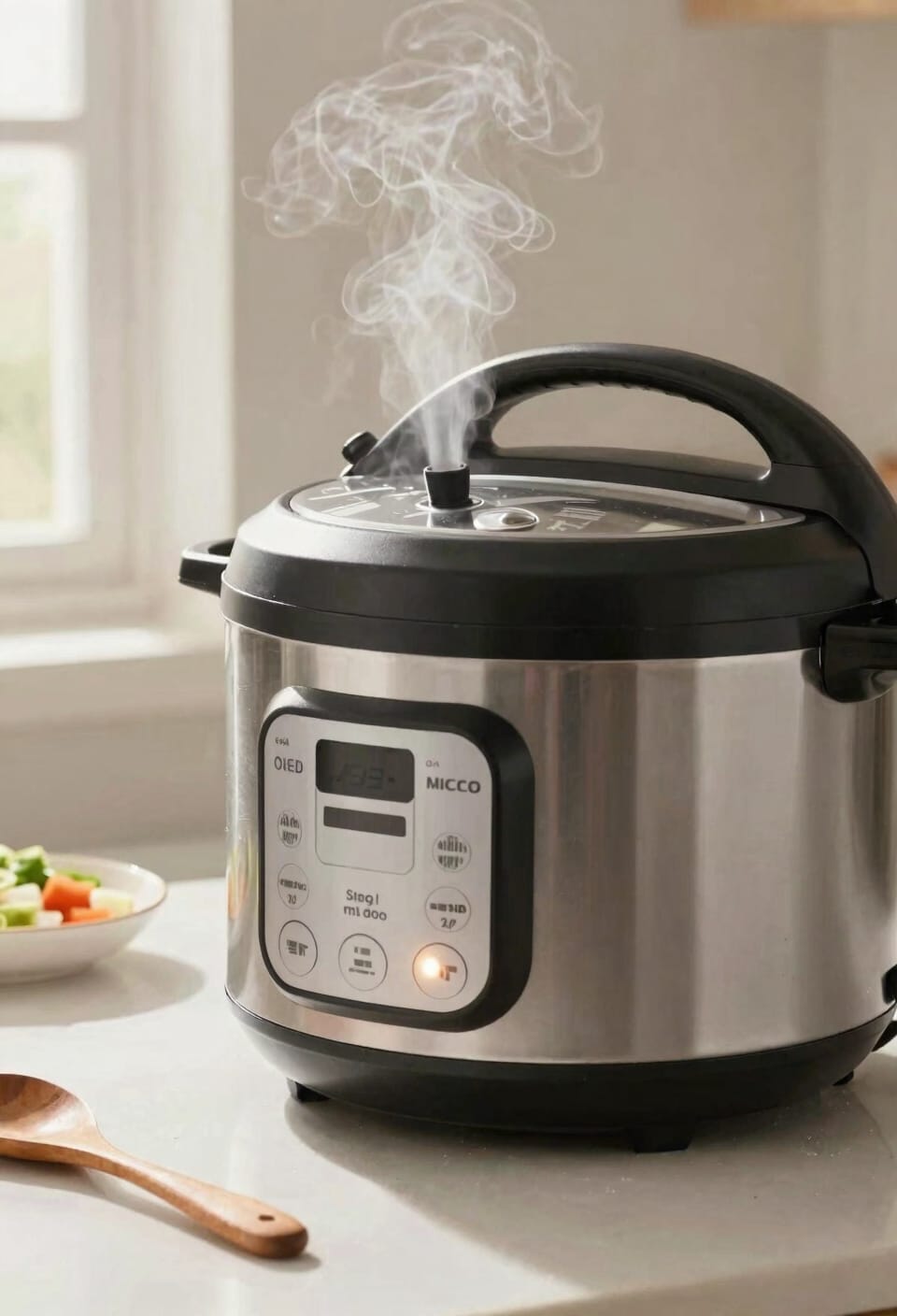
You’ll catch on to the signals pretty quick once you know what you’re looking for. The main thing I watch for is the floating valve—that little pin on top that pops up when pressure’s been reached. It’s honestly hard to miss. You’ll also notice the indicator light blinks during the preheat phase, giving you a visual confirmation that something’s actually happening in there. Once preheating finishes, that countdown timer appears on the display, which signals the cooking cycle’s officially begun. I keep my display visible throughout so I’m not guessing what stage we’re in. Between the valve pop, the blinking light, and that timer kickoff, you’ve got plenty of confirmation that your pot’s ready to work.
Why Liquid Amount Extends Your Preheat Time
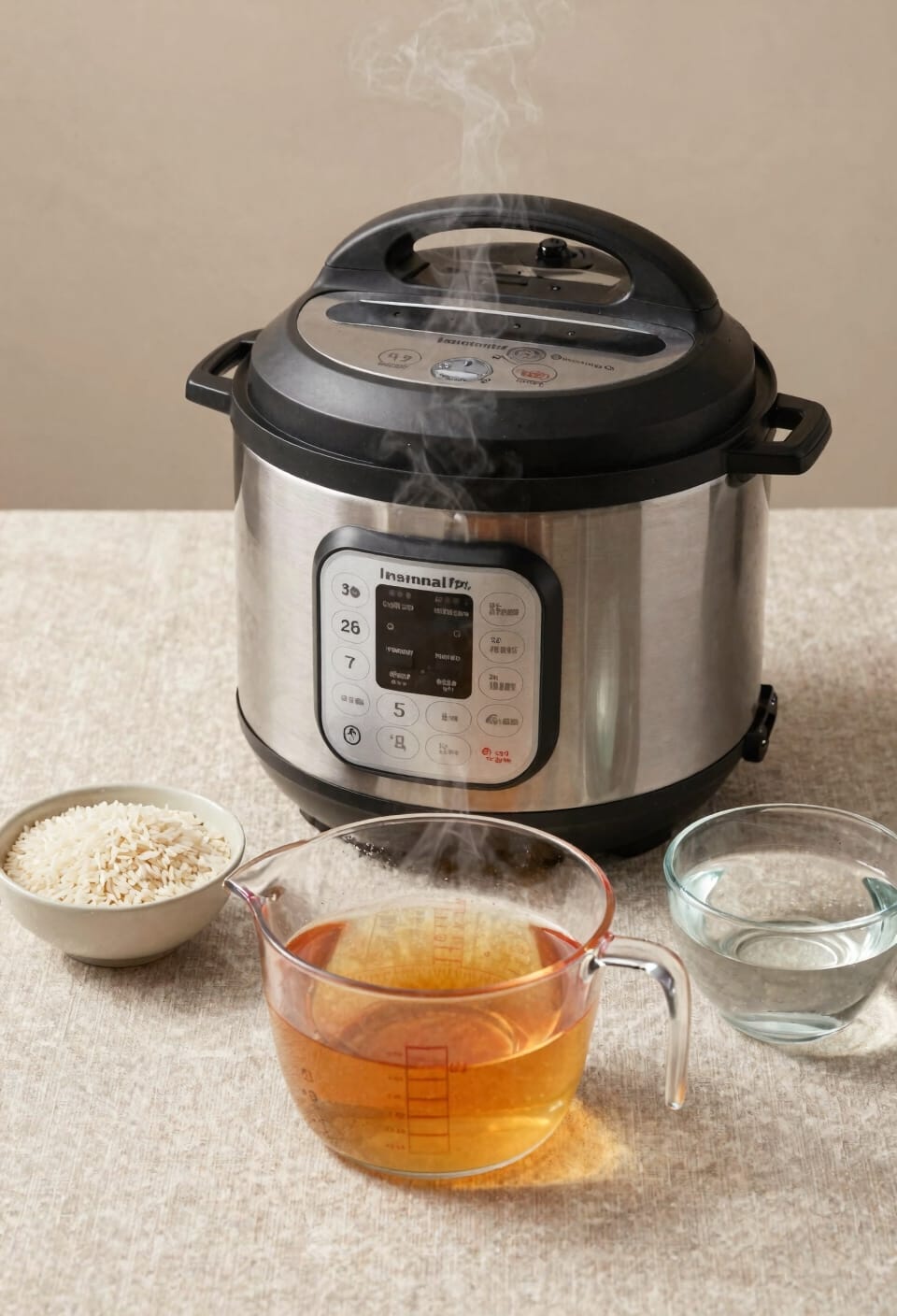
Adding more liquid to your Instant Pot is like inviting more guests to a party—it takes longer for everyone to get comfortable and settled. Here’s the thing: more liquid means more time for heat transfer to occur throughout the pot. You’re not just heating water; you’re dealing with liquid viscosity, ingredient temperature variations, and evaporation rate all working against you simultaneously. When I tested with 4 cups of water, it took nearly 11 minutes just to reach pressure. That’s because the heating element has to warm every drop before your pot can pressurize. Less liquid? Faster preheating. More liquid? You’re looking at extended wait times. Plan accordingly, and you’ll stop feeling like preheating takes forever.
How Your Instant Pot Model Affects Preheat Speed
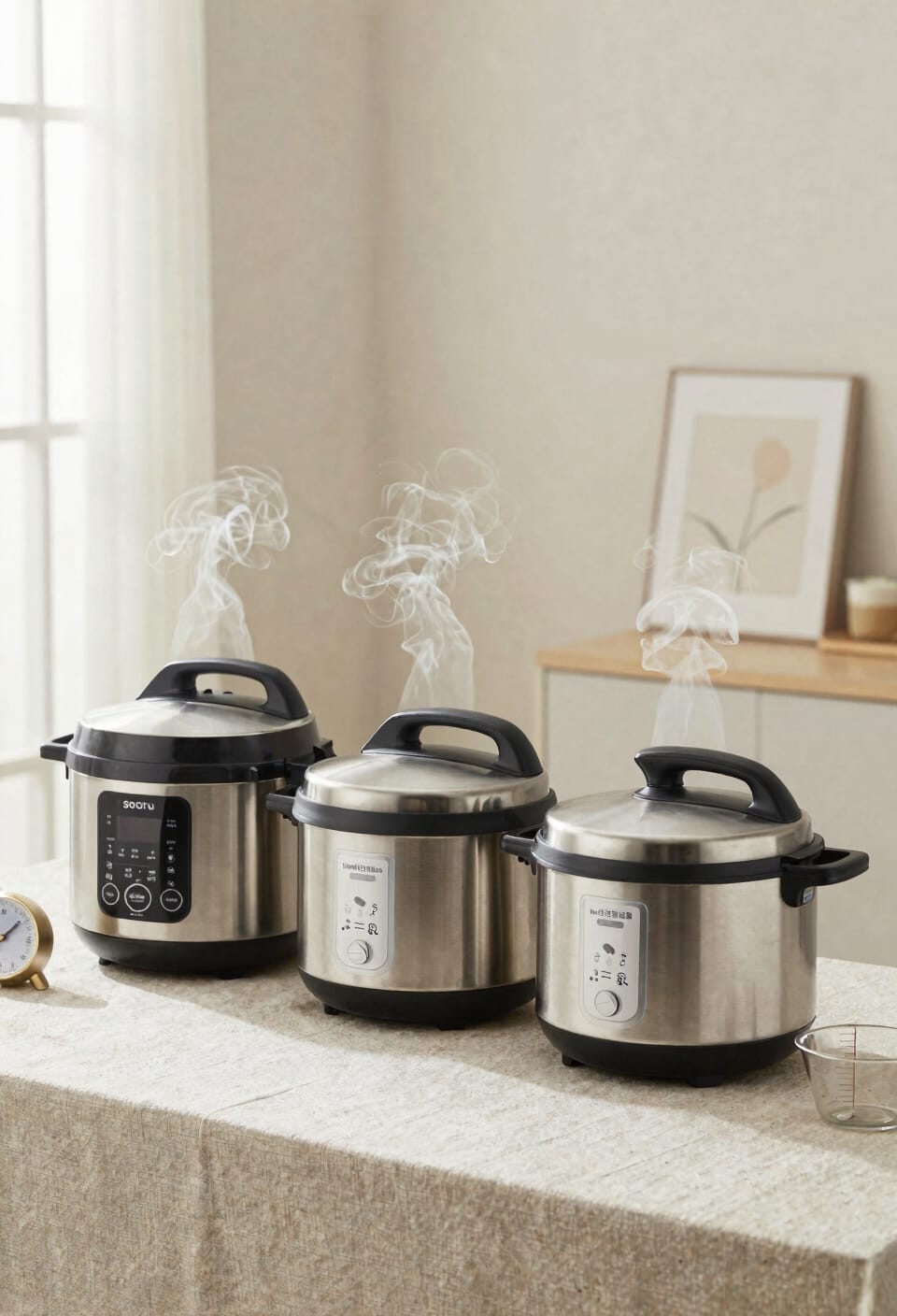
Not all Instant Pots are created equal—and that’s where things get interesting. The model variation between your unit and your friend’s can mean a difference of several minutes in preheat time, which honestly matters when you’re hungry.
Here’s the thing: different heating elements work at different speeds. Your standard Duo might take 10 to 11 minutes to build pressure, while a Duo Crisp air fryer cuts that down to around 5 minutes. That’s not a small gap. The heating elements themselves differ in power and efficiency depending on which model you own, which means you can’t just copy someone else’s timing expectations and call it a day.
Look, knowing your specific model helps you plan realistically instead of standing around wondering what’s happening inside that pot.
Why a Full Pot Slows Pressurization
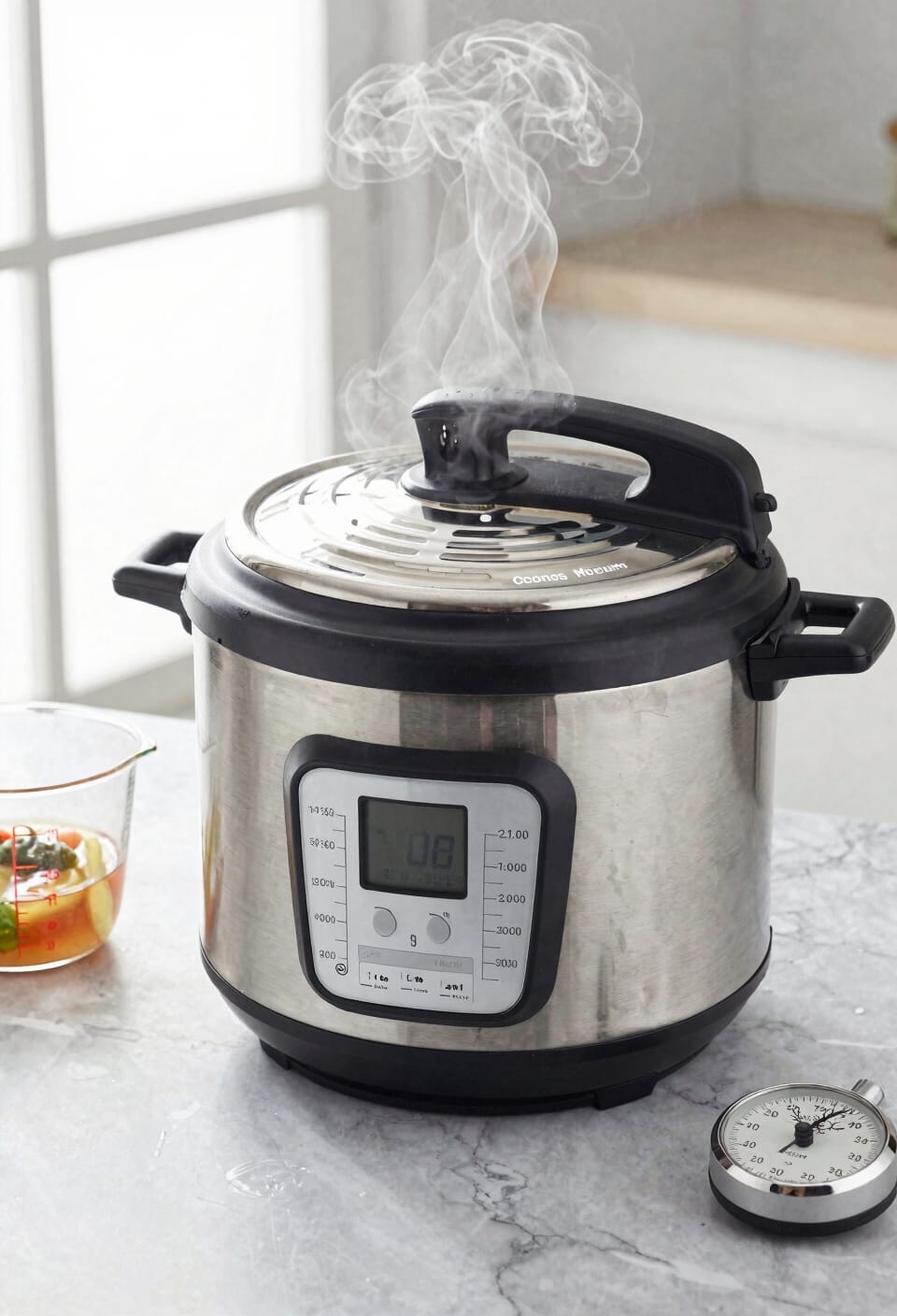
When your pot’s stuffed with ingredients, it takes longer to reach pressure because there’s simply more thermal mass to heat up. I’m talking about all that food, liquid, and cookware absorbing energy that’d otherwise go straight into pressurization. The heating element’s working harder, and heat dissipation increases across a fuller pot.
Think of it this way: a pot with 4 cups of water might take 11 minutes to pressurize, but load that same pot with vegetables, meat, and broth? You’re looking at pushing toward 15 or even 20 minutes. The physics are straightforward—more stuff means slower heating.
That’s why I always factor fullness into my planning. A packed pot demands patience. You’ve gotta account for that extra time upfront, or you’ll find yourself wondering why dinner’s running late.
Natural Release Time After a Full Pot
Now here’s where patience becomes your actual cooking ingredient: after you’ve spent 15, 20, maybe even 25 minutes getting that stuffed pot up to pressure, the natural release on the back end is going to demand just as much—or honestly, sometimes more. I’m talking 30 to 45 minutes, sometimes pushing a full hour when you’ve really loaded that pot down.
Here’s why: temperature gradients inside create uneven cooling. The liquid near the heating element stays hotter longer, so pressure drops slowly. Safety considerations matter here too—rushing a full pot’s release risks sputtering liquid and burns. Turn off Keep Warm to speed things up slightly, but don’t force it. Your patience now prevents disasters later.
Stop Confusing Preheat Time With Total Cooking Time
This is where I see folks trip themselves up the most: they glance at that 10-minute preheat time, add it to their 20-minute cook time, and suddenly they’re telling dinner guests to arrive in half an hour—only to have the Instant Pot still hissing away 45 minutes later.
Those misleading timers don’t account for natural release, which can stretch another 30 to 45 minutes depending on how full your pot is. You’re looking at a total commitment that’s way longer than what the display promises.
Here’s the thing: user expectations crash hard against reality when nobody explains this upfront. Plan for the whole timeline, not just the numbers flashing back at you. Your guests—and your sanity—will thank you.
Quick Release vs. Natural Release: Which Speeds Up Your Cycle
So you’ve got a handle on the preheat confusion now—good. Now here’s the thing: what happens after cooking matters just as much. Quick release is your speed demon—you manually turn the steam venting valve and pressure drops fast, sometimes in minutes. Natural release takes longer, anywhere from 30 to 45 minutes depending on how full your pot is, but it’s gentler on food and requires fewer safety precautions since you’re letting pressure equalize naturally. I’ll be honest: quick release is faster overall, but it can make certain foods tough or splatter everywhere. Natural release? Slower, but your pot roast stays tender. Your call depends on what you’re cooking and how patient you’re feeling.
Start Your Pot While Prepping to Eliminate Wait Time
During your prep work, you’ve got a golden opportunity that most people miss: start your Instant Pot preheating while you’re chopping vegetables, measuring out ingredients, and getting everything else ready. I’m serious—this is multitask cooking at its finest. You hit that power button, set your pressure level, and boom, you’ve got 10-20 minutes to handle your mise en place without staring at a machine doing nothing.
Here’s the thing: that preheat time isn’t wasted anymore. By the time you’ve finished prepping, your pot’s already pressurized and ready to go. No standing around twiddling your thumbs. Start prepping, let the pot do its thing simultaneously, and suddenly your total cooking time feels way shorter. It’s not magic—it’s just smart planning.
Frequently Asked Questions
Does the Sealing Position of the Lid Affect How Quickly My Instant Pot Preheats?
Yes, I’ve found that your lid’s sealing position directly impacts preheat speed. When you don’t align it properly, it won’t build pressure efficiently. I’d also check your gasket condition—a worn one compromises the seal, markedly slowing preheating.
Will Keeping the Keep Warm Function on Impact My Total Cooking and Release Time?
keeping Keep Warm on actually slows your natural release time. You’ll use more energy for warm holding, which delays cooling and can impact flavor. I’d recommend turning it off for faster release.
Can I Open the Lid During Preheating Without Affecting the Pressure Buildup Process?
I’d strongly advise against opening the lid during preheating—you’ll lose pressure and restart the entire process. Watch the visual indicators like the floating valve instead; it’ll pop when you’ve reached pressure, eliminating the need for interruption.
How Do I Know if My Pressure Pin Is Functioning Correctly During Preheating?
I’d tell you to keep your eyes peeled on that pressure indicator—it’s the real deal. Your float valve should rise smoothly during preheating, signaling proper function. If it doesn’t pop up, something’s amiss.
Does the Type of Liquid I Use Change the Preheat Duration Significantly?
I’ve found that while water quality minimally impacts preheat time, alcohol content does matter—liquids with higher alcohol content take slightly longer to pressurize than plain water, extending your overall preheat duration.
Conclusion
Look, I’ve basically spent approximately seventeen years waiting for my Instant Pot to pressurize, and honestly? I’m not even mad about it anymore. Now that you know preheat time‘s wildly unpredictable—depends on liquid, model, and whether Mercury’s in retrograde or whatever—you can stop timing it like some culinary maniac. Start prepping while it does its thing. Your sanity (and dinner) will thank you.