As an Amazon Associate, we earn from qualifying purchases. Some links on this site are affiliate links at no extra cost to you. Our recommendations are based on thorough research and editorial judgment.

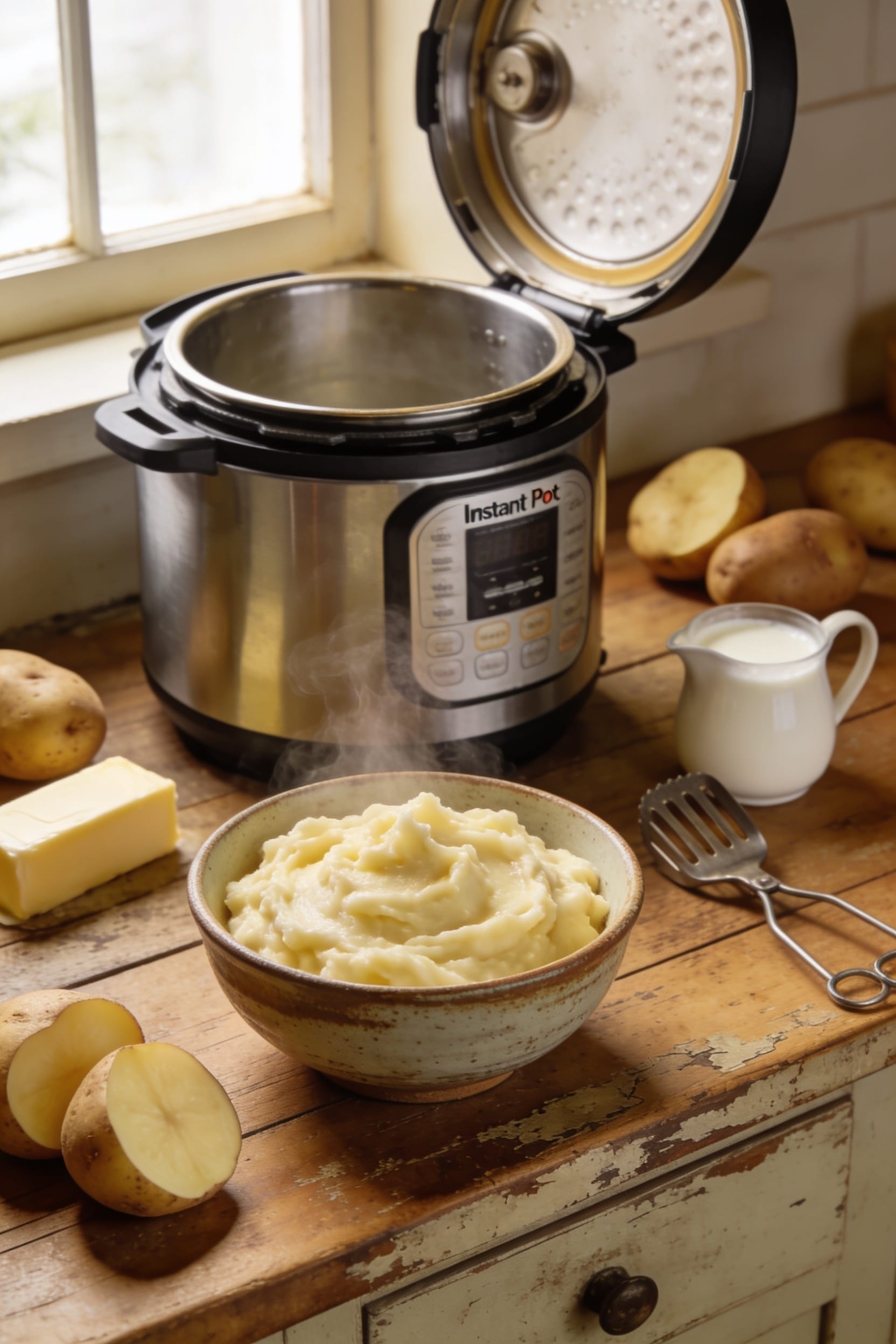
How to Make Mashed Potatoes in an Instant Pot

All right, here’s the thing: cut 2–4 pounds of potatoes into uniform chunks, then pressure cook ’em either boiled in 4–6 cups water for about 12 minutes or steamed with just 1 cup for 7–8 minutes—steaming keeps more starch, which means silkier mash. Quick-release when done, drain if you boiled them, then mash with butter first while they’re hot, adding milk gradually so you don’t end up with gluey potato paste. Season to taste, and you’ve got creamy results faster than the stovetop ever could deliver—but there’s definitely more nuance worth knowing.
Key Takeaways
- Cut 2–4 pounds of potatoes into uniform quarters or cubes for even cooking in your Instant Pot.
- Use the steaming method with 1 cup water and a steam basket to preserve starch for silkier mash.
- Cook on high pressure for 7–8 minutes, then apply 10-minute natural release followed by quick release.
- Add room-temperature butter first while potatoes are hot, then gradually incorporate milk to reach desired consistency.
- Use a potato masher for controlled texture; avoid forks or whisks to prevent gluey, overworked mashed potatoes.
Choose the Right Pot Size and Potato Type
Since you’re about to discover that making mashed potatoes in your Instant Pot is genuinely foolproof, let’s talk about the two things that actually matter upfront: your pot choice and which potatoes you’re throwing into it.
For most home cooks, a 6-quart Instant Pot handles 2–4 pounds of potatoes beautifully. That’s roughly 4–7 russets or Yukon Golds, which is honestly the sweet spot for feeding a normal-sized dinner table without drama.
Your pot choice matters because you need enough headroom for the liquid to reach pressure. Now, your skin preference shapes everything after that. Russets typically get peeled—they’re starchy and benefit from it. Yukon Golds? I leave the skin on half the time because they’re waxy and hold together better. Cut whatever you choose into uniform quarters so everything cooks evenly.
Prep and Cut Your Potatoes for Even Cooking
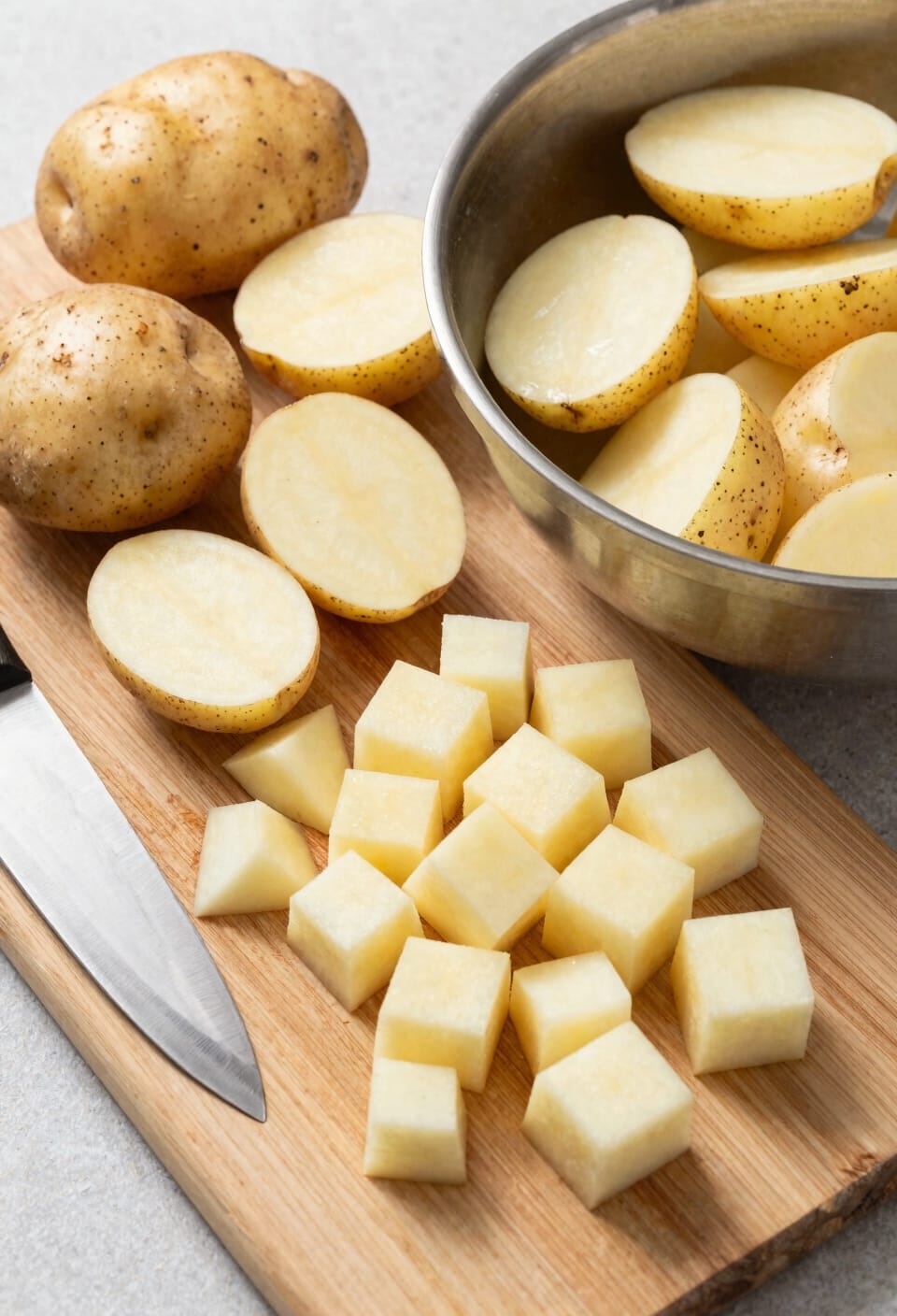
Now that you’ve got your potatoes picked out and your pot ready to go, the actual prep work is where a lot of people stumble—not because it’s hard, but because they overthink it. Grab a chef knife and cut your potatoes into evenly sized pieces, about quarters or large cubes. Uniform chunks cook at the same rate, which means no sad undercooked centers hiding next to mushy edges. Peel your russets first if you’re using them, then give everything a brief rinse under cold water. That quick rinse handles minor starch removal without requiring any elaborate soaking ritual. Pat them dry if you’re feeling fancy, though it’s not mandatory. You’re basically done—that’s honestly the hardest part of this whole operation.
Choose Your Instant Pot Cooking Method: Boiled vs. Steamed
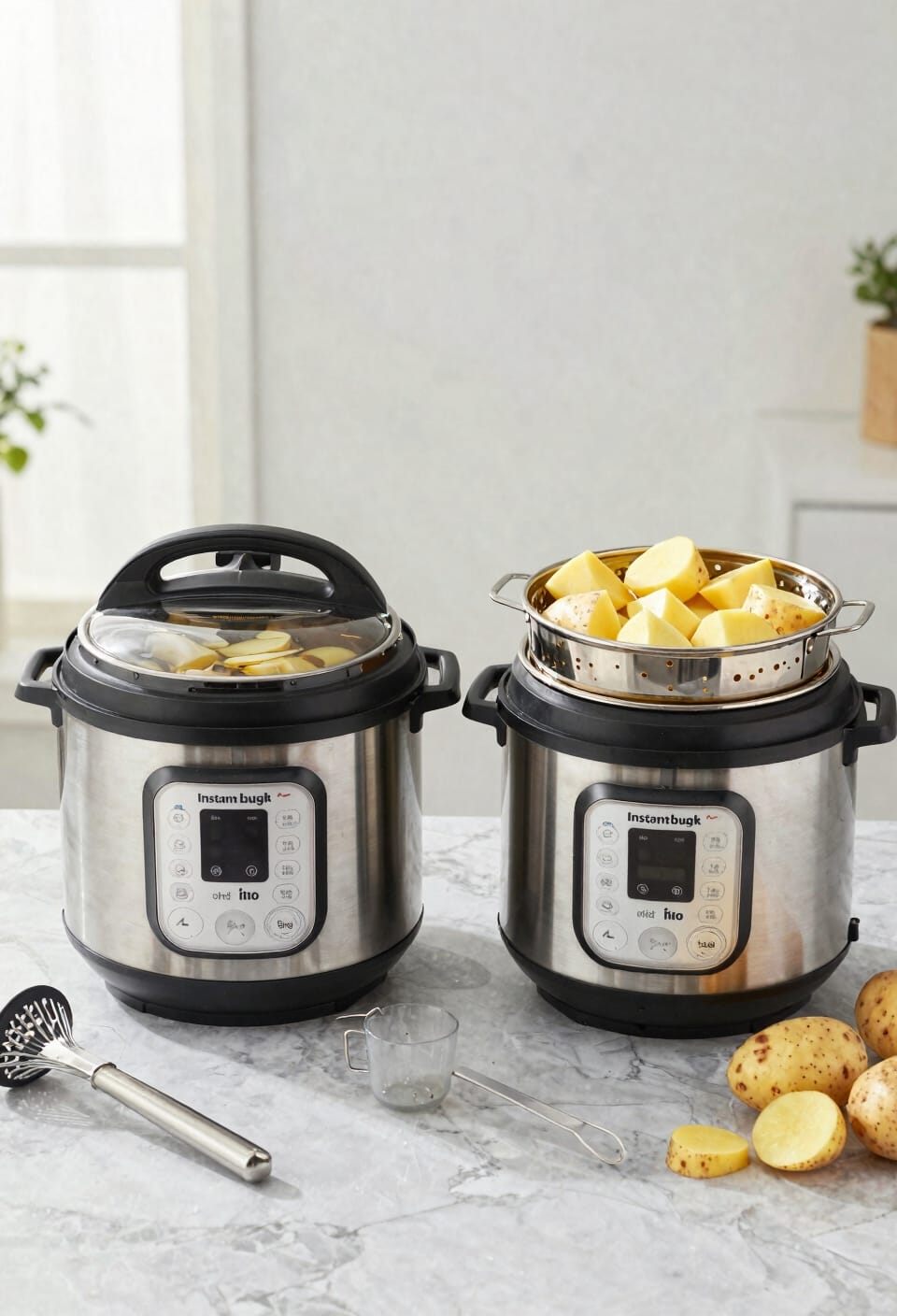
Once you’ve got your potatoes cut and rinsed, you’re staring down a fork in the road—well, more like a fork in the pot. Here’s the thing: you can either boil or steam, and honestly, both work. Boiling means submerging your potatoes in 4–6 cups of water, cooking them 8–12 minutes high pressure. It’s straightforward, and flavor infusion happens naturally through the liquid. Steaming uses just 1 cup water with a steam basket, cooking 7–8 minutes instead. I lean steamed because you lose less starch to the pot, keeping your mash silkier. Plus, steamed potatoes need less added liquid later. Either way, you’re golden. Pick whichever feels less fussy to you.
Set Pressure and Cook Time for Perfect Texture
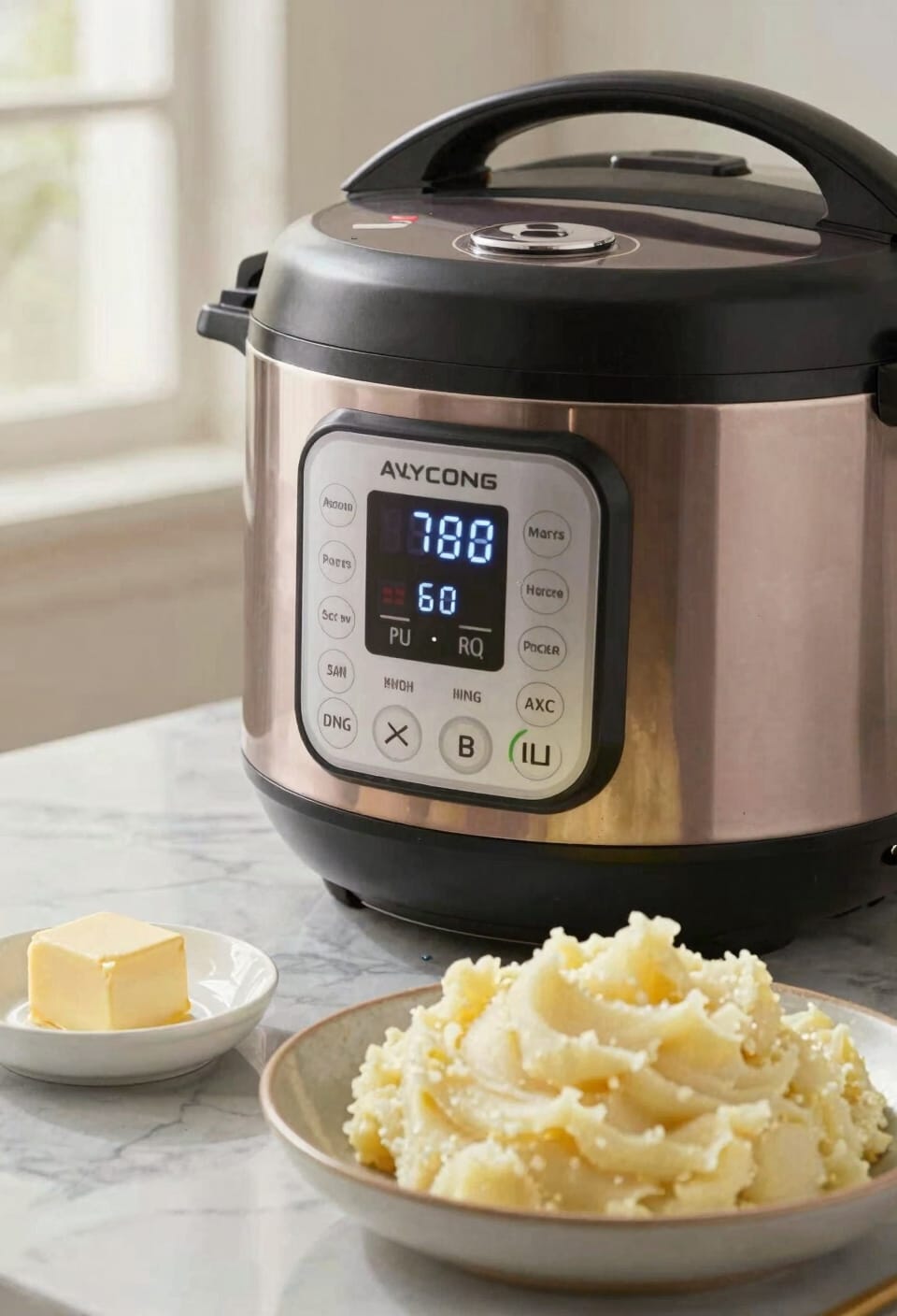
Your cooking method is locked in, so here’s where precision actually matters—the pressure level and timing are what separate fluffy, perfectly tender potatoes from either undercooked chunks or that gluey mess nobody wants. I’m talking high pressure across the board, no exceptions. For boiled potatoes, you’re looking at 12 minutes once that pressure regulator starts hissing. Steamed? Dial it back to 7–8 minutes. Now, release timing matters just as much. I tend toward quick release for boiled methods—get that steam out fast—but steamed potatoes benefit from a 10-minute natural release followed by quick release. That gentler approach keeps them from getting waterlogged. Here’s the thing: those few minutes of controlled release timing actually preserve texture better than you’d think.
When to Drain Your Instant Pot Potatoes
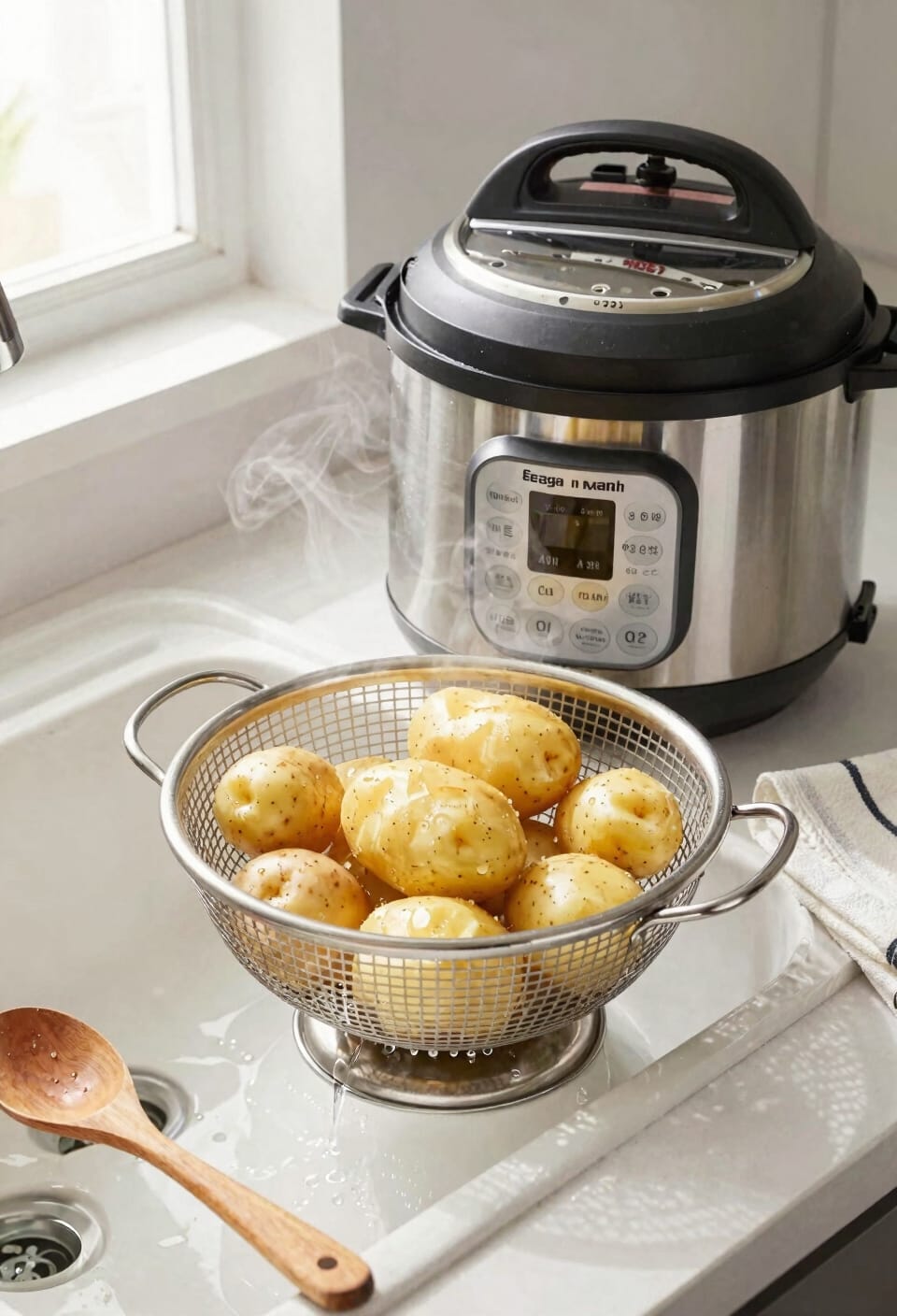
After you crack open that Instant Pot and the steam clears, you’ve got to make a split-second decision: drain or don’t drain? Here’s the thing—drain timing matters more than you’d think. If you’re going the traditional boiled-potato route, I’d drain them right away in a colander. You’ll lose some residual starch, sure, but you gain control over your mash’s final consistency. That starch can make things gluey if you’re not careful.
Now, if you went steamed or no-drain, you’re already ahead. Those methods use minimal liquid, so there’s barely anything to drain anyway. The residual starch stays put, keeping your potatoes fluffy and flavorful. Transfer directly to your mashing bowl or back to the pot. Either way, work fast while they’re hot—cold potatoes resist butter and milk like they’ve got something to prove.
Mash Your Potatoes to Your Desired Consistency
Grab a potato masher—not a fork, not a whisk, just a good old masher—and start breaking down those hot potatoes with steady pressure. You’ve got options here depending on your texture preferences. Want rustic and chunky? Stop mashing after a minute or two. Craving silky-smooth? Keep going, but don’t overwork them into gluey submission. Now, add butter first while everything’s hot, then gradually pour in your milk, tasting as you go. Once you’ve hit your sweet spot, you’re ready for serving suggestions: straight into a bowl for family dinner, or keep them warm in your Instant Pot on the “Keep Warm” setting if you’re juggling multiple dishes.
Add Butter, Milk, and Seasonings Gradually
Now that you’ve mashed your potatoes to your liking, the real magic happens—and it’s all about restraint. I start with butter at room temperature because cold butter’s harder to incorporate evenly, and nobody wants lumps masquerading as texture. I add it first while the potatoes are still hot, letting it melt in naturally. Then comes seasoning layering—and here’s where patience pays off. I don’t dump all the milk in at once. Instead, I add a splash, mash it through, taste it, then decide what comes next. Maybe more milk for creaminess. Maybe salt and pepper first. This gradual approach lets you actually control the final texture instead of ending up with potato soup. Trust me, your palate knows what it wants if you give it a chance to weigh in.
Fix Instant Pot Mashed Potato Problems
Sometimes despite your best intentions, you’ll open that Instant Pot lid to find something’s gone sideways—and that’s okay, because most mashed potato mishaps are totally fixable. Got lumpy rescue situations? Run them through a hand mixer or food mill; a potato ricer works too if you’re feeling fancy. For gluey mash, you’ve probably overworked things, but honestly, there’s no real fix—just learn and move on. Watery potatoes mean you used a boil method with too much liquid; next time, drain harder or try steaming instead. When it comes to seasoning balance, taste as you go and remember you can always add salt, but you can’t take it back. Start conservative and build from there.
Hold and Reheat Your Mashed Potatoes
If you’ve made a big batch of mashed potatoes and aren’t serving them right away, I’ve got good news—the Instant Pot is actually your best friend for keeping them warm without turning them into a sad, crusty mess. Use the Keep Warm function for up to about two hours. If you’re storing them in cooler storage, transfer to an airtight container and refrigerate for up to three days.
When reheating, stovetop reheating works best—low heat with a splash of milk, stirring occasionally until creamy again. You can also use the Sauté function in the Instant Pot itself, adding a bit of butter and milk. Microwave’s fine too if you’re in a rush, though you’ll want to stir frequently to avoid hot spots.
Frequently Asked Questions
Can I Make Mashed Potatoes in an Instant Pot Without Peeling the Potatoes First?
Yes, you can skip peeling. I’d recommend using Yukon Golds or red potatoes for skin-on texture and nutrient retention. They’ll cook just fine unpeeled in your Instant Pot, giving you rustic, flavorful mashed potatoes.
What’s the Difference Between Using Water Versus Vegetable Broth for Cooking Potatoes?
I’ll tell you straight: broth beats water for flavor infusion and nutrient retention. Vegetable broth adds depth and richness your potatoes won’t get from plain water, making every bite taste like someone truly cared about the meal.
How Long Can I Keep Mashed Potatoes Warm in the Instant Pot Before Serving?
I’d recommend keeping your mashed potatoes warm on the “Keep Warm” function for up to 1–2 hours. This holding time guarantees consistent temperature control without overcooking or drying them out further.
Can I Use a Hand Mixer Instead of a Potato Masher for Creamier Results?
I’d recommend using a hand mixer for creamier results, but you’ll need careful texture control. Over-mixing creates gluey potatoes, so blend briefly on low speed, adding milk gradually until you reach your desired consistency.
Is It Necessary to Use Natural Release, or Can I Always Quick Release Immediately?
You can quick release immediately—it’s not necessary to use natural release. I’ve found that pressure timing and steam safety matter most. Quick release works fine; natural release simply offers a gentler texture comparison, though both yield delicious mashed potatoes.
Conclusion
Look, you’ve just orchestrated a creamy cloud of potato perfection in a fraction of the time it’d take on the stovetop. Your Instant Pot didn’t just cook those spuds—it revealed them, transforming humble root vegetables into silk. You’ve got this down now: pressure, timing, butter, milk, taste. Next time you’re feeding a crowd, you’ll be serving mashed potatoes like you’ve got hours to spare when really, you’ve barely broken a sweat.