As an Amazon Associate, we earn from qualifying purchases. Some links on this site are affiliate links at no extra cost to you. Our recommendations are based on thorough research and editorial judgment.

Instant Pot Cooking Time Cheat Sheet: Every Food Listed

All right, here’s the thing: your Instant Pot won’t overcook chicken if you nail the timing—boneless breasts need 6–8 minutes per pound, whole chickens about the same. Seafood’s stupidly fast (shrimp’s 2 minutes, fish fillets 2–3), beans transform in 20–40 minutes depending on whether you soaked them, and rice hits perfect in 4–25 minutes depending on the type. Vegetables go from crisp to mush in seconds, so release pressure immediately. The real magic? Knowing which foods actually need low, moist heat and which ones don’t.
Key Takeaways
- Poultry cooks 6–9 minutes per pound; boneless chicken breasts take 6–8 minutes; frozen adds 1 minute per ounce plus 3 extra.
- Seafood cooks very quickly: shrimp needs 2 minutes; fish fillets 2–4 minutes; whole crab and fish 4–7 minutes depending on size.
- Beans cook faster when soaked first; black beans 6–8 minutes soaked versus 20–25 minutes dry; chickpeas 10–15 minutes soaked versus 35–40 dry.
- Rice and grains vary by type: white rice 4 minutes; brown rice 20–25 minutes; quinoa 1 minute; steel-cut oatmeal 15 minutes.
- Vegetables cook in minutes with immediate pressure release to prevent overcooking: sweet potatoes 15–20 whole, carrots 6 minutes, broccoli 0–1 minute.
Poultry and Meat Proteins: Exact Cooking Times by Cut
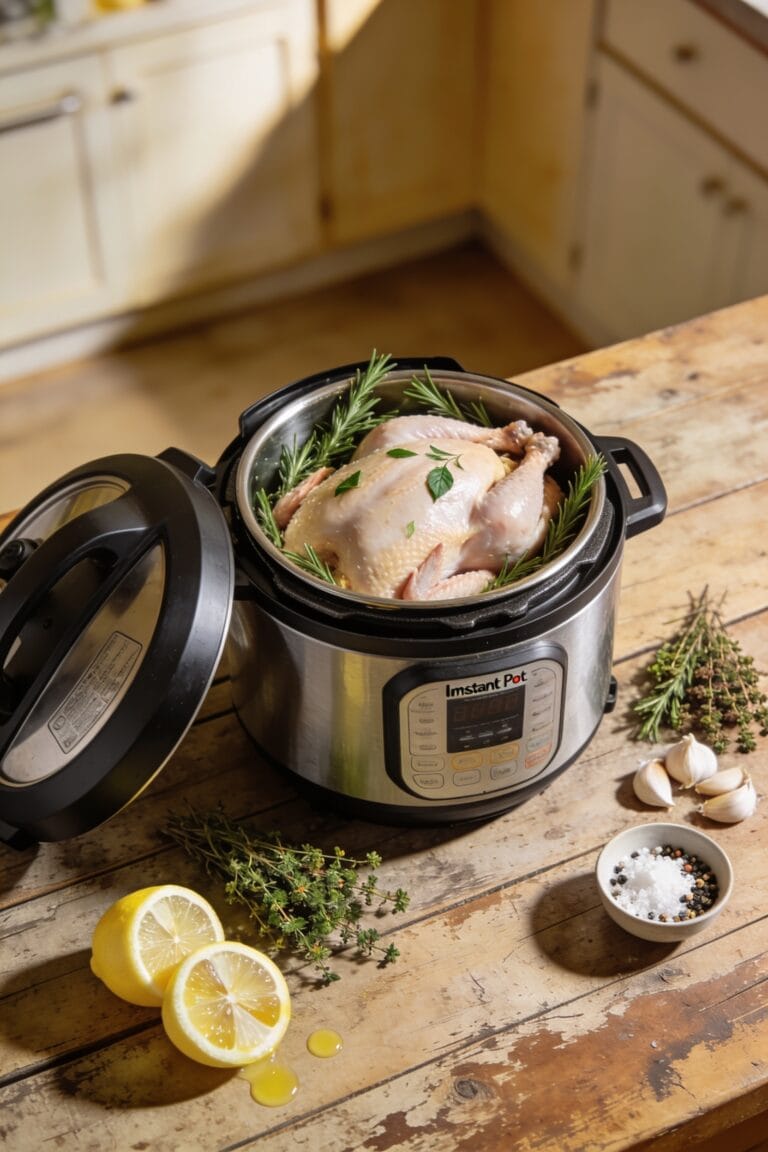
All right, here’s the thing about cooking meat in the Instant Pot—it’s honestly one of the best reasons to own one, because you’re going to get consistently tender results without having to think too hard about it. Boneless chicken breasts need 6–8 minutes per pound, though frozen ones take 1 minute per ounce plus 3 extra. Whole chickens clock in around 6–8 minutes per pound depending on size and whether they’re fresh or frozen. Turkey boneless breasts require 7–9 minutes per pound, while whole breasts need 20–25 minutes. Here’s where it gets interesting: beef stew meat takes exactly 20 minutes regardless of quantity. The Instant Pot basically works like sous vide cooking—that low, moist heat means carryover cooking stays minimal, so you won’t accidentally overcook anything.
Seafood and Fish: Quick Cook Times for Every Type

Now, if meat is the Instant Pot’s main event, seafood is basically the appetizer that makes everyone wonder why you don’t cook fish more often—because here’s the thing, it’s genuinely hard to mess up. Fresh whole crab and fish take just 4–7 minutes depending on species and size. Fish fillets are even quicker at 2–3 minutes fresh, stretching to 3–4 when frozen. Fish steaks need 3–4 minutes fresh or 4–6 frozen. Shrimp? Two minutes, tops.
The beauty here is that you can work with sustainable sourcing and regional flavorings without overthinking it. Frozen seafood adds a few minutes to both pre-heating and cooking, but honestly, the speed remains your biggest advantage. That’s why seafood belongs in your Instant Pot rotation way more than it probably does.
Beans and Legumes: From Dried to Table-Ready
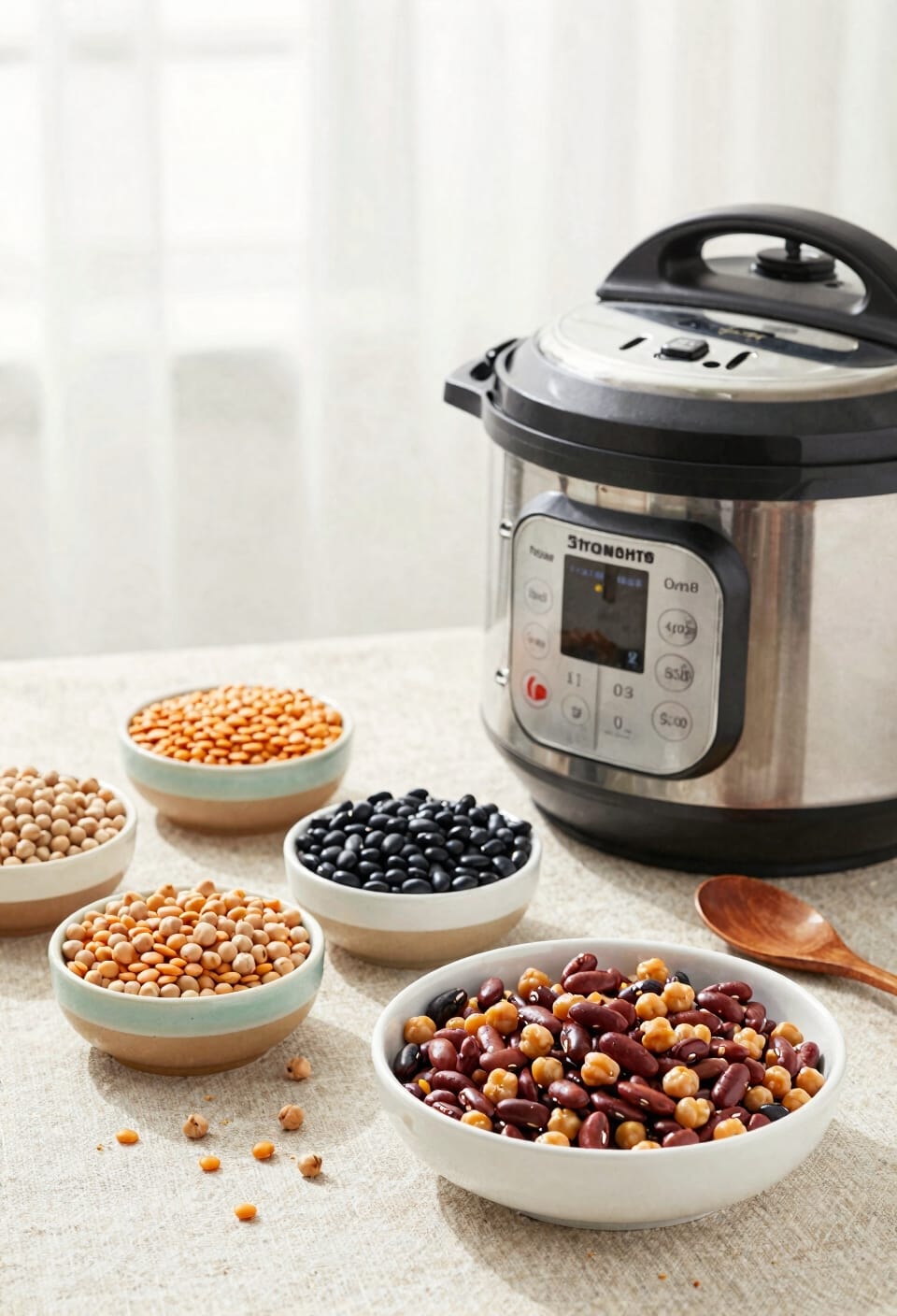
Dried beans and legumes are basically the Instant Pot’s secret weapon—they transform from rock-hard little pebbles into creamy, perfectly cooked protein in a fraction of the time it takes on the stovetop, and I’m not exaggerating when I say this single capability has changed my weeknight dinner game. Black beans clock in at 20–25 minutes dry, but here’s where soaking benefits kick in: pre-soak them and you’re down to 6–8 minutes. Chickpeas need 35–40 minutes unsoaked, dropping to 10–15 after soaking. Red lentils? They’re rebels—no soaking required, just 6–10 minutes. Kidney beans and pinto beans follow similar patterns where soaking cuts cooking time roughly in half. The flavor enhancements you get from proper pressure cooking make stovetop methods feel archaic.
Rice and Grains: Water Ratios and Timing for Perfect Results

While beans are basically foolproof once you nail the pressure and timing, grains are where the Instant Pot really earns its kitchen real estate—and I mean that with the kind of reverence usually reserved for a perfectly seasoned cast iron.
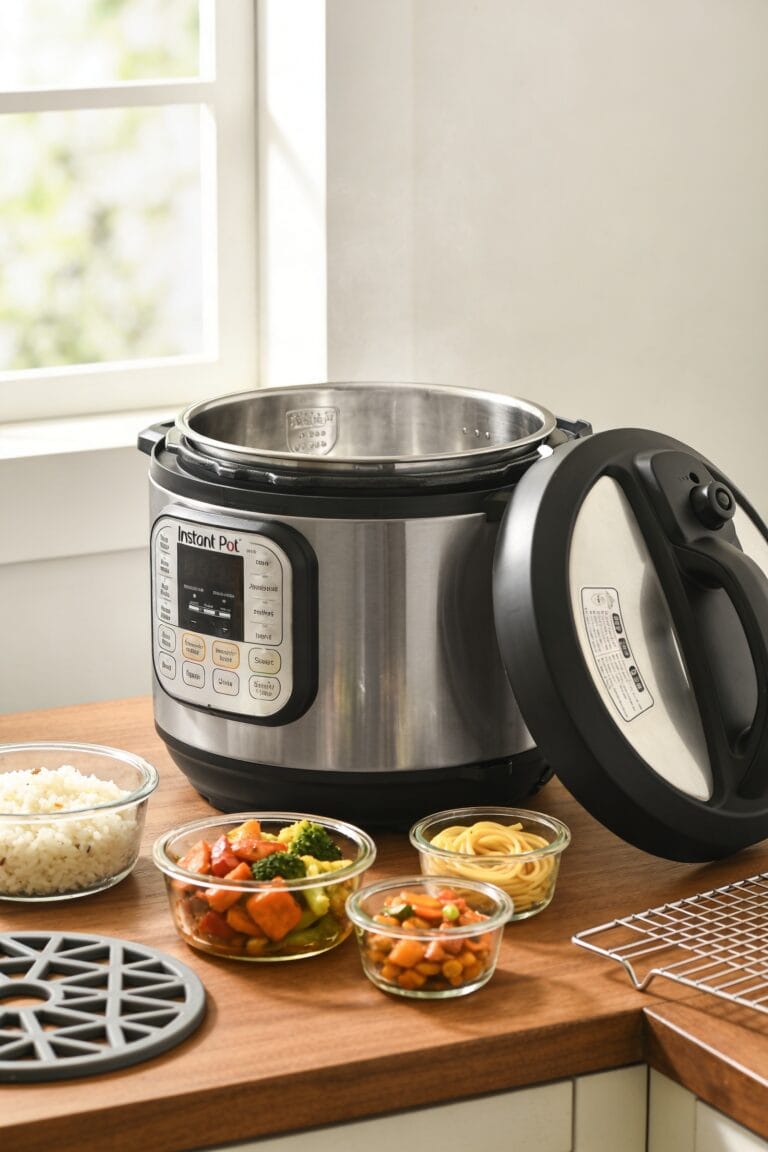
Here’s the thing: grains hydration is everything. White basmati and jasmine rice? They’re your speed demons at 4 minutes with a 1:1 ratio. Brown rice takes longer—20–25 minutes—because it needs that extra time for proper starch gelatinization. Quinoa‘s the overachiever, done in 1 minute flat with a 1:1.25 ratio. Steel-cut oatmeal demands 15 minutes, while wild rice varies between 20–25 minutes depending on the type. Get your water ratio right, and you’re golden.
Vegetables and Starches: Fast Cook Times With Steamer Basket Method
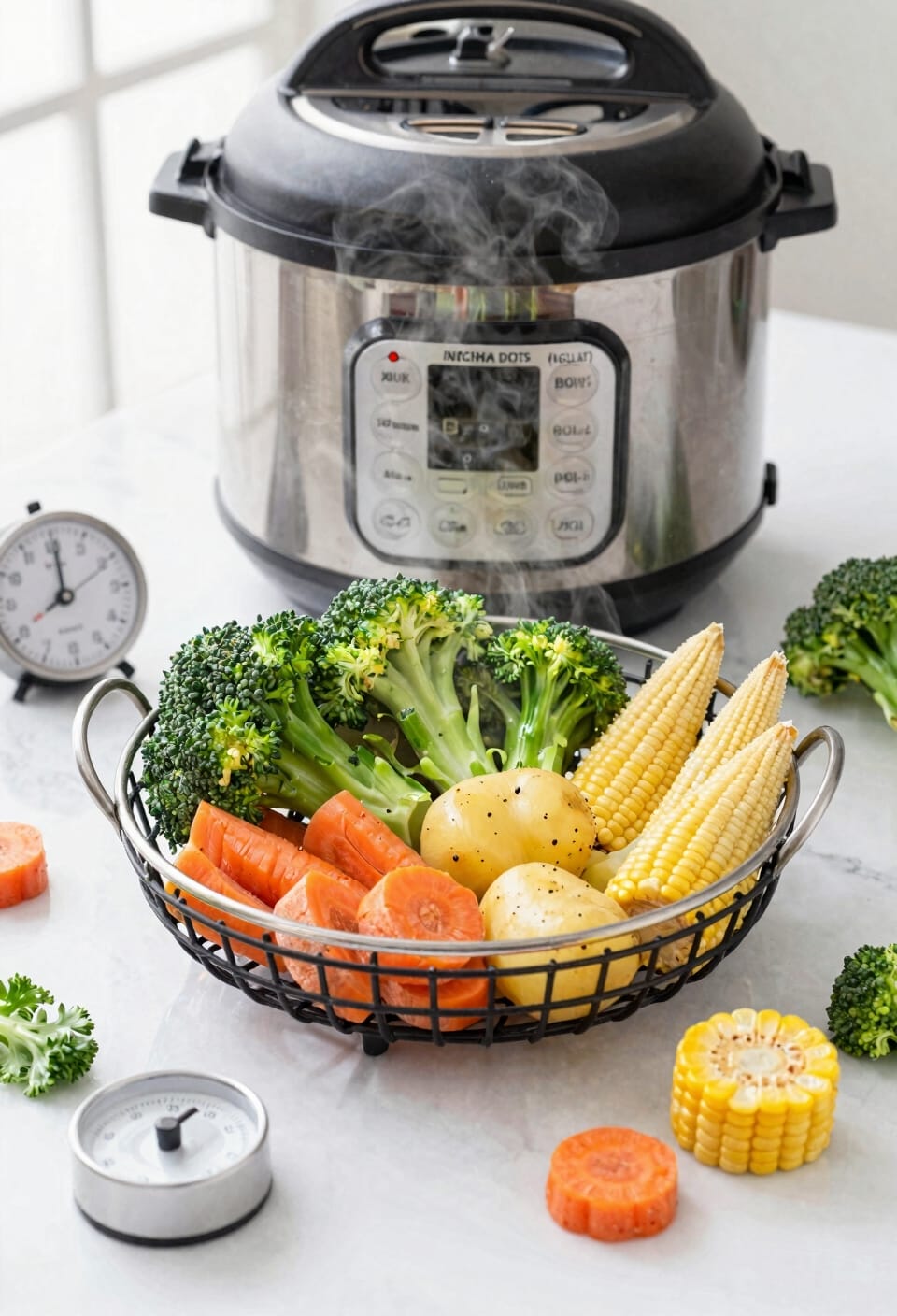
Steaming vegetables in your Instant Pot is where you realize that “fast cooking” doesn’t have to mean sacrificing texture or taste—it just means knowing which vegetables actually benefit from pressure cooking and which ones would rather you didn’t. Here’s the thing: a steamer basket transforms your countertop cleanup because you’re not dealing with soggy, waterlogged vegetables swimming in broth. Sweet potatoes cook whole in 15–20 minutes or cubed in just 2–4 minutes. Broccoli crowns need practically nothing—0–1 minutes with 1.5 cups water. Carrots take 6 minutes whole or chunked, while cauliflower florets finish in 2–3 minutes. You’ll find that timing’s tight here, so release pressure immediately when that timer goes off.
Layering, Pressure Release, and Timing for Best Results
Once you’ve mastered individual cooking times, the real magic happens when you start stacking—literally and figuratively—multiple dishes into one pot. I place longer-cooking food on the bottom with the steam rack, then nestle an oven-safe bowl on top for your second item. Steam sequencing matters here: the bottom food cooks while steam rises through your second dish.
Now, release timing is where precision counts. The moment your programmed time ends, use that steam release handle immediately—don’t let natural pressure release happen automatically unless you’re doing a stew. Natural pressure release takes 7–10 minutes anyway, which throws off your carefully planned timing. You’re effectively buying yourself extra cooking time you didn’t account for. Grab that handle, let the steam out, and dial in exactly when your food finishes.
Frequently Asked Questions
What Pressure Level Should I Use for Accurate Cooking Times With My Instant Pot?
I’d recommend you use high pressure for accurate cooking times with your Instant Pot. The timing standards I’ve provided are based on cooking pressure between 10.15–11.6 psi, which is your high pressure setting. Low pressure won’t give you the same results.
How Do I Adjust Cooking Times When Using Frozen Ingredients Versus Fresh Ones?
I’ll add several minutes to my cooking time when using frozen ingredients since they require longer pre-heating and cooking. Frozen thawing affects texture changes, so I account for this by extending the timer based on quantity and food type.
Can I Cook Multiple Dishes With Different Cooking Times Simultaneously in One Pot?
Yes, I can cook multiple dishes simultaneously using layered steaming or the pot-in-pot method. I’ll place longer-cooking food on the bottom with the steam rack, then set a second oven-safe bowl on top for quicker-cooking items.
What’s the Difference Between Natural and Quick Pressure Release for Various Foods?
Pressure-packed precision plays a pivotal role: natural release retains residual heat, causing carry over cooking that softens textures, while quick release halts heating instantly, preserving texture contrast and seal integrity through precise steam release control.
How Does the Instant Pot’s Preheat Time Affect My Total Meal Preparation Duration?
Your preheat impact greatly affects timing optimization. I’d recommend adding 5-10 minutes to your total meal prep, especially with frozen foods requiring longer preheating. Plan accordingly to guarantee accurate cooking times and successful results.
Conclusion
your Instant Pot isn’t magic, but it’s pretty darn close. With these times locked in your brain—or bookmarked for quick reference—you’re basically cooking with a cheat code. The pot does the heavy lifting while you kick back, and suddenly dinner’s done before you know it. That’s worth its weight in gold, trust me.