As an Amazon Associate, we earn from qualifying purchases. Some links on this site are affiliate links at no extra cost to you. Our recommendations are based on thorough research and editorial judgment.

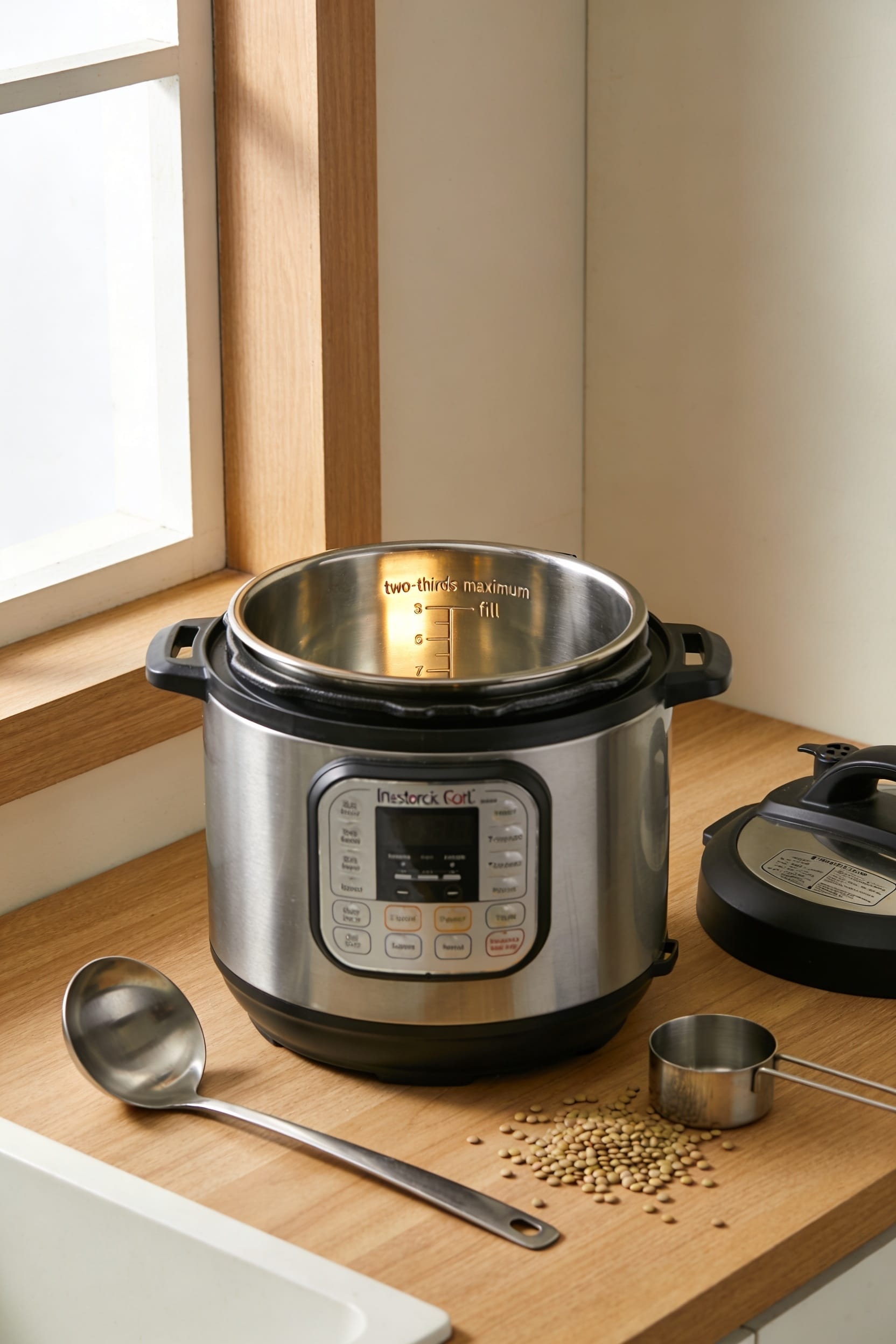
Instant Pot Maximum Fill Line: Why You Must Not Exceed It

Look, here’s the thing—overfilling your Instant Pot past that line means food and foam sneak into your venting valve where they harden and clog the pressure release mechanism. That’s literally your cooker’s safety system getting disabled. The steam space above your ingredients isn’t wasted room; it’s a pressure buffer that keeps things from going sideways. Stick to the lines, and you’ll avoid creating a cleaning nightmare plus a potential hazard. There’s actually a lot more to understand about why each food type has its own fill limit.
Key Takeaways
- Fill to maximum 2/3 line for most recipes; exceeding causes foam to clog vents and pressure valves.
- Expanding foods like beans and grains require only 1/2 fill line to prevent dangerous overflow.
- Overfilling blocks steam release valves, preventing proper pressure regulation and creating unsafe pressure buildup.
- Quick release on overfilled pots causes violent foamy ejections and scalding splatter; use natural release instead.
- Exceeding fill lines forces frequent deep cleaning of valves, gaskets, and sealing surfaces to maintain function.
Why Overfilling Clogs Your Venting Knob?
Overfilling your Instant Pot is basically asking for trouble, and here’s why: when you pack too much food and liquid into that inner pot, you’re not leaving enough headspace for the magic to happen. What I’ve seen happen—and what you’ll want to avoid—is liquid and foam bubbling up into your venting system during cooking. That’s vent blockage at its finest, and it’s messy. The worst part? Valve contamination follows quickly. Food particles get sucked up into those tiny openings, clogging everything. Your pressure release valve stops working properly, excess pressure builds, and suddenly you’ve got a safety issue on your hands. Stick to the fill lines, and you won’t have to deep clean your lid like you’re defusing a bomb.
What Happens When You Exceed the Fill Lines?
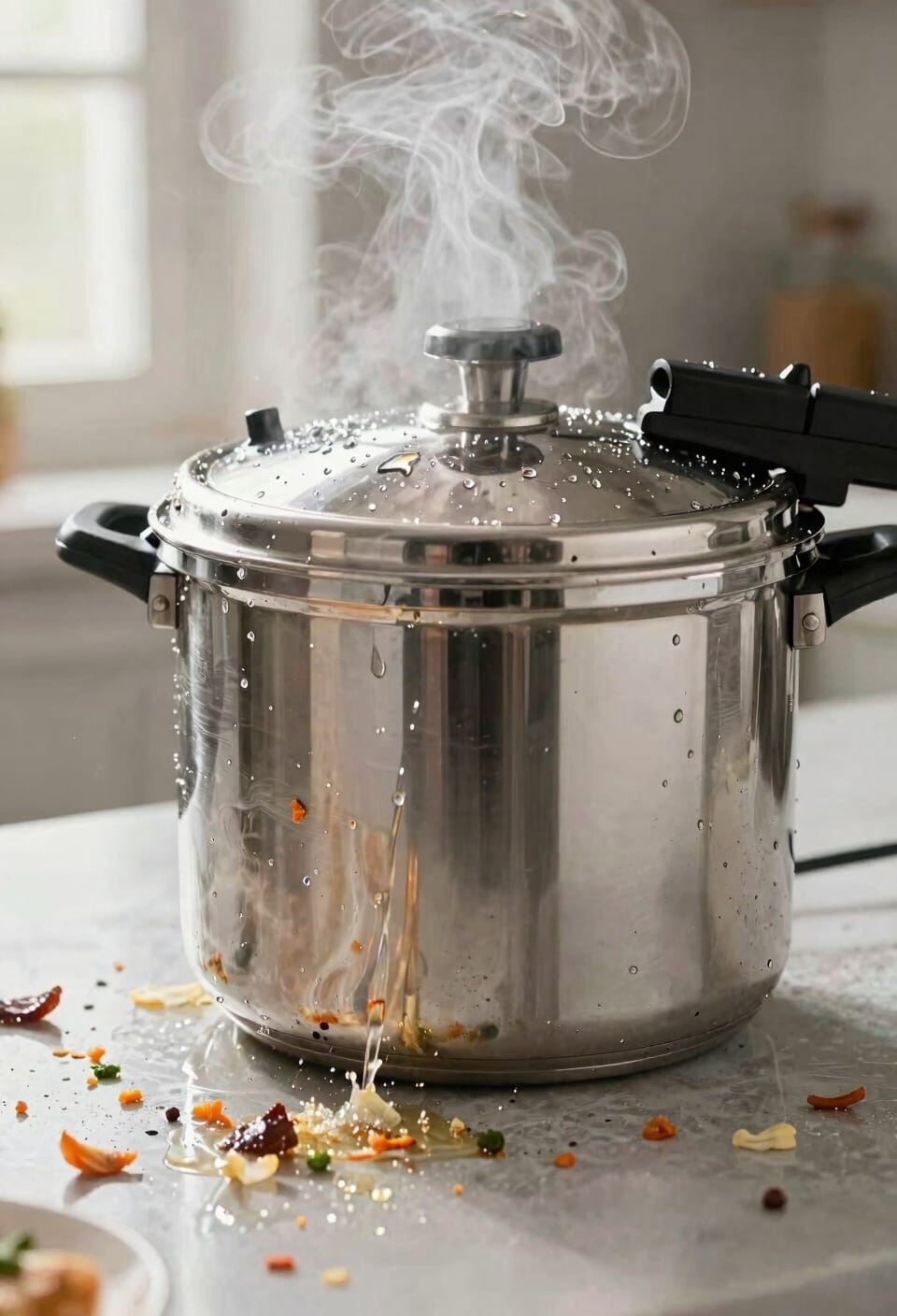
When you cram too much into that inner pot, you’re basically running an experiment in chaos—and trust me, it’s not the fun kind. Here’s the thing: exceeding those fill lines messes with your pressure dynamics in ways that create real safety implications. You’ll get excessive foaming that bubbles up into your venting knob, which clogs it faster than you’d think possible. The pressure can’t regulate properly, so you’re sitting on a time bomb of mounting internal pressure that your cooker wasn’t designed to handle. You might see leaking around the lid, hissing from unexpected places, or worst-case scenario, splattering when you release pressure. Your equipment suffers too—valves get damaged, seals wear out prematurely. It’s genuinely not worth the risk.
The Fill Lines Explained: ⅔ vs. ½ and What Goes Where
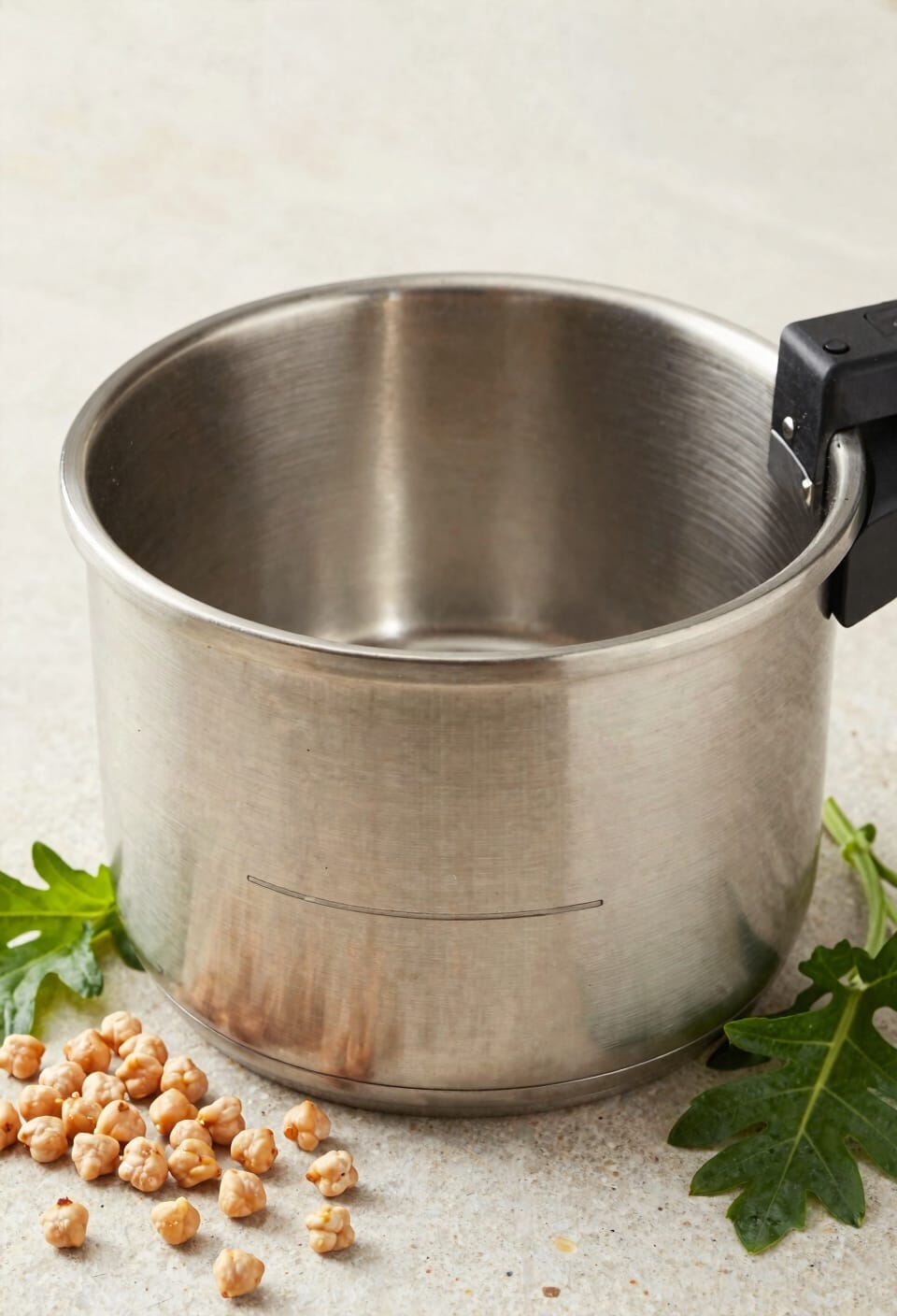
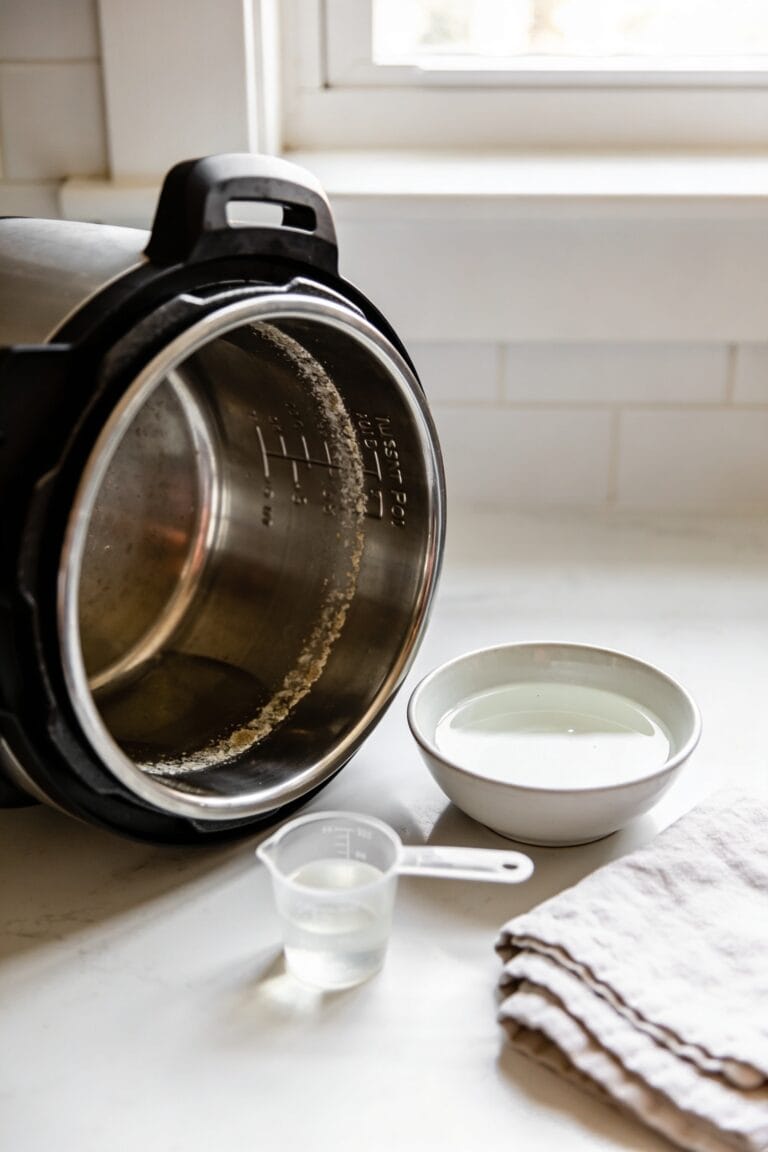
Now that you know what happens when you go rogue with the fill level, let me break down exactly where those lines live and why they’re not just suggestions your Instant Pot’s throwing at you. Your inner pot measurements include two critical markers: the ⅔ line and the ½ line. The ⅔ line is your standard maximum for most recipes—meats, vegetables, broths, anything that won’t expand dramatically. The ½ line? That’s where expanding foods live. Grains, beans, dried vegetables, anything that puffs up during cooking needs that extra breathing room. Newer inner pot designs mark these fill line markings clearly, so you’ve got no excuse squinting at your cooker wondering where they actually are. Different sizes matter too—your 6-quart and 8-quart cookers have different liquid minimums, but the fill line ratios stay consistent.
Expanding Foods Require Extra Caution
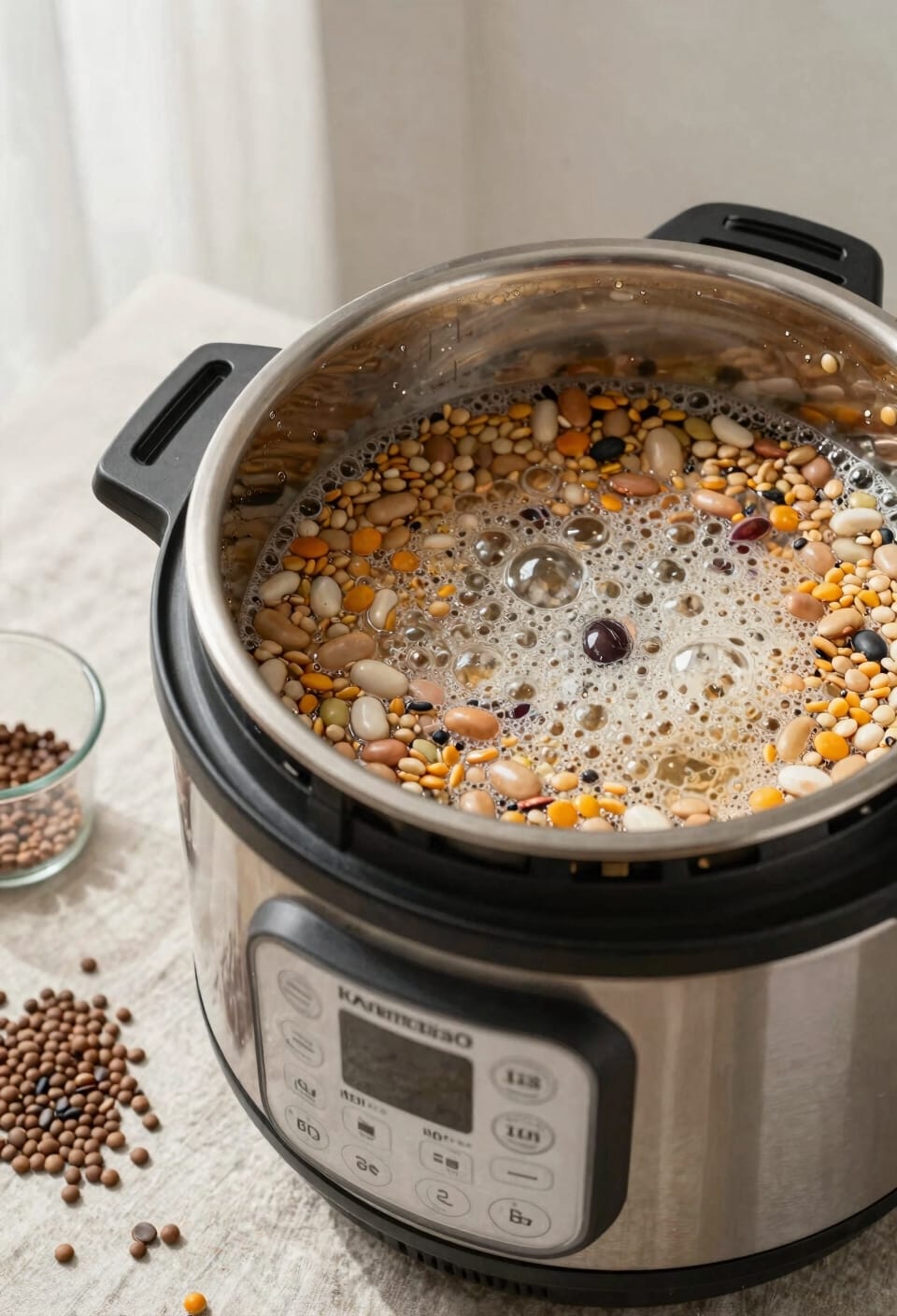
Beans, rice, and grains expanding like they’re auditioning for a cooking show is exactly why that ½ line exists—and I learned this the hard way so you don’t have to. These foods absorb liquid and swell dramatically during cooking, which means what looks reasonably filled at the start becomes a pressurized volcano by the time your timer goes off.
Now, foamy foods deserve special mention here. Applesauce, soups, and starchy starches create foam that rises aggressively under pressure. That foam can travel straight up into your venting system, clogging it completely and creating a genuine safety hazard.
The ½ line isn’t arbitrary. It’s your buffer zone against grain expansion and foamy mishaps. Respect it, and you’ll cook confidently. Ignore it, and you’re inviting trouble.
Minimum Liquid Your Pressure Cooker Actually Needs
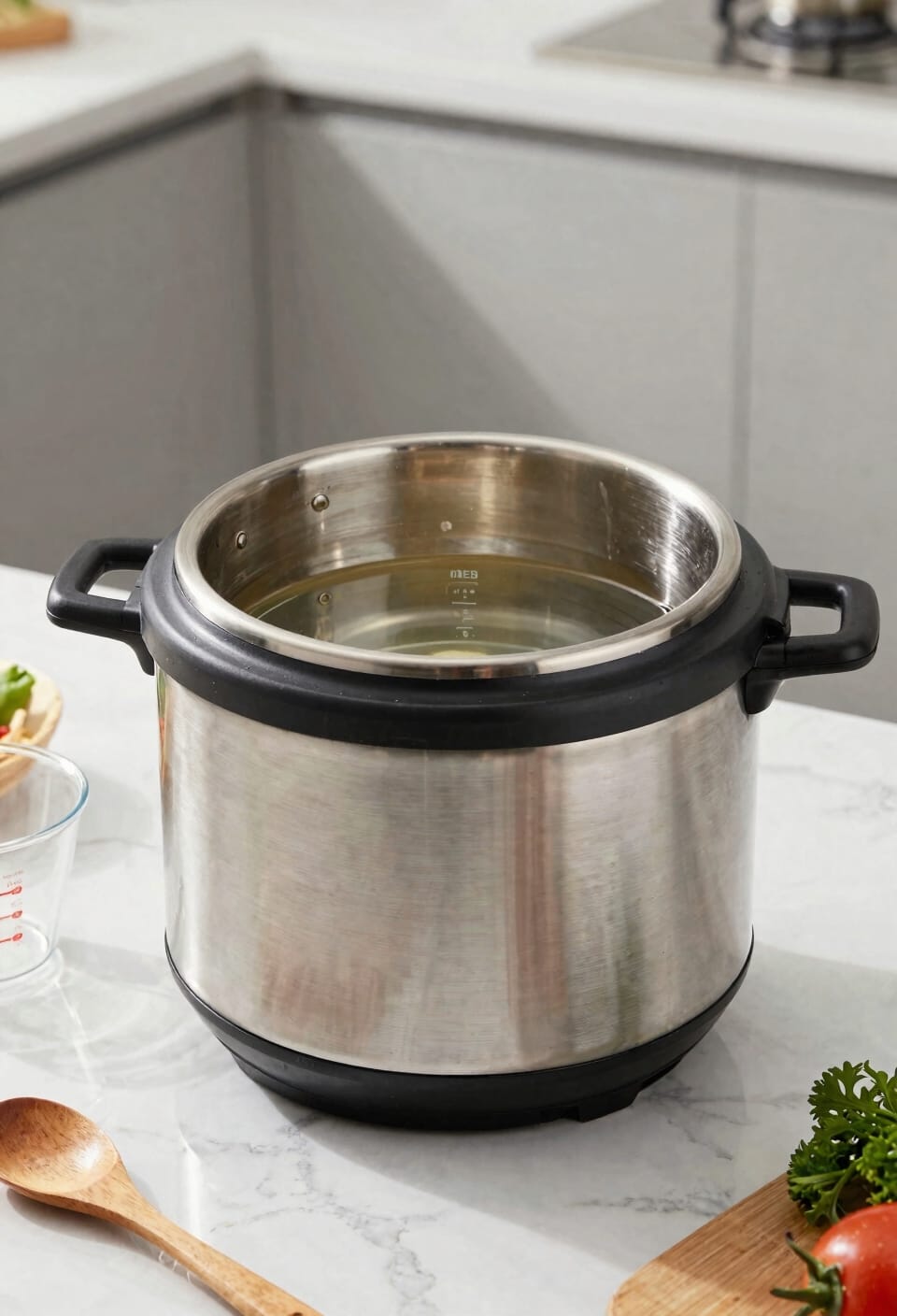
If you’ve ever wondered whether you can just dump your ingredients in and hope for the best, I’ve got news for you—your pressure cooker actually needs a minimum amount of liquid to function properly, and skimping on it is asking for trouble. Here’s the thing: your cooker’s appliance calibration depends on that water-based liquid to generate steam and build pressure. For a 6-quart model, you’re looking at 1½ cups minimum. An 8-quart needs 2 cups. Now, oils and oil-based sauces don’t count—they won’t cut it. Thin cream-based soups and thick sauces with added liquid instead. Follow your recipe’s amounts; they’re usually dialed in already. Respect these minimum liquids, and your cooker respects you back.
Why Meat and Vegetables Release Extra Liquid
When you’re filling your Instant Pot with chicken thighs, ground beef, or even humble vegetables like mushrooms and courgettes, you’re not just adding solid food—you’re bringing in moisture that’s going to release during cooking, and that’s exactly why the fill line rules matter so much. Heat causes protein breakdown and cell rupture, squeezing out all that trapped liquid. I’ve watched it happen countless times: a pot I thought was perfectly filled suddenly looks like soup halfway through cooking. That’s not a happy accident—it’s your ingredients doing what they’re designed to do. This is why respecting the ⅔ line keeps you safe. The liquid those meats and vegetables surrender needs somewhere to go, and if you’ve already maxed out your pot, well, that’s how you end up with a mess.
Steam Space: The Critical Buffer Preventing Pressure Spikes
Now that we’ve talked about all that liquid your meat and vegetables are going to dump into the pot, here’s what actually matters: you need somewhere for that steam to go, and I’m not talking about opening a window. That empty space above your ingredients—your steam cushion—is doing real work. It’s your pressure buffer, literally. When you seal that lid, steam needs room to build up and create pressure. If you’ve crammed everything to the brim, there’s nowhere for the steam to expand. You get chaotic pressure spikes, potential valve blockage, and a recipe for disaster. The ⅔ line exists precisely because you’re not filling a pot—you’re creating a pressure system. Respect the space.
Quick Release on Overfilled Pots: Why It Splatters
You’ve built up all this pressure, created the right steam space, and now you think you can just pop that lid open with a quick release on an overfilled pot—and I’m telling you right now, that’s where things get messy, literally.
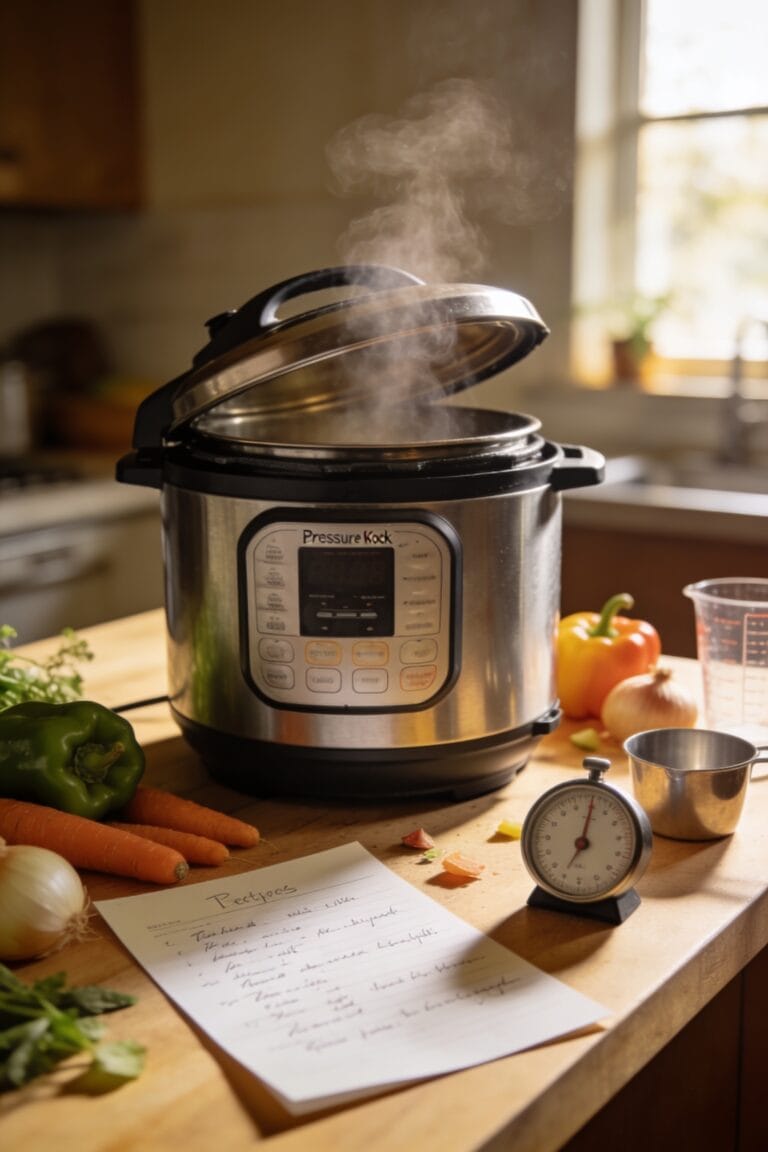
When you trigger quick release on an overfilled cooker, you’re effectively uncorking a shaken soda bottle. That sudden pressure drop causes foamy ejections of hot liquid and food particles to shoot straight out of the venting system. The quick release consequences? Scalding splatter across your stovetop, your hands, your kitchen.
With overfilled pots containing foamy foods like soups or applesauce, it’s even worse. The bubbles amplify the eruption. That’s why natural pressure release exists—it’s your safety net when you’ve miscalculated the fill line.
Natural Release vs. Quick Release When Overfilled
If you’ve overfilled your Instant Pot, the release method you choose determines whether you walk away with a clean stovetop or spend the next hour scrubbing dried soup off your backsplash.
Here’s the thing: natural release timing is your friend when you’ve overfilled. As pressure gradually decreases, the lid safety signals indicate when it’s safe to open—and importantly, the contents stay put. Quick release? That’s asking for trouble. The sudden pressure drop causes everything inside to violently boil over, and foamy liquids shoot right out the venting knob.
I’m not saying you should regularly overfill, but if you do, give it time. Let that pressure release naturally. Your stovetop will thank you, and you’ll actually enjoy your meal instead of playing cleanup crew.
Your Post-Overfill Cleaning and Maintenance Checklist
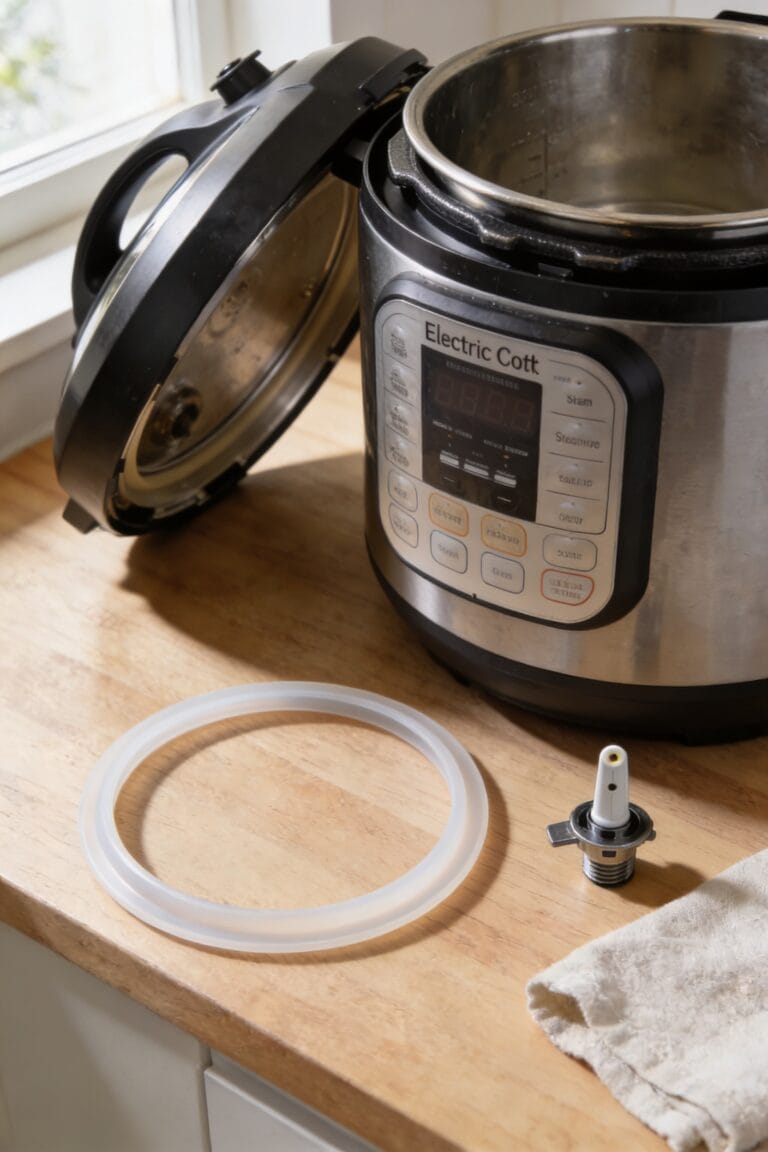
Cleaning up after an overfill incident is honestly the least fun part of pressure cooking, but it’s also the most important if you want your Instant Pot to keep working like it should. Start your post overfill inspection by removing the lid and checking your gasket inspection—that rubber ring takes the brunt of splatter damage. Wipe down the lid limescale buildup, especially around the steam release valve where residue hardens fastest. Don’t skip the hinge lubrication either; a few drops of food-grade oil keep things moving smoothly. Check inside the pot itself, clean the sealing surfaces thoroughly, and inspect the float valve for any stuck particles. A deep clean now prevents headaches later and keeps your cooker functioning properly for years.
Frequently Asked Questions
Can I Use Oil-Based Liquids to Meet the Minimum Liquid Requirement?
No, I can’t use oil-based liquids for minimum requirements. You’ll need water-based liquids instead. While cooking fats and flavor concentrates add taste, they don’t generate steam properly like water does in your pressure cooker.
How Do I Know if My Inner Pot Has the Fill Line Markings?
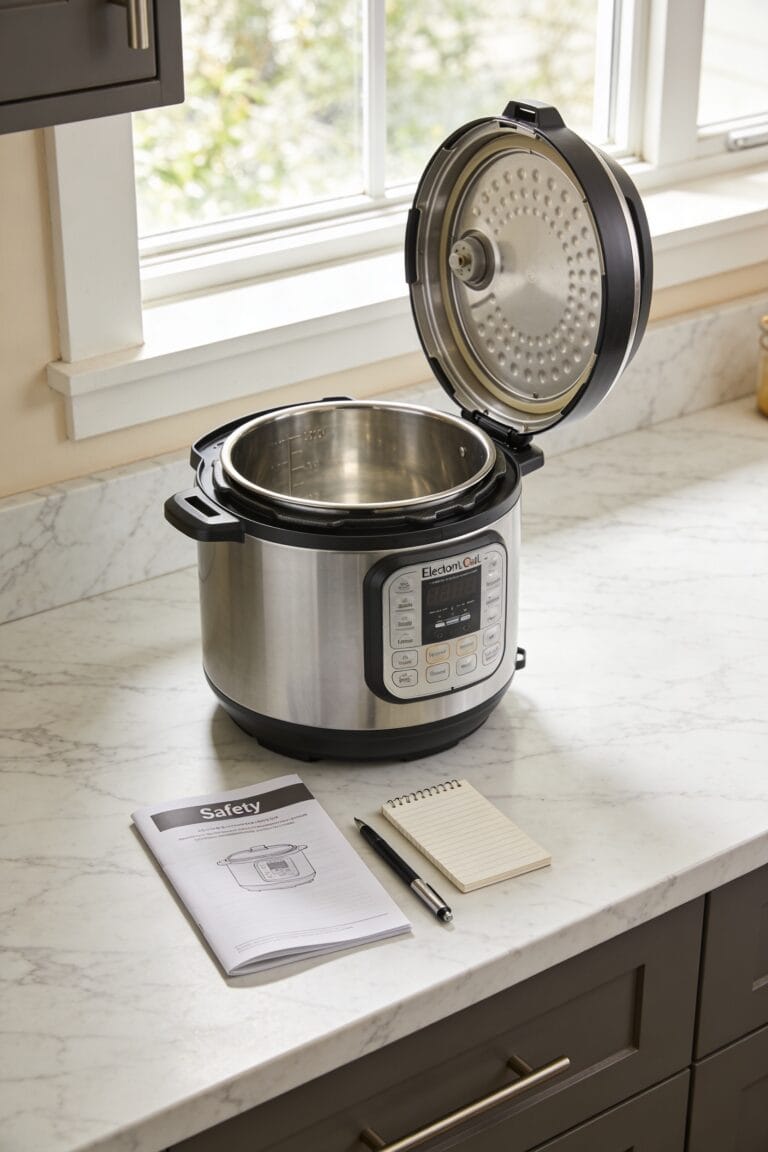
I’d recommend doing a visual inspection of your inner pot’s interior surface—you’ll see etched or printed lines marking the ½ and ⅔ levels. If you’re unsure, consult your user manual for specific details about your model’s markings.
What’s the Difference Between a 6-Quart and 8-Quart Cooker’s Minimum Liquid?
I’ll tell you: a 6-quart needs 1½ cups minimum liquid, while an 8-quart requires 2 cups. That extra half-cup guarantees proper heat distribution and cook time consistency across the larger cooker’s surface area.
Should I Measure Fill Level Before or After Adding Ingredients?
I’d recommend you measure after adding all your ingredients. This way, you’ll see the actual fill level and make certain you’re not exceeding the ⅔ or ½ line, depending on what you’re cooking.
Is It Safe to Open the Lid if I Accidentally Overfilled?
I’d recommend using natural pressure release first—don’t quick release. Let me inspect the valve, check for blockages, and make sure it’s functioning properly. Only then can I safely open the lid to avoid dangerous steam burns.
Conclusion
Look, I’m not saying your Instant Pot will explode into a mushroom cloud if you overfill it, but I’m also not *not* saying that. Respect those fill lines like they’re written in stone, because they literally exist to keep your kitchen from becoming a pressure-cooker crime scene. Your future self—the one scraping food off the ceiling—will thank you profusely.