

Look, here’s the thing—your Instant Pot’s slow-cook function works differently than a traditional slow cooker, so you can’t just plug in grandma’s recipe and hope for the best. Skip the “Less” setting entirely; it’s basically a keep-warm mode. Use “Normal” for low-heat recipes and bump up to “More” for high-heat ones. Add about fifteen minutes per hour of cooking time when converting, and if your timer stalls, run the sauté function for a few minutes to prime the heating element. Get these adjustments right, and your pot roast stays tender instead of turning into sad mush—stick around to uncover the specifics that’ll transform your slow-cook game.
Key Takeaways
- Turn the valve to “venting” and press “slow cook” to engage slow-cook mode before starting.
- Select heat level: Less (keep-warm only), Normal (low heat), or More (high heat).
- Use Normal for traditional low-heat recipes and More for high-heat slow-cooker recipes.
- Add approximately 15 minutes per cooking hour when converting traditional slow-cooker recipes.
- Run sauté function for 3-4 minutes if the countdown timer stalls to prime the heating element.
Set Up Your Instant Pot for Slow Cooking
Look, getting your Instant Pot ready for slow cooking is genuinely straightforward, but there’s one thing you’ve absolutely got to do first or you’ll end up with a pressurized disaster instead of the gentle, low-and-slow situation you’re after.
First, turn that valve from “sealing” to “venting”—seriously, don’t skip this. Then hit the “slow cook” button and choose your heat level: Less, Normal, or More. Now, about lid placement: you’ll want that valve staying vented the entire time, so keep your standard lid positioned accordingly, or grab a glass lid with ventilation instead.
Before preheating cookware with your ingredients, set your timer anywhere from half an hour to twenty hours. The Instant Pot’ll automatically kick into keep warm mode once you’re done. That’s it—you’re ready to go low and slow.
Pick the Right Heat Level for Your Recipe
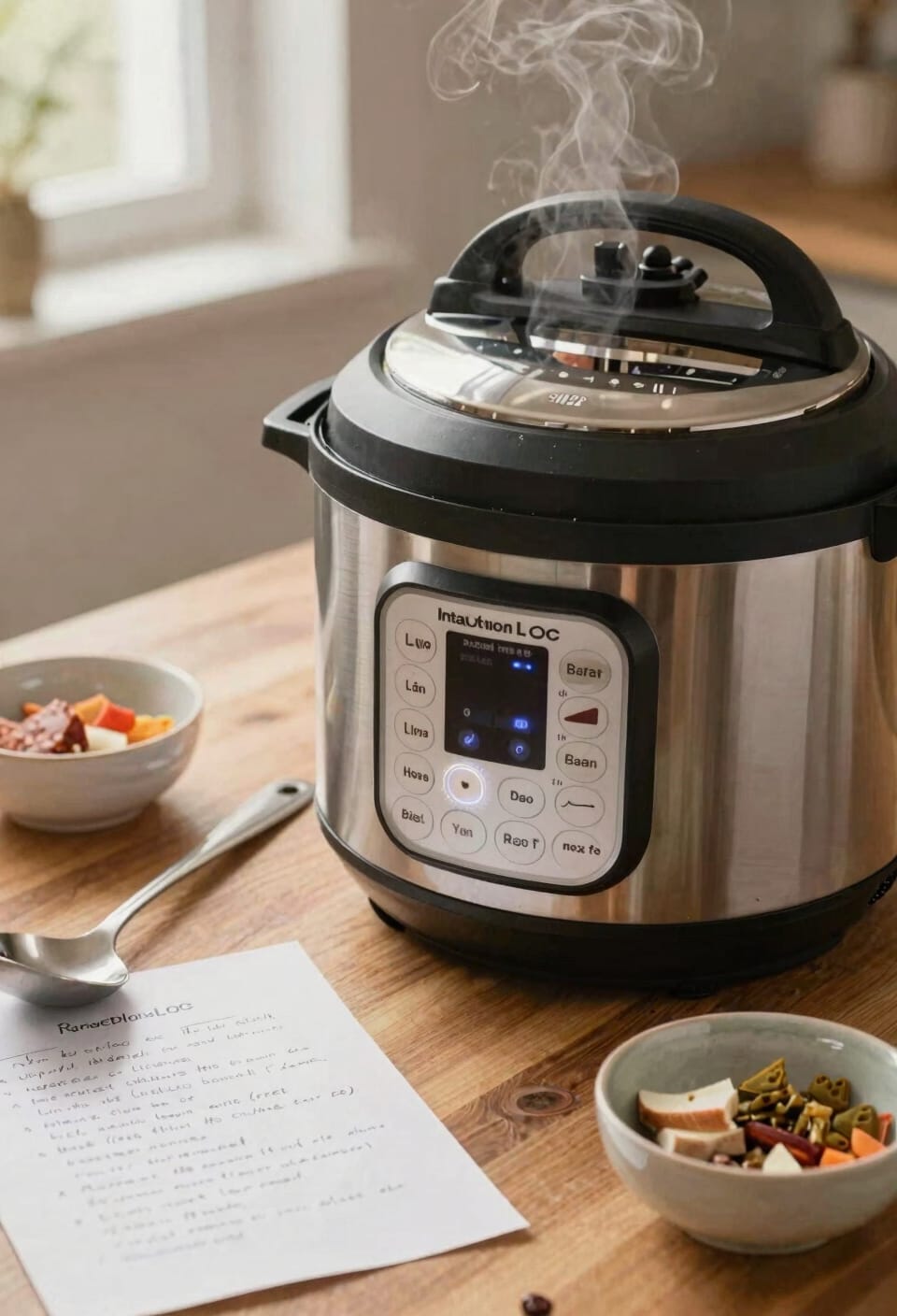
Since your Instant Pot’s heating capacity doesn’t quite match a traditional slow cooker’s, you’ve got to think a little differently about heat settings than you might expect. The Less setting basically keeps things warm rather than actually cooking them—skip it. Normal approximates low heat, while More gets closer to high, though neither quite reaches traditional slow cooker temperatures.
Here’s where recipe conversions matter: bump up your heat level by at least one notch when adapting traditional recipes. If something calls for low heat, use Normal instead. This adjustment helps manage ingredient textures properly and prevents that mushy disappointment. Add roughly 15 minutes per cooking hour to account for the Instant Pot’s different thermal properties, and you’ll nail consistent results.
Convert Slow Cooker Times for the Instant Pot
Now that you’ve got your heat level dialed in, the clock’s where things get tricky—and honestly, it’s the part that trips up most people when they’re first converting recipes. Here’s the thing: your Instant Pot doesn’t heat quite like a traditional slow cooker, so you’ll need to add roughly 15 minutes for every hour of cooking time. That four-hour high-heat recipe? Plan on five hours instead. Long recipes requiring 15 hours on low stay at 15 hours on normal—the math works out differently depending on duration. Consider ingredient substitutions and seasonal adjustments too; hearty winter vegetables might need extra time, while delicate produce requires less. The countdown won’t actually start until your pot reaches temperature, so don’t panic if there’s a delay.
Why Your Instant Pot Won’t Heat Up (and How to Fix It)
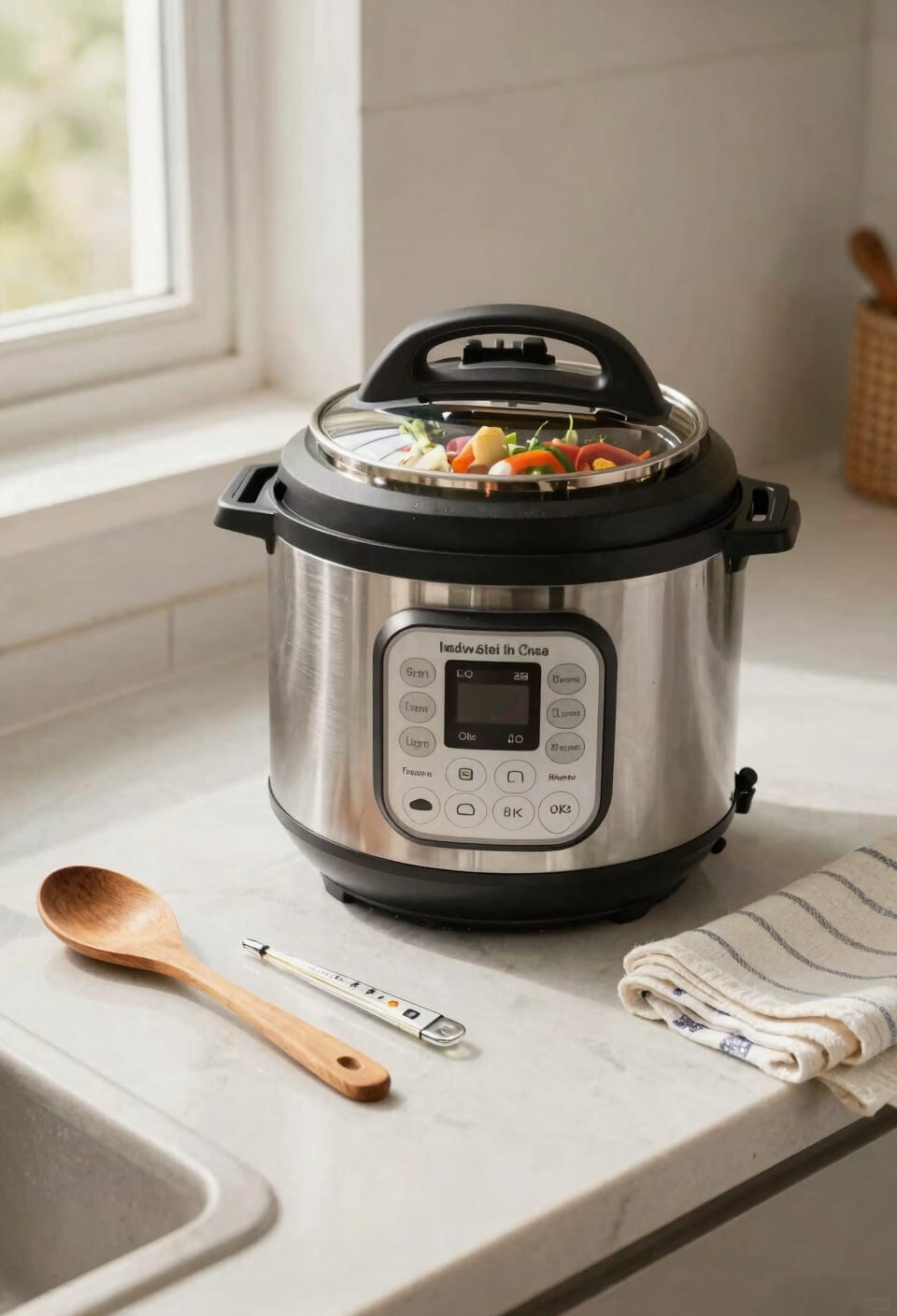
If your Instant Pot’s countdown timer refuses to budge, it’s usually because the pot hasn’t reached the target temperature yet—and that’s actually more common than you’d think when you’re first figuring out this slow cooker thing. Now, here’s the thing: before you suspect a faulty thermostat or stuck valve, try running the sauté function for three to four minutes. This primes the heating element and helps your pot climb to the proper temperature. Bring your ingredients to a boil using sauté mode, then restart the slow cook cycle. You’d be surprised how often this simple trick works. If it still won’t heat up after that, then you might have a legitimate mechanical issue worth investigating further.
Forget the Low Setting: Use a Higher Heat Instead
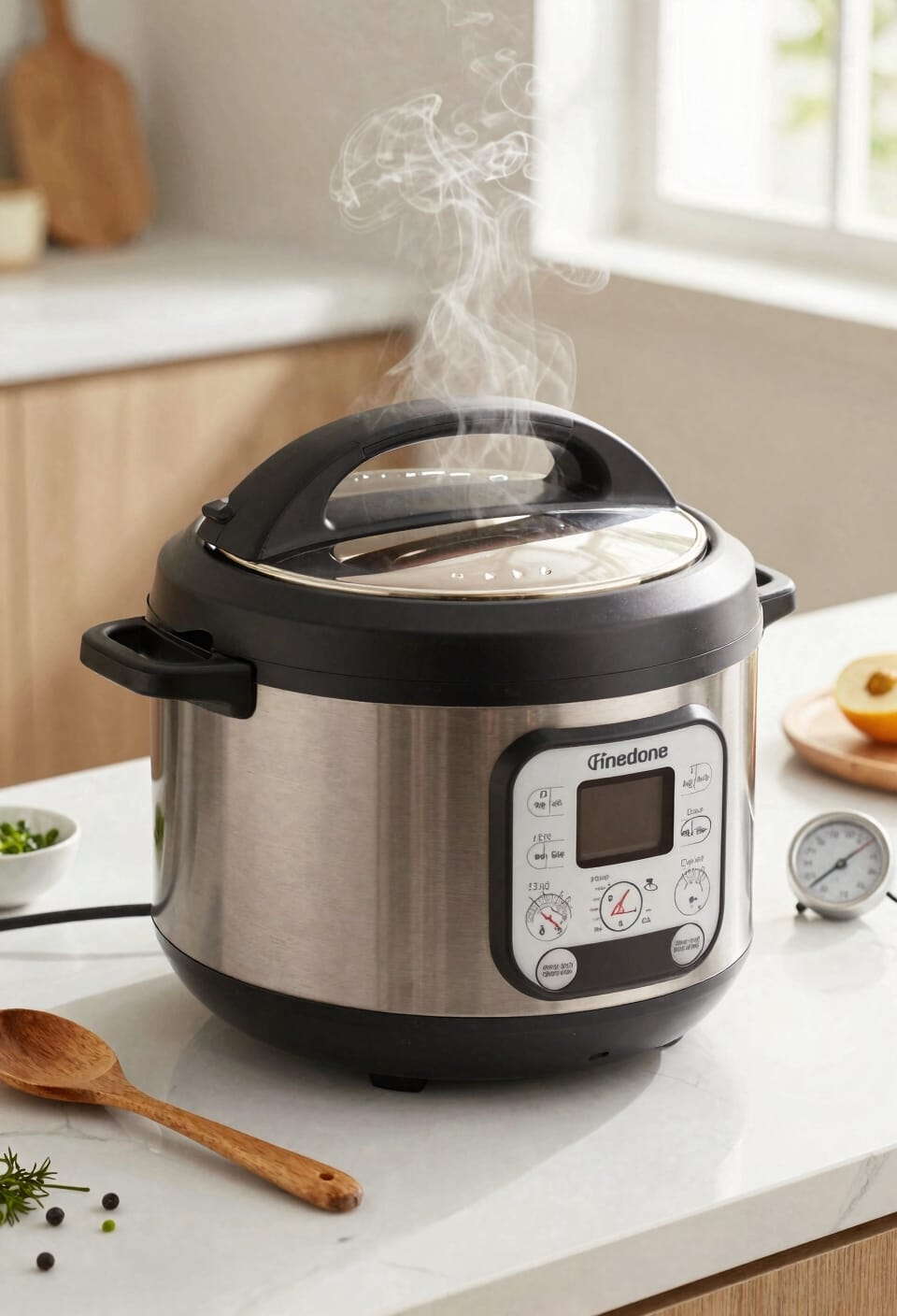
Once you’ve got your Instant Pot heating properly, there’s another counterintuitive thing you need to know: that “Low” setting you’re eyeing? Skip low settings entirely. I know that sounds weird—traditional slow cookers have a low setting for a reason—but your Instant Pot’s low function basically acts like a keep-warm feature. It won’t raise temperatures enough to actually cook your food properly.
Instead, bump up to the Normal or More setting. Normal approximates traditional low heat cooking, while More gets you closer to high. I’d recommend using More when recipes specify low heat on standard slow cookers. Your Instant Pot’s heating technology just works differently, so you’ve got to adjust accordingly. Trust me, your results will improve dramatically.
Frequently Asked Questions
Can I Use the Standard Instant Pot Lid for Slow Cooking Safely?
Yes, I can safely use the standard Instant Pot lid for slow cooking if I keep it in the venting position to address pressure concerns. I’ve got venting options available, including a glass lid alternative that maintains proper ventilation throughout cooking.
How Long Will My Food Stay Warm After the Cooking Cycle Ends?
Your food won’t cool instantly once the timer ends. I’ve found that your Instant Pot’s automatic keep warm cycle maintains heat for up to 10 hours, offering excellent carryover warmth. For extended periods, I’d recommend insulated storage containers.
Which Recipes Aren’t Suitable for Slow Cooking in an Instant Pot?
I’d avoid recipes with dairy sauces and delicate seafood in your Instant Pot’s slow cooker function. These aren’t suitable because they’re sensitive to prolonged heat exposure and the pot’s unique thermal properties, which can compromise texture and flavor.
Does the Timer Start Immediately After I Press the Slow Cook Button?
No, it doesn’t—Rome wasn’t built in a day, and your timer won’t start immediately either. The countdown won’t begin until your Instant Pot reaches the correct temperature. This preheat behavior means there’s a timer delay between pressing slow cook and actual cooking commencing.
What’s the Maximum Cooking Duration Available on the Instant Pot Slow Cooker?
You can set the timer for up to 20 hours maximum duration on your Instant Pot’s slow cook function. I’d recommend using programmable delays strategically to fit your cooking schedule perfectly.
Conclusion
Look, I’ve learned that your Instant Pot isn’t just a speed demon—it’s also a patient companion willing to take the scenic route through slow cooking. Once you embrace the heat adjustments and time conversions I’ve walked you through, you’ll realize this gadget earns its counter space twice over. You’ve got flexibility now, and honestly, that’s what makes cooking less of a chore and more of an actual joy.