As an Amazon Associate, we earn from qualifying purchases. Some links on this site are affiliate links at no extra cost to you. Our recommendations are based on thorough research and editorial judgment.

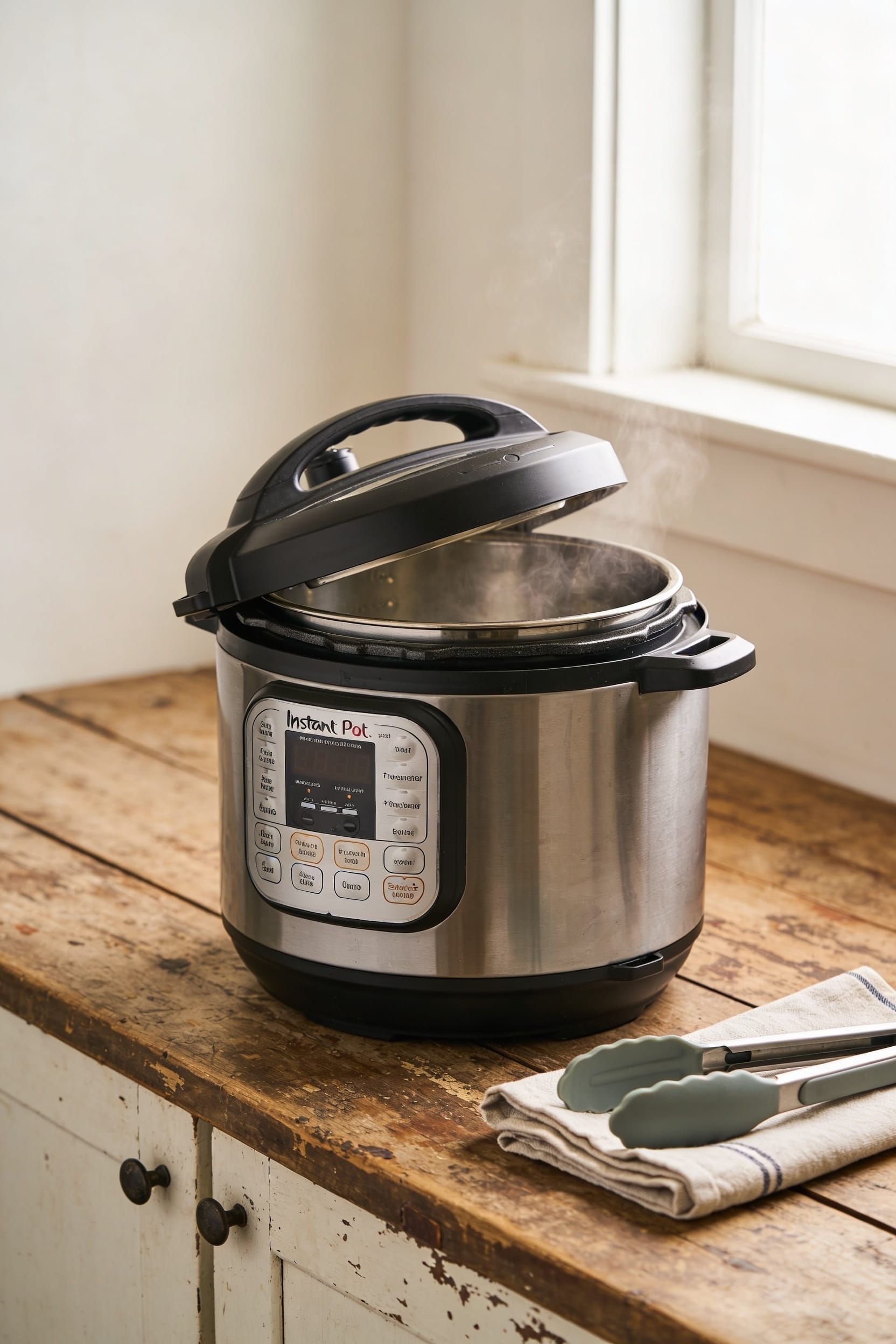
Why Your Instant Pot Lid Is Wobbling and What to Do

A wobbly Instant Pot lid usually isn’t cause for panic—it’s typically loose hinges, a shifted sealing ring, or debris gunking up the works. Start by reseating the lid firmly until you hear a click, then clean around the sealing ring groove and tighten any hinge screws. If that doesn’t fix it, you might have a warped base or worn hinge that needs replacing. The good news: most lids run fifty to eighty bucks, and the fix takes five minutes if you know what you’re looking for.
Key Takeaways
- Lid wobbling often stems from rim bumps, sealing ring shift, or hinge wear from regular use and handling.
- Inspect for dents, warping, loose hinge components, and sealing ring displacement to identify the wobble source.
- Distinguish cosmetic wobble from functional failure by checking alignment, rotating the lid, and running a pressure test.
- Reseat the lid firmly, clean contact surfaces, tighten hinge screws, and lubricate the lock pin with food-grade silicone.
- Replace the lid if hinges are damaged, handles warped, or lock assemblies fail repeated repair attempts.
Common Causes of Instant Pot Lid Wobbling
When you’ve got a lid that’s moving around like it’s got a mind of its own, it’s usually trying to tell you something—and I’ve learned the hard way that ignoring it doesn’t make the problem go away. Most wobbling comes down to two main culprits: lid alignment issues and hinge wear. If your lid isn’t sitting flush on the base, that’s an alignment problem—maybe the rim got bumped or the sealing ring shifted out of position. Hinge wear happens over time with regular use; the little mechanisms that hold everything together eventually loosen up. I’ve also noticed that sometimes it’s just the base unit itself that’s slightly warped, which throws the whole lid off balance. None of these are catastrophic, but they’re all worth investigating before your Instant Pot starts rattling like it’s possessed.
Inspect Your Lid: Spot Damage, Dents, and Loose Parts
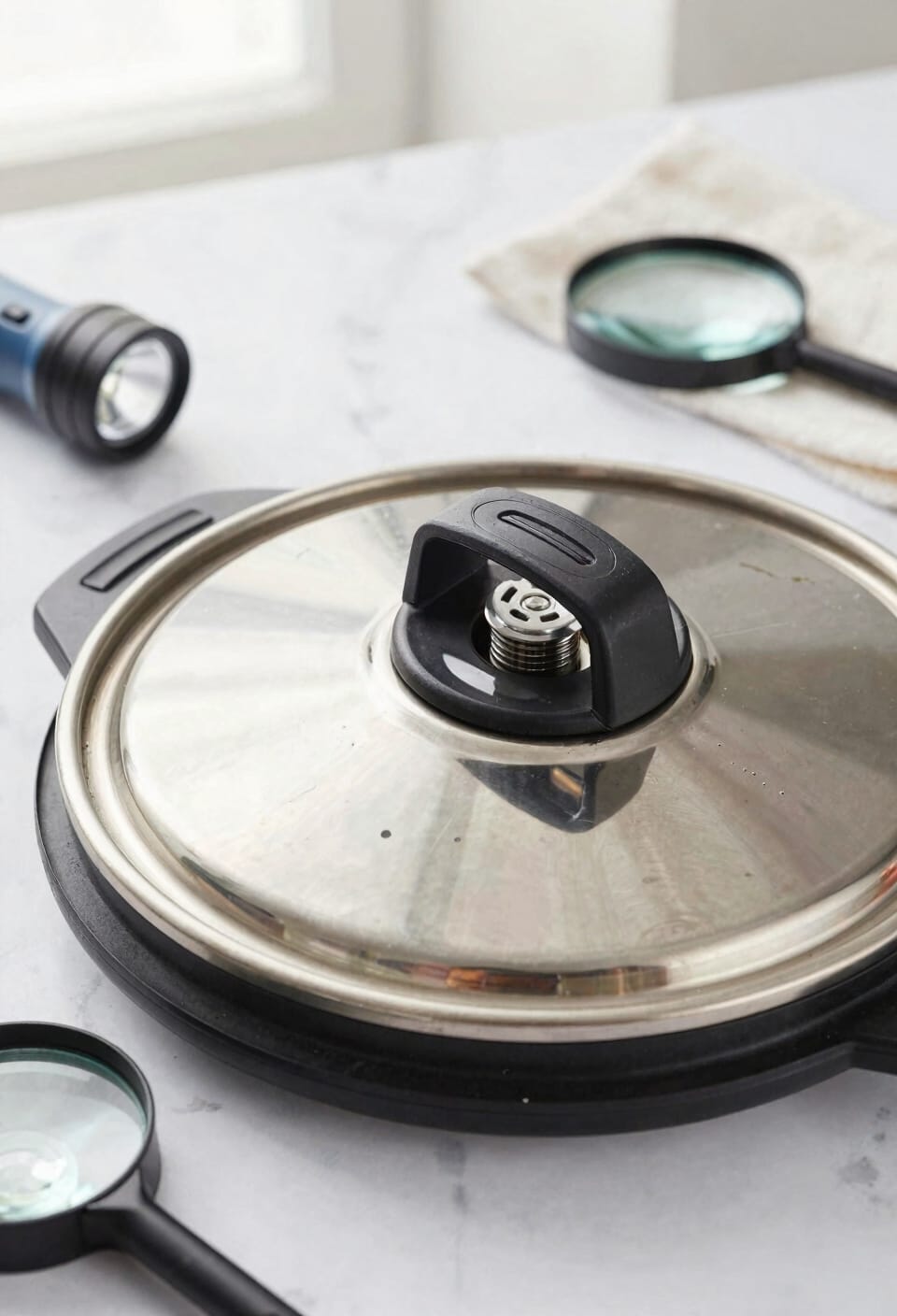
Before you go blaming the hinge or the base, take a close look at the lid itself—because half the time, the problem’s literally right there staring back at you. I’ve caught myself missing obvious damage more times than I’d like to admit. Start by examining the entire lid surface for dents, cracks, or warping that might throw off its balance. Check your handle alignment too; a bent or misaligned handle throws the whole thing off-kilter. Look underneath for loose components or anything rattling around. While you’re down there, peek at the hinge lubrication—dried-out hinges create play and wobble. Give the sealing ring area a thorough inspection as well. Sometimes the culprit isn’t dramatic; it’s just subtle wear catching you off guard.
Diagnose the Problem: Is It Cosmetic or a Sealing Issue?
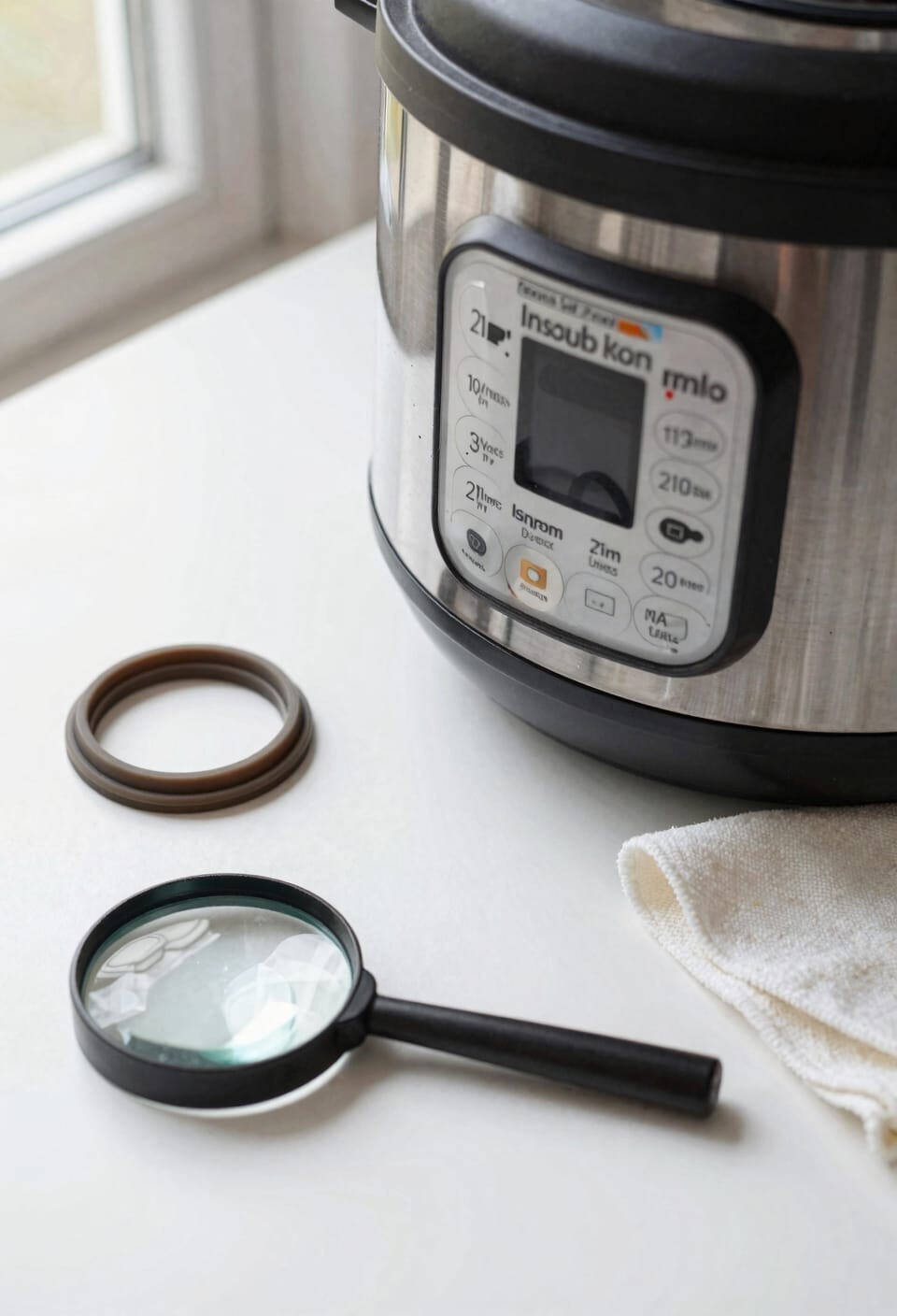
Now here’s where things get interesting—because a wobbling lid isn’t always a crisis, and figuring out which kind of problem you’ve actually got will save you from replacing a perfectly good cooker.
Start with an alignment check. Does the wobble happen when the lid’s closed, or only when you’re handling it? Try rotating it gently—sometimes it’s just sitting cockeyed on the rim. Next, run a pressure indication test: seal it empty and hit high pressure. If steam shoots out sideways or the float valve won’t rise, you’ve got a real sealing problem. But if it pressurizes normally and only wobbles cosmetically? You’re looking at minor wear that doesn’t actually compromise your cooking. That’s the difference between “fix it eventually” and “fix it now.”
Quick Fixes: Reseat, Clean, and Tighten Your Lid
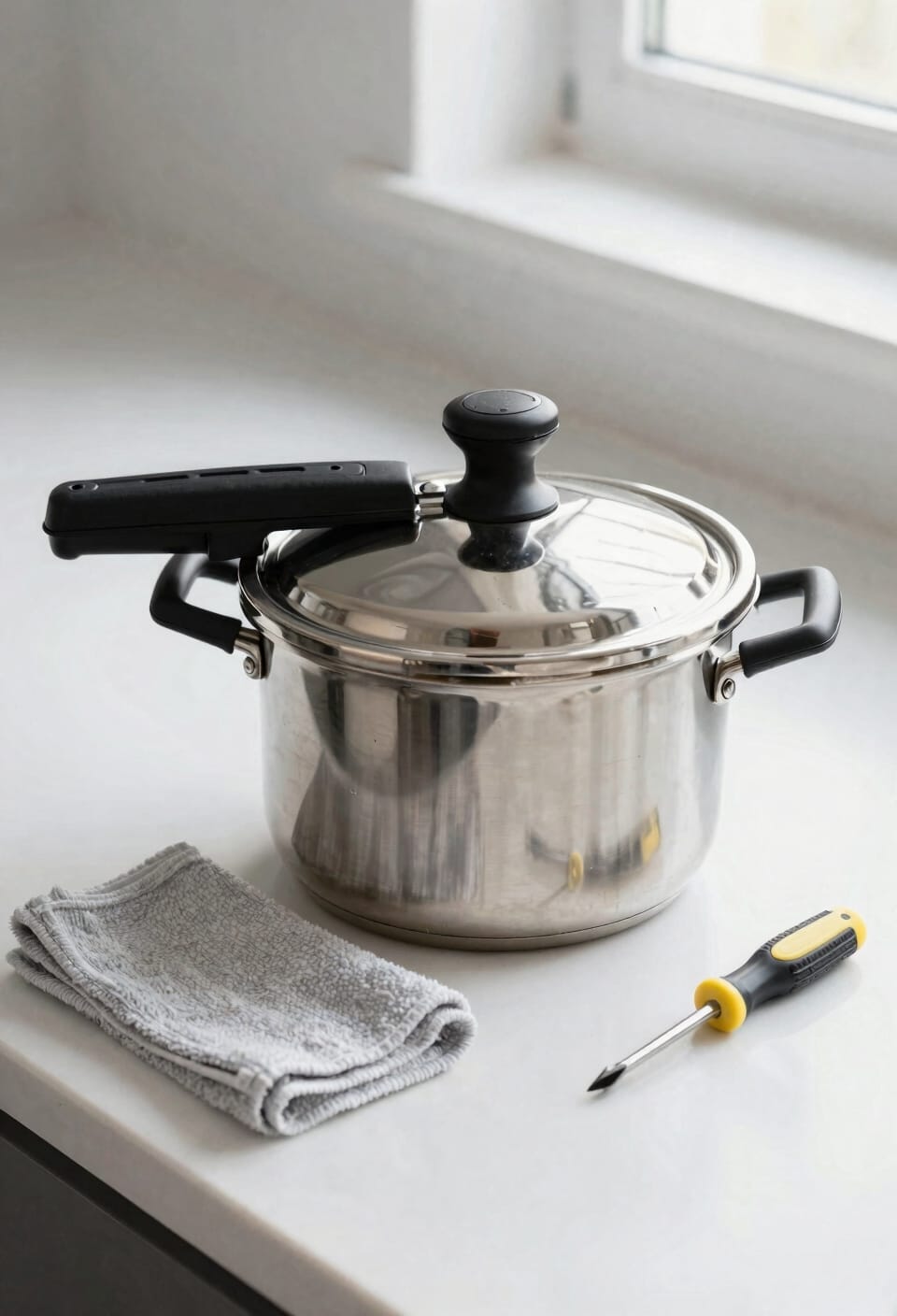
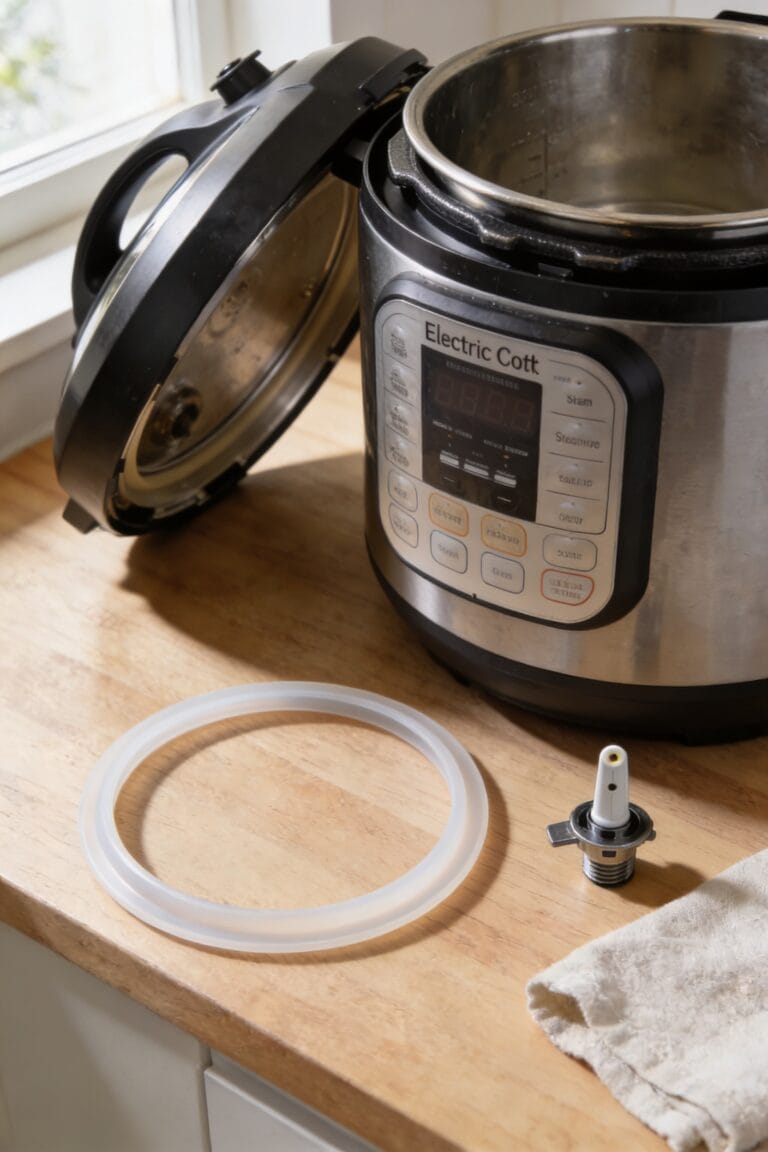
If you’ve diagnosed a wobble that’s mostly cosmetic or a minor sealing hiccup, here’s the good news: you might fix this in five minutes without ordering anything or watching a twenty-minute YouTube video. Start with the reseating technique—remove the lid completely, then reseat it firmly, making sure you hear that satisfying click. While you’re at it, check gasket alignment by running your finger around the sealing ring; it should sit evenly in its groove. Next, inspect the hinge tightening points (there’s usually a screw or two you can gently tighten). Wipe down all contact surfaces with a damp cloth to remove any food debris affecting lid balance. Do a few torque checks by gently pressing down on different lid sections. Ninety percent of wobbles disappear after this routine.
Is Your Lid Wobbling Due to a Faulty Safety Lock?
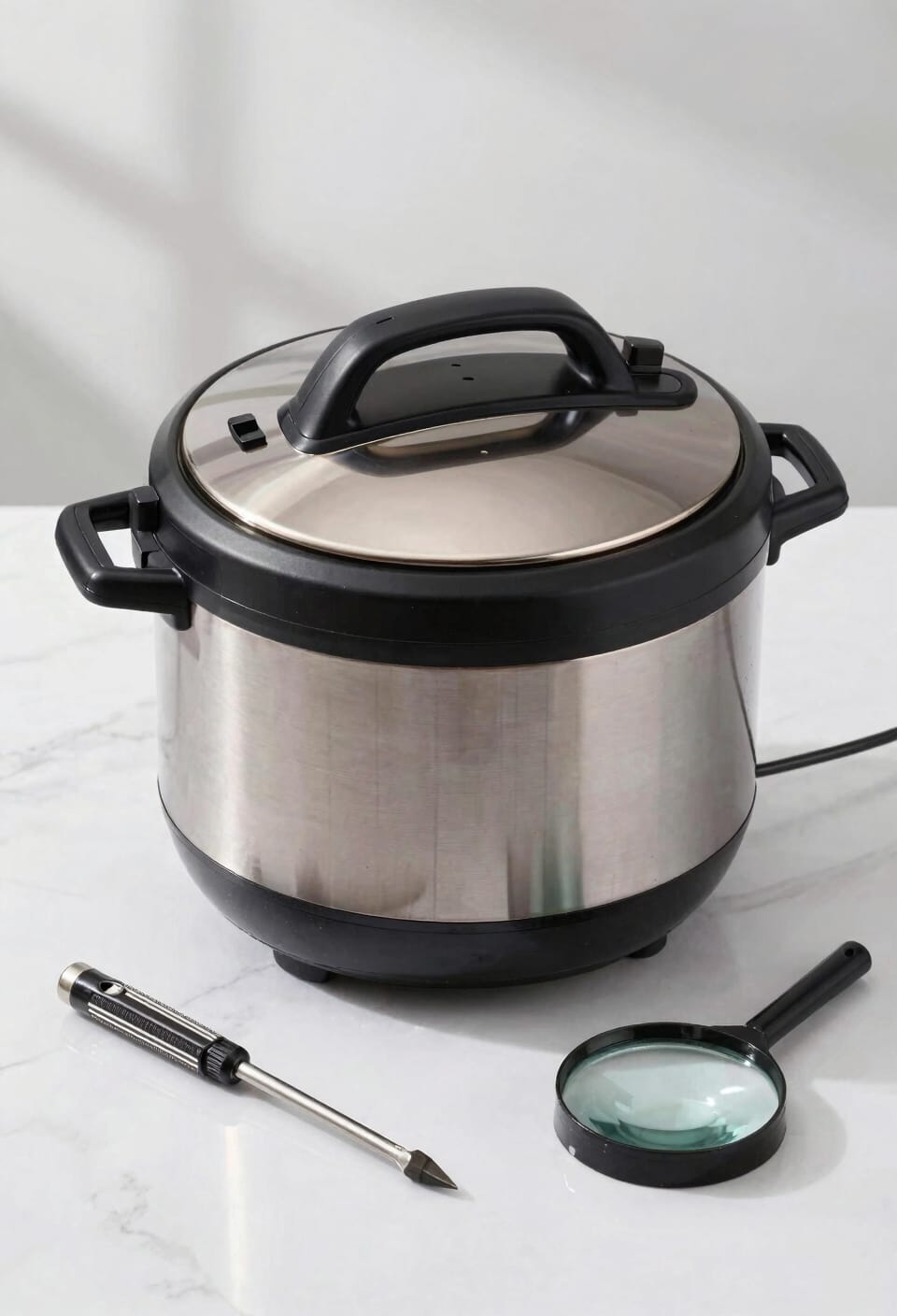
Those quick fixes work beautifully when you’re dealing with loose hinges or a dirty gasket, but I’ve found that some wobbles stubbornly persist no matter how many times you reseat that lid or tighten the little screws. Here’s the thing: your safety lock might be the culprit. The locking mechanism can wear down or misalign over time, creating that annoying side-to-side movement you’re experiencing.
Start with safety lock diagnostics by checking if the lock pin moves freely when you open and close the lid. If it feels stiff or stuck, lock pin lubrication is your next move—a tiny bit of food-grade silicone lubricant on that pin can work wonders. Sometimes the lock assembly itself needs replacement, but try the lubrication first.
When Your Lid Needs Replacement Instead of Repair
Sometimes you can lubricate and tighten your way out of trouble, but there comes a point where you’re just throwing good effort after bad—and that’s when you need to accept that your lid has earned its retirement. I’ve been there, honestly. When replacement timing feels imminent, consider the cost comparison between a new lid and another repair attempt. Your warranty coverage might actually help here, depending on your model’s age. Here’s the thing: material mismatch happens too. If you’ve jerry-rigged fixes with incompatible parts, you’re fighting a losing battle. A genuine replacement lid runs you maybe fifty to eighty bucks—not insignificant, but it beats replacing your entire cooker because a wobbling lid caused safety issues. Sometimes investing in the right part saves money and headaches down the road.
Stop Lid Wobbling: Cleaning and Care Tips
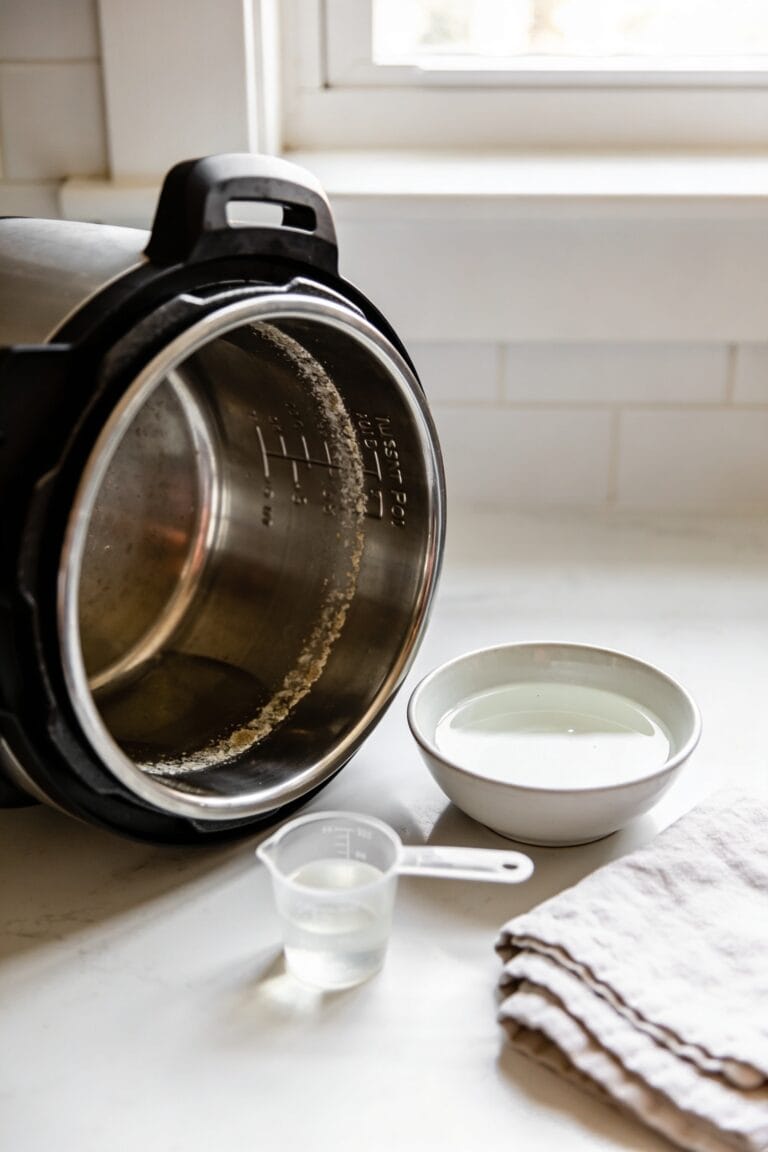
Before you start taking things apart or ordering replacement parts, let me tell you—a shocking amount of lid wobble comes down to something embarrassingly simple: gunk. I’m talking about the buildup around your gasket and hinge areas that nobody thinks to clean until their lid’s doing the wobble dance.
Here’s the thing: regular gasket maintenance is genuinely your first defense. I wipe mine down weekly, checking for dried food particles or mineral deposits that throw off the seal’s alignment. For hinge lubrication, a tiny bit of food-grade silicone oil works wonders—not WD-40, obviously. Just a light coat keeps things moving smoothly without attracting debris.
You’d be amazed how often this solves the problem entirely.
Fix or Replace Your Wobbly Instant Pot Lid?
Now that you’ve done the cleaning work, you need to figure out whether you’re looking at a quick fix or whether your lid’s genuinely done for—and I’m not going to sugarcoat it, that decision matters because replacing a lid isn’t cheap, but neither is running a pressure cooker that wobbles like it’s possessed.
Start with hinge adjustment. Most wobbling stems from a loose hinge you can tighten yourself with a screwdriver. If that doesn’t work, handle replacement might be your next move—a bent or cracked handle throws off the entire balance.
But here’s the thing: if the hinge is damaged or the handle’s warped beyond recognition, you’re probably better off biting the bullet and replacing the whole lid. It’s genuinely the safer play, honestly.
Frequently Asked Questions
Can I Use My Instant Pot if the Lid Wobbles Slightly During Cooking?
I wouldn’t recommend using your Instant Pot if the lid wobbles. Poor lid alignment compromises food safety by preventing proper pressure sealing. You’ll risk unsafe cooking conditions and potential steam leaks during operation.
How Much Wobbling Is Normal for an Instant Pot Lid?
I’d say minimal wobbling’s normal—slight movement when you’re handling it. If you’re noticing excessive wobbling during cooking, I’d check your latch adjustment. Acceptable movement shouldn’t affect your pot’s performance or sealing.
Will Wobbling Affect My Instant Pot’s Pressure Cooking Performance?
I’d say wobbling’s like a ship rocking on waves—it can disrupt your cooker’s rhythm. Yes, it’ll affect pressure consistency and heat distribution, compromising your cooking results if you don’t fix it.
Does Lid Wobbling Void My Instant Pot Warranty?
I can’t definitively say lid wobbling voids your warranty without reviewing your specific terms exclusions. I’d recommend checking your warranty documentation or contacting Instant Pot directly, as warranty transfer policies vary based on purchase conditions.
Can Wobbling Indicate a Safety Hazard or Pressure Release Problem?
I’d recommend checking your pressure indicator and steam venting immediately if you notice wobbling. A loose lid can compromise the seal, preventing proper pressure buildup and safe steam release during cooking cycles.
Conclusion
Look, your wobbling lid is like a bridge with loose bolts—sometimes it just needs tightening, sometimes the foundation’s cracked. I’d start with cleaning and reseating, since that fixes most issues without spending money. But if damage is real, replacement beats frustration every time. Your Instant Pot’s only useful when it actually seals, so don’t let a wonky lid turn dinner into a disaster.